


Bullets:
AI models from Chinese labs are comparable in performance to the top systems from Silicon Valley.But Chinese models are open-source, and are developed for a fraction of the cost and time.They are also preferred by business users, which presents a serious problem for the valuations of firms like OpenAI, which owns ChatGPT. OpenAI’s most recent funding round valued the company at over $500 billion, which is also what is needed to develop the Stargate project. By contrast, the latest offering from Moonshot, the #2-ranked model, comes from a company valued at just $3 billion.The investment thesis for the Magnificent 7 relies on users paying premium prices for access to proprietary systems. But even technicians working on Silicon Valley itself increasingly use Chinese models like Alibaba’s Qwen and DeepSeek, which are more up-to-date and affordable.
Inside China / Business is a reader-supported publication. To receive new posts and support my work, consider becoming a free or paid subscriber.
The YouTube video for this report may be found here:
Report:
Good morning.
A year ago DeepSeek came out of nowhere and wrecked the one thesis that Silicon Valley was building the best models for Artificial Intelligence, and the other that China is at least a generation behind–on the chips, on the large language models, on the applications.
Nobody believes any of that anymore. This is what is curious, though. After Nvidia and the other chipmakers got their stock prices hammered by the markets, investors piled back in.
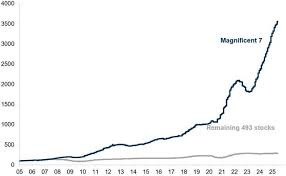
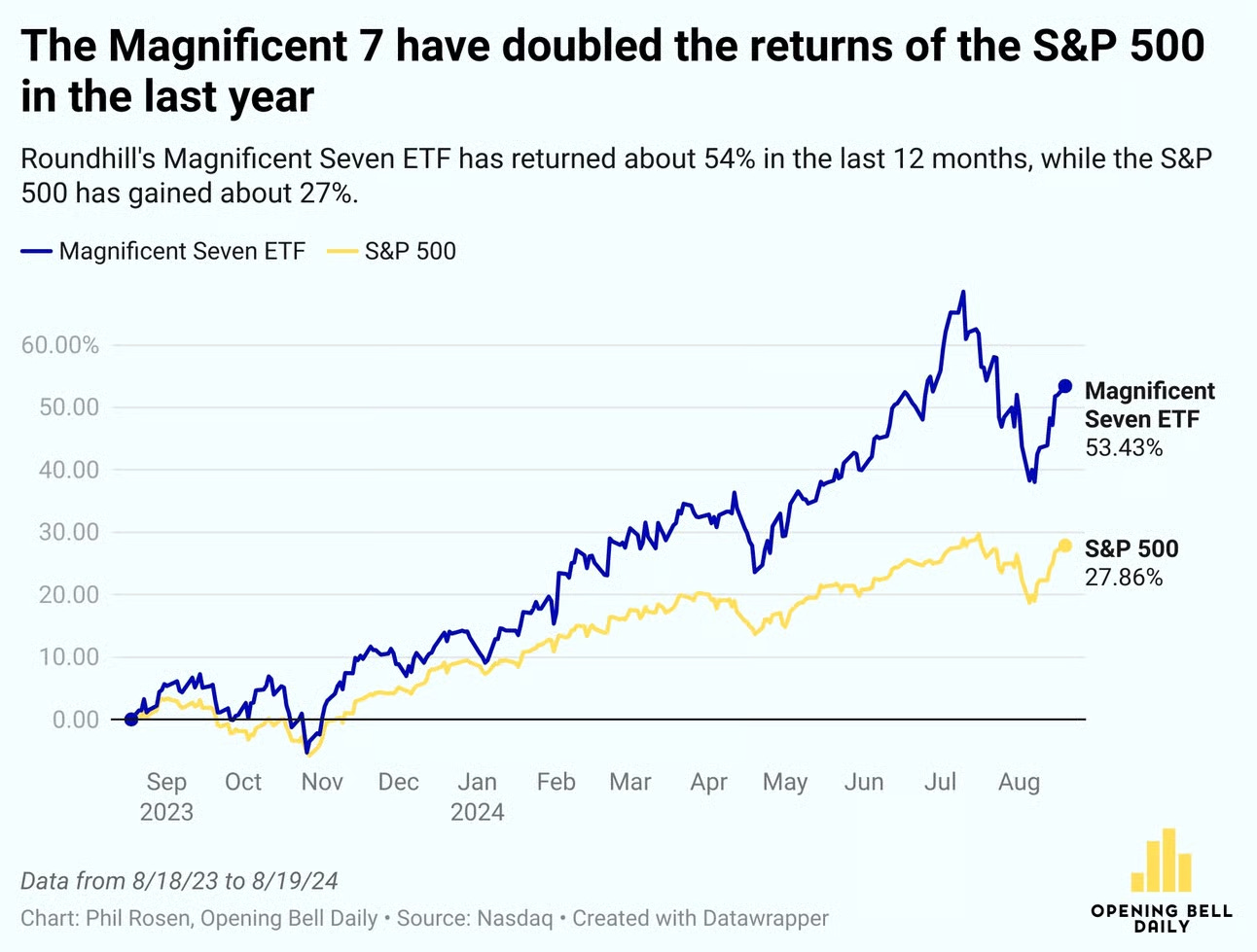
Evidence is stacking up, everywhere, that these AI valuations are in a bubble — in the United States. The valuations are crazy, and nobody is pretending they’re not. But in China it’s the opposite. Chinese AI models are taking over applications everywhere they’re allowed to be, but the valuations are very low by comparison.
Moonshot AI is out of Beijing, and they released a new open-source reasoning model called Kimi K2 Thinking. It was instantly popular among the techies who ranked it the second-best model in its peer group. They shared reports like this one, which are not meant to be understood by normal human beings. Except for the first line anyway.
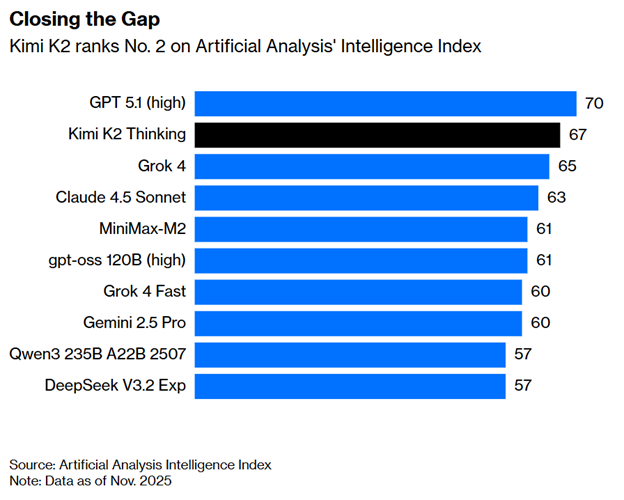
Here is the new and updated table for the Top 10 AI models. Kimi K2 made its debut at #2. MiniMax M2 is from a company in Shanghai. Qwen is from Alibaba, a Chinese company. DeepSeek is there at #10. Four of the top ten models on this index are from Chinese companies.
And the problem for investors in those other names, and in the chipmakers that build the hardware to make them go, is that these Chinese LLM’s are doing just as well, but much more cheaply. It seems Wall Street investors either have a short memory, or aren’t paying attention anymore, to the fact that this entire model is blowing up. Thomas Wolf asks if these new breakthroughs out of China in the AI space is just going to be a regular thing, and it seems so.
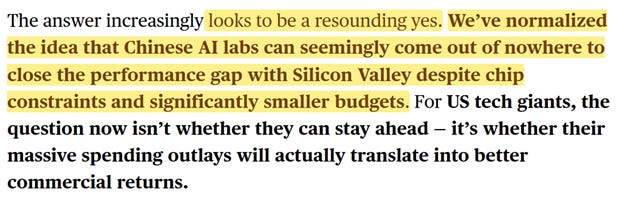
Those two sentences sum up the situation better than anything: now we’ve just come to understand that Chinese labs supposedly have inferior chips and less money, yet do just as well as the best proprietary AI models from our top companies. And the question for Silicon Valley—and their investors—is not whether the American companies can stay far ahead; we probably already know they can’t. The question is what the ROI is going to be, after trillions of dollars have been spent on systems that now compete against Chinese labs churning out comparable models for millions of dollars.
According to CNBC, Kimi K2 was built for under $5 million. The Stargate project in the US is looking for $500 billion so ChatGPT can run their proprietary systems and presumably charge users enough that they get that money back. Based on its latest funding round, OpenAI, who owns ChatGPT, is the world’s most valuable private company, with a $500 billion valuation. Moonshot is the company behind Kimi, and their valuation is around $3 billion:

So there are big question marks around what investors in companies like ChatGPT are actually paying for, when Chinese labs that nobody heard of a year ago are releasing models that are at least as good as Silicon Valley’s richest companies.
But here’s another problem, which is that users of AI prefer to use Chinese systems. The CEO of Airbnb is Brian Chesky, and he is a good friend of Sam Altman over at ChatGPT. But the techs at Airbnb don’t use ChatGPT in their applications because the developer tools aren’t far enough along yet. Airbnb built a customer service agent with AI, which makes it easy for users to change or cancel reservations. That feature is available in English now, and other languages are being added, over 50 more. Airbnb mostly relied on Qwen, from Alibaba. His quote: “It’s very good. It’s also fast and cheap.”
We shared earlier that here in Asia Qwen is killing everyone using AI to develop commercial applications, business apps, such as this one here that Sam Altman’s pal at Airbnb needed to save money on customer service reps.
Airbnb has money to spend, and they’re going to save millions of dollars by building this customer service agent. But ChatGPT isn’t up to the job. Qwen was. And Alibaba, by the way, has also already solved the language problem—millions of engineers here in China talk to millions of engineers around the world, translating in real time the most advanced and difficult manufacturing and scientific problems and questions. The translation and design features on Qwen–and DeepSeek too–are shockingly good.
So when Airbnb asked for a little button so someone in Boston, or Barcelona, can cancel a room reservation, that’s a walk in the park for these Chinese systems. That’s the easiest thing anyone asked Qwen for this month. But if ChatGPT can’t even do that, what exactly can it do that’s worth half a trillion dollars?
Be Good.
**Resources and links:**Chesky Says OpenAI Tools Not Ready for ChatGPT Tie-Up With Airbnb apphttps://www.bloomberg.com/news/articles/2025-10-21/airbnb-ceo-brian-chesky-says-chatgpt-integration-not-ready-for-airbnb-appCNBC, Alibaba-backed Moonshot releases its second AI update in four months as China’s AI race heats uphttps://www.cnbc.com/2025/11/06/alibaba-backed-moonshot-releases-new-ai-model-kimi-k2-thinking.htmlArtificial Analysis Intelligence Index by Open Weights vs proprietaryhttps://artificialanalysis.ai/
X, Deedy, Today is a turning point in AI. A Chinese open source model is #1.https://x.com/deedydas/status/1986643204616450197Bloomberg, Are DeepSeek Moments Now the New Normal?https://www.bloomberg.com/opinion/articles/2025-11-17/ai-are-deepseek-moments-now-the-new-normalReuters, OpenAI hits $500 billion valuation after share sale to SoftBank, others, source sayshttps://www.reuters.com/technology/openai-hits-500-billion-valuation-after-share-sale-source-says-2025-10-02/DeepSeek exposes a fundamental advantage of China’s system: their whole economy is open source
Tech stocks fall as China’s DeepSeek sparks U.S. worries about the AI racehttps://www.nbcnews.com/business/markets/tech-stocks-react-chinas-deepseek-sparks-us-worries-ai-race-rcna189394Investor%E2%80%99s Business Daily, Bursting AI Stock Bubble Gets Ugly — Erases $2.4 Trillion In valuehttps://www.investors.com/etfs-and-funds/sectors/bursting-ai-stock-bubble-worsens-destroys-trillions-in-value/
Inside China / Business is a reader-supported publication. To receive new posts and support my work, consider becoming a free or paid subscriber.
From Inside China / Business via this RSS feed