

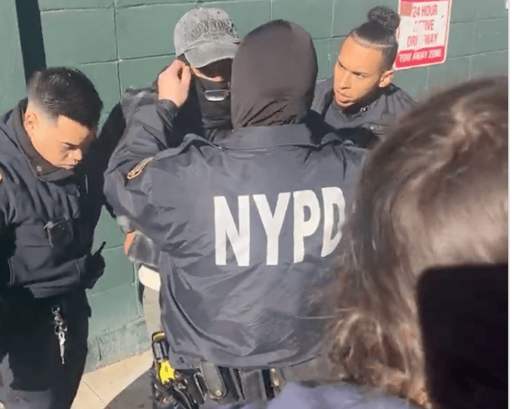
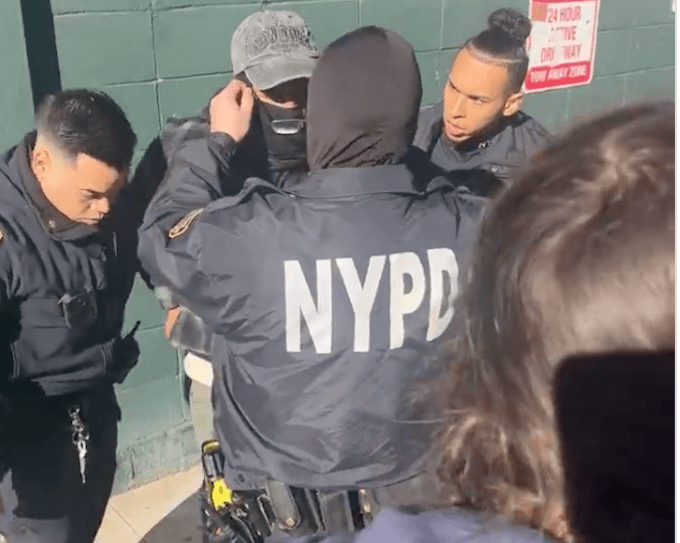
Still from a video shot by Laura Flanders of a stand-off between protesters and ICE in NYC.
I was in the vicinity of two ICE operations this week. One I saw, the other I didn’t, and that’s a problem.
Like many resolute winter drivers, I drove hundreds of miles this Thanksgiving; thirteen hours from downtown New York City to rural Michigan, from concrete and crowds, to forests and frozen water and back again. (Thank you, Trisha, our terrific traveling maltipoo.)
Back home, before my bones had quite stopped rattling from the ride, the ICE alerts started bleeping on my phone. I live on bustling Canal Street where ICE raids are big and noisy. Last month, 50 federal agents stormed in, intent on swooping up immigrant street vendors, and the city that never sleeps sent them packing almost immediately. The video of a woman, possibly a shopper, in a polka-dot dress, chewing out a masked man in front of a menacing military truck went viral, and the vendors were back selling knock-off bags by tea time.
@lauraflanders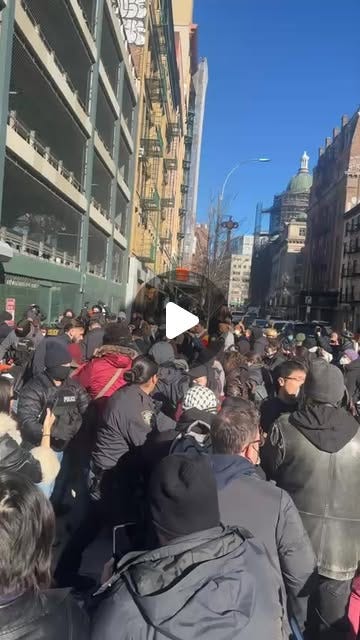 Laura Flanders on Instagram: “An alert went out Saturday mornin…
This Saturday, DHS apparently had another of their so-called “enforcement surges” planned, this time involving some 600 agents and an even bigger sweep of Canal Street. Once again, they were met with Manhattan mayhem. When word got out that ICE was using a local garage as a staging area, hundreds of people massed outside, whistles blowing, drums beating, livestreams livestreaming. The racket ricocheted off surrounding buildings and bounced down the narrow streets of Chinatown causing at least one dim sum seeker to join the action. For hours, pissed-off ICE men in silly ski masks were penned inside the grimy garage, while scores of city cops, with bullhorns, cattle pens, pepper spray and tasers, pushed, shoved and wrestled the crowd out of the roadway. After several arrests, the road partially cleared, unmarked white vans slipped out of the garage, their planned “enforcement surge” out-surged by counter-protestors. Slowly and ignominiously, the feds beat a retreat to New Jersey with the moving mob blocking their path every step of the way to the Holland Tunnel.
In Manhattan, ICE operations are about as subtle as Macy’s Thanksgiving Day parade. In the woods and worn roads of rural Lake County, Michigan, I drove through a completely different kind of enforcement scene without even knowing it — and that’s no accident.
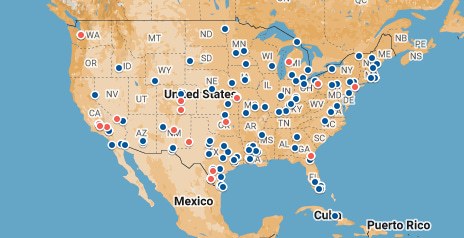
Map of ICE detention facilities by Cronkite News.
Lake County, MI is a recreation spot in summer, with sparkling lakes and miles of woods, a historic Black arts community, and an annual “blessing of the bikes”. In winter, between the snow-battered summer cabins, behind the frosty jack pines, I never expected to find one of the nation’s largest ICE detention centers, and the truth is, I didn’t. I drove by, twice, without ever seeing it.
Lake County is officially the poorest county in Michigan. It’s entire population could fit in one tall city building. There’s a Dollar Store or two, and a few gas-station qwik-marts catering mostly to hunters, but no fresh groceries for more than twenty miles. In other words, it is exactly the kind of place where federal “economic development” arrives in the form of incarceration.
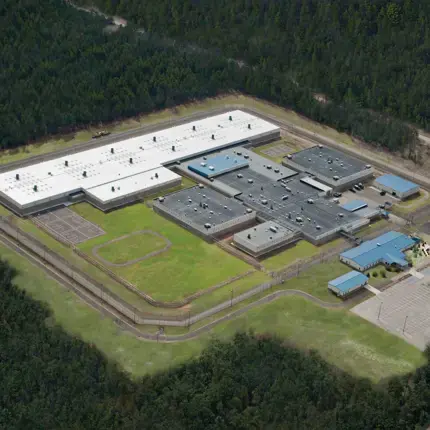
North Lake Processing Facility, Baldwin, Michigan. Photo: GEO Group
Sold as a boon to the local economy, the North Lake Corrections Facility was built in 1999 by the Wackenhut Corrections Corp (now GEO Group). Nicknamed the “punk prison” by then-Governor John Engler, it originally housed Michigan’s young offenders, then high security inmates imported from Vermont. But for years the place has cycled in and out of operation. A ten-year contract with the Federal Bureau of Prisons was canceled in 2022 when the Biden administration ended federal contracts with for-profit prison companies. Almost at once, local officials were pitching for the place to join the immigration detention economy.
This June, North Lake re-opened as the North Lake Processing Center, an ICE facility — the only one of its kind in the state, and the second largest in the nation. A sprawling concrete complex, just three-miles out of the tiny town of Baldwin, the facility, with capacity for around 1,800 beds, is now marketed as a vital “processing” hub for the region, whatever that means. It’s far from where family members, advocates, or lawyers can easily visit. On Google aerial view, it looks like every other prison placed where we’re not supposed to see it: low-slung buildings, tall fences, parking lots.

In Manhattan, ICE is a scandal. The day after the Canal St chaos, activists held a press conference and forced city officials to answer questions. Mayor-elect Zohran Mamdani called the federal operation “aggressive and reckless” and “authoritarian theatrics”. He has promised to review the NYPD’s role in coordinating with federal immigration enforcement, as he should, given that this is supposed to be a “sanctuary city.” Speaking at the scene, City Comptroller Brad Lander called the action “horrific” and emphasized that while street vendors are not a national security threat, the military-style response is actively endangering New Yorkers.
In rural Michigan, meanwhile, even people who live close-by have lost track of the comings-and-goings at North Lake. And that is just how it’s supposed to work. Our incarceration system has long relied on distance, desperation and euphemism. Now basic due process is intentionally being outsourced to far-flung ZIP codes like this one.
Civic duty today requires getting geographic. The truth is, I’d never paid much attention to that U.S. government-owned garage just two blocks from me. Now I’ll be taking an inventory. County GIS maps, zoning board agendas, sheriff’s contracts — they’re all publicly available. Which boxy brick buildings near you are federal jails, lockups, “processing centers,” or government property convenient for ICE staging areas? Which ones are run by private companies like GEO under state or federal contracts? Who approved those agreements, and what did they tell you they were buying — “jobs,” “economic development,” or “public safety”?
Surveillance-savvy city dwellers in well-connected places like New York and Chicago are doing well, keeping the heat on ICE and its militarized people-snatchers. But the bodies are being taken to quiet, no-notice, rural places that urban people have ignored for too long already. It’s time that changed, before America expands its carefully hidden gulag.
The post A Tale of Two ICEs appeared first on CounterPunch.org.
From CounterPunch.org via this RSS feed