

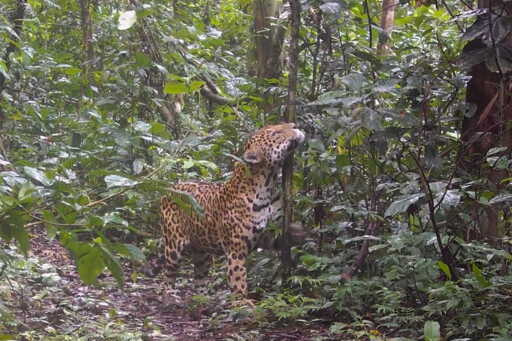
Ecuador’s northern Amazon is home to some of the most biodiverse areas on the planet, including Yasuní National Park. But visitors are rarely able to see iconic large mammals like deer, lowland tapirs (Tapirus terrestris) or the mythic jaguar (Panthera onca). In the middle of the dense jungle, the only tangible evidence of these creatures is usually their tracks. However, the Sani Lodge, a community-run ecotourism venture in Yasuní, is deploying camera traps to document wildcats, rodents, primates and other mammals that share the same paths as humans — and are closer than they seem. “The footage shows that the animals are watching and listening to us,” says Javier Hualinga, a naturalist guide and former manager of the Sani Isla Kichwa community tourism project, which sits inside the national park and south of Cuyabeno Wildlife Reserve. Covering 31,000 hectares (76,000 acres), the Sani Lodge is owned and run by the Indigenous Kichwa community. Even for Hualinga — who uses his honed senses to find monkeys 40 meters (130 feet) up in the trees, amphibians camouflaged between leaves, and insects disguised as branches — locating a wildcat is like looking for a needle in a haystack. For this reason, the camera-trap project is an opportunity to show clients the wildlife they help to preserve with their visit. Wildcats like pumas often approach and investigate the camera traps. Image courtesy of fStop Foundation. Sani Lodge, which opened in 2002, has become a buffer against oil exploitation, the advance of the agricultural frontier,…This article was originally published on Mongabay
From Conservation news via this RSS feed
You must log in or # to comment.