


In 1966, traffic was terrible in Honolulu, Hawaii. The mayor said, “Taken in the mass, the automobile is a noxious mechanism whose destiny in workaday urban use is to frustrate man and make dead certain that he approaches his daily occupation unhappy and inefficient.” Mayor Blaisdell proposed a light rail system to alleviate people’s frustration.
Nearly 50 years later, in 2011, the first shovel hit the ground. They planned three segments going 18.9 miles, or 30.4 km, in and around the city. But construction was delayed. Native Hawaiian suits charged that the route would disturb the bones of their elders, environmental impacts had to be studied, and more delays occurred after they discovered sub-par welding and cracks. Segment 1 finally opened in 2023 and Segment 2 in 2025. Segment 3 won’t be ready until 2031.
Mexico’s Maya Train goes about 932 miles, or 1500 km — 47 times longer than Honolulu’s rail. Lopez Obrador proposed it in 2018 when he ran for president. Construction began in 2019, and it was ready to ride in 2024.
The train still has many detractors — particularly outside of Mexico. Unlike most who have written about the train, British researcher Etienne von Bertrab has closely followed the suspenseful adventure: how huge physical and political obstacles were confronted, how the plot and subplots twisted and turned, how thousands of humans, animals and plants were involved. The train project never traveled a straight line.
To make the story of this remarkable achievement accessible to all, von Bertrab put his findings into graphic novel form, the just-released Más Allá, which means “beyond.” President López Obrador wanted Tren Maya to be the signature project of his presidency. It goes beyond that. It’s one for the history books — and graphic novels!
In 2024, three of us from the Bulletin production team, Bruce Hobson, Vicky Hamlin and I, joined Étienne von Bertrab on his research expedition studying the Tren Maya.
Interviewing Etienne took me back to the adventures we shared going from Cancún to Mérida on the train’s northern loop; at that time, the tracks and stations were still under construction. What struck me most vividly was that the project is indeed “more than a train.”

Building a wall by hand with local stone at Jaguar Park
In Tulum, as part of the massive Jaguar Park designed to be within walking distance of the train station, we watched indigenous craftsmen build a Mayan historical museum by hand, using ancient methods — no mortar — such as building foundations of stones and bricks and walls of straw tied together in sheets. At a Mayan ecotourism co-op, the manager told us about their negotiations with the government when it requested permission for the train to go through some of their ejido land. What they got in return included a new school and health center, needed for a community far from the nearest city.
In Chetumal, resting on a bench near a newly opened museum, another component of the Tren Maya Project, we struck up a conversation with a Chetumal resident. He loved the new attractions bringing more people, jobs and income to his town. At one station, I chatted with a National Guardswoman and asked her opinion. With pride in her voice, she responded that the train was constructed with Mexican expertise. “Even the train cars are made in Mexico!”
And that was the most common feeling we found in our random encounters. Pride. More than a train. The Tren Maya symbolizes the pride of Mexico.

Étienne von Bertrab, born and raised in Mexico, now teaches political ecology at University College London. His research focuses on environmental (in)justice in Latin America. Over the last five years, von Bertrab has led a team conducting research on the Tren Maya, the López Obrador administration’s flagship infrastructure/development project. His team has paid particular attention to the voices of people living in the southern region. He turned his research into the recently released graphic novel, Más Allá: Una Historia del Tren Maya,
What were the questions that guided your research?
From the very beginning, Mexico’s political opposition was against the building of the Tren Maya, particularly once it became clear that it was AMLO’s signature project. Coming himself from Southern Mexico, the country’s poorest region, he wanted to promote economic development not based on the top-down neoliberal model but to ensure ordinary people actually benefitted.
His opponents did everything they could to stop the project as a way to discredit AMLO and the Fourth Transformation. More than 50 amparos — injunctions — were filed to stop construction, most of them promoted or financed by the political right. It’s incredible that the Tren Maya was actually built, given all the obstacles thrown against it!

Existing train tracks across the Peninsula were upgraded to make way for the Maya Train: Photo: Carlos Rosado Van Der Gracht/Yucatan Magazine
Others raised legitimate questions too, including people living along the proposed route, especially once construction got under way in 2021. These were about the role of the Mexican Secretariat of National Defense, known as SEDENA, potential environmental damages, and the effect on local communities, particularly ejidos. Ejidos are a form of collective land ownership still very present in the south and southeast regions; would these be disrupted? Other concerns related to whether the Tren Maya would cause a Cancún-style touristification of the broader region.
I was also interested in understanding Sembrando Vida, or Sowing Life, a national program to reduce rural poverty and environmental degradation, and how it intersected with the Tren Maya project.

Farmer Victor Poot participates in the Sembrando Vida Program
Both were launched simultaneously in the southern states at the beginning of AMLO’s administration. Would these interventions weaken or strengthen ejidos and communal life? How could urbanization be guided in a more sustainable and socially just way? Would peasants and local producers benefit from this new transport system?
Many questions to research. But given the levels of disinformation and misinformation in the media nationally and internationally, an overarching goal was to better understand what was happening on the ground. A search for the truth has been central to my work.
You sought access to government officials working on the project; did they attempt to make you put the project in a favourable light?
Many journalists and researchers ignored or made assumptions about the actions and decisions of the National Fund for the Promotion of Tourism, known as FONATUR, which was initially in charge of the project, and other authorities. But to me it was important to take concerns gathered from the ground, as well as our own questions, directly to public officials responsible for different aspects of the Tren Maya, of Sembrando Vida, and of the programs of the Ministry of Agrarian, Territorial and Urban Development, or SEDATU, and the Ministry of the Environment, or SEMARNAT, and others also integral to the project. This meant being very open in our dialogue with them, and we built trust over time.
I was pleasantly surprised that most public officials showed a profound spirit of public service, worked very long hours, and were open to debate and criticism, something that was portrayed very differently in the media and in academic circles. And no, we were never pressured, not even by insinuation, to record things in a favorable light.
But of course, my research didn’t just rely on their voices. My work, often together with colleagues and students with whom I travelled every year, involved research at the level of communities, from peasant farmers and ejidatarios to residents of towns and peripheral areas of cities, to the workers. It was these grassroots voices that convinced me that the project was putting into practice AMLO’s rejection of the neoliberal extractive model, instead prioritizing the people and responding to their concerns. We heard many people say the government was treating them differently, with their voices now being heard.
Several times, major changes in the train route or the placement of stations were made due to various reasons, including public opposition. Some critics say that it’s wrong that stations weren’t placed all the way into the city centers, which had been the original plan. But this was not only complicated to do in dense urban areas but, in some cases, it was opposed by residents who would need to be relocated. Instead, for instance, in San Francisco de Campeche, they built a station on the city periphery and implemented a transport system to connect the station to the city and to the airport. For mostly technical reasons, this also happened in Mérida, but the station is connected to the city through an electric bus system that also serves other areas of the city.
When the original railway crossing part of the peninsula was built in the 1950s, the government was supposed to pay communities and ejidos for the land they expropriated to ensure right of way for the train. But often people, especially ejidos, weren’t paid. This happened as well when constructing roads and highways. AMLO’s government made good on these old debts and gained their trust. We witnessed many instances of dialogue between communities and the companies building the railway or authorities. These were fascinating processes.

Photo: Jessica Ramírez
The Tren Maya has often been cited as a major example of the “militarization” of Mexico including its civic sector. What did you find?
The project was first in the hands of the FONATUR, with SEDENA’s Army Corps of Engineers only in charge of the construction of some railway segments. But the Covid-19 pandemic, the amparos and other factors slowed construction, and AMLO clearly got frustrated as he’d promised to deliver Tren Maya before he left office in 2024. In early 2022, he appointed new leaders to FONATUR and formally expanded the role of SEDENA.
It would not only oversee the project but also run the operation of the train. Similarly, SEDENA was given responsibility for the operation of the new airports in the region and the publicly owned Mexicana airline. State companies were created to operate these infrastructures and services, all under SEDENA.
Critics refer to this as “militarization,” which has, of course, a negative connotation. The reality is that, as in previous governments, AMLO used the armed forces to deliver his political project — to move away from neoliberalism and ensure these public services wouldn’t be privatized in the future. We remember what happened in the 1990s, when Mexico’s railway network was privatized and we lost all our passenger trains. But more fundamentally, he decided to use the military for different purposes than in the past, when they were central to repressing dissenting movements. His use of the military is constitutional. One of the military’s functions is to “support the development of the country.” He made sure this was the case under the Fourth Transformation.
AMLO had other reasons for deciding to give the operation of the Tren Maya to the military. I discuss them in my book Más Allá: Una Historia del Tren Maya! This includes the question of what to do with around 300,000 armed forces personnel. If they won’t be used to repress dissent and there’s no chance we could stop a US invasion militarily, what should the country ask them to do to keep them busy? Give them work on public infrastructure projects! Apart, of course, from their role in disaster response and public security, needed to counter the organized crime violence that we inherited from Felipe Calderón’s infamous “war against cartels.”
The National Guard present in the region reinforces the government’s public security strategy. They are deployed in the Tren Maya stations and on the trains, not with weapons, but as station managers, keeping people clear of the rails and answering passenger questions.

You see them helping people in wheelchairs and lifting baggage onto the cars. From the friendly exchanges, it’s clear that people appreciate their presence. This completely contradicts the narratives around the “military train.”
When people in the UK or Europe — and certainly in the US — express concern for “Mexico’s militarization,” I laugh. European countries have accepted Trump’s demands to increase their military spending in the next decade at a huge social cost. And this spending is for weapons of war and death! Mexico, on the other hand, isn’t buying missiles, tanks, bombs, surveillance systems and certainly not nukes. During AMLO and Sheinbaum’s presidencies, the military has not been used once for repression or to stop protests. SEDENA’s budget has increased over the last few years because it is building railways and major infrastructure projects.
If this is “militarization,” it’s a different kind of militarism that benefits the common people.
Multiple organizations accuse the project of damaging the environment. Is that simply a price the project had to pay?
In 2018, when AMLO first announced the train project, he made the mistake of claiming, in a radio interview, that “not a single tree would be felled.” An exaggeration, of course, as the train would inevitably impact the environment. But when he made that statement, the assumption was that the railway would use the existing rail lines and highways, and they could simply renovate abandoned train stations. This would have required minimal deforestation for laying the tracks. However, the plan wasn’t workable.
The original route had to be changed multiple times in response to local community demands, social resistance, archaeological findings, technical difficulties and costs — and to minimize harm to the environment.
Section 5, particularly the parts between Playa del Carmen and Tulum, underwent the most controversial changes because one of the longest and most extraordinary underground river systems flows underneath. Hotel associations of the Riviera Maya strongly opposed building along the highway, and it was also too expensive to buy the necessary land required from private owners parallel to the route.

Jungle clearing advances in Section 5. Photo: Lisette Poole
Moving the route inland meant far more deforestation than originally planned, and the project now had to minimize the train’s impact on the underground river system, caves and cenotes (sinkholes). In some cases, like in Calakmul, building the railway next to the highway would have made it more difficult for animals to cross those double barriers, and would also have affected a hugely significant bat cave, Volcán de los Murciélagos. As a result, the project moved the route several kilometers away and constructed animal crossings, as it did in the rest of the route.
When it comes to how the train impacts the environment, we should consider several factors. First, the deforestation it caused is only a fraction of what tourism development and its associated urbanization have caused over the last decades. The building of highways, hotels, recreation parks and golf courses caused far more damage to ecosystems, but no one protested these mostly private developments. The pre-Tren Maya transport model, with all cargo transported by road, is also more dangerous for people and animals. Motor vehicle emissions are much higher, whereas half of the Tren Maya railway is electric, and the rest can be electrified in the future.
Second, due to the Tren Maya project, Natural Protected Areas have expanded, and key biological corridors are now in better shape than before. Companies that built the railway, including SEDENA, were obliged to reforest, which they largely have done. However, not everyone has complied, and the current administration is ensuring that they do so.
The pre-Tren Maya transport model, with all cargo transported by road, is more dangerous for people and animals. Motor vehicle emissions are much higher, whereas half of the Tren Maya railway is electric, and the rest can be electrified in the future.
Third, we must consider Sembrando Vida, or Sowing Life, a national program that in practice is now the largest reforestation program in the world and which started precisely in this region, implemented in conjunction with the Tren Maya project. In the five states along the route, 167,000 peasant farmers, mostly on ejido lands, receive a monthly stipend to implement agroforestry systems in previously degraded parcels of land and to care for their milpas and trees. They have reforested 419,000 hectares, a figure much greater than the around 7,000 deforested during construction.
A media-intensive campaign called Sélvame del Tren, or, in English, “Save me from the train,” promoted the idea in Mexico and internationally that the Tren Maya was committing “ecocide.” This campaign not only exaggerated the actual environmental damage but also obscured all the negative impacts of past developments. By visiting the area, I found that this was a campaign disconnected from local communities, who mainly sympathized with the project. They knew what had caused the real ecocide in their region.
What about the issue of “touristification”?
Local communities certainly don’t want to see more Cancún-style developments that appropriate precious resources, including land and water, and exploit the workers. It’s a highly predatory model of globalized tourism. The Tren Maya aims to spread the benefits of tourism — and there are benefits — to a larger region and to residents and workers. The key question is what kind of tourism is promoted and what mechanisms can be implemented so that people can decide how far and at what cost developments should be expanded.
Construction of the train created hundreds of thousands of jobs, including by other public projects such as parks, museums, community centers, sports grounds and so on. All this public investment fueled private investment, and the rate of economic growth in the region has, for the first time, been higher than in the country’s center and north. But we will need to understand how that level of jobs can be maintained and what kinds of jobs are created.

One disappointment is the lack of commitment towards community-led tourism, or turismo comunitario. In 2021, FONATUR, the entity originally entrusted with the Tren Maya project, reached an agreement with a regional alliance of cooperatives involved with tourism, with the aim of strengthening them and creating up to a hundred cooperatives along the route. But with changes in the project’s management, the agreement has been left in limbo.
Of course, dangers lie ahead. Thanks to the efforts of AMLO’s administration, local and regional governments have more robust planning instruments, but we’ve witnessed both good local governments, with honest officials devoted to the public good, and terrible ones, involved in corruption, particularly in land deals. The people must remain vigilant, ensuring their local governments are accountable to them and mobilizing when needed.

Most academics publish scholarly papers, as you also have done. So why did you decide to publish your research in the form of a graphic novel?
It was a result of several factors: a project for an academic book didn’t materialize, and I was generally frustrated with how academic publishing works. But I also wanted to produce something that could contribute to public understanding and debate. It had to be in Spanish and in a format accessible to everyone.
That’s when I thought of Rius, the beloved Mexican cartoonist who wrote more than 100 books, including Marx for Beginners, which was translated into dozens of languages. Many of us Mexicans were politicized through his books. I proposed the idea to the cartoonists of El Chamuco; they recommended Augusto Mora to be the illustrator. It was a huge pleasure to work together, and we hope readers like our book.
Más allá: una historia del Tren Maya by Étienne von Bertrab and illustrated by Augusto Mora is published by El Chamuco. The book can be ordered online from Pendulo (for shipping within Mexico). We will update this when it is available for international shipping.In Mexico, it is available in-person at Educal, Fondo de Cultura Económica, Librerías Gonvill, Librería Ríus, Cafebrería El Péndulo, Proveedora Escolar, El Sótano, La Rueca de Gandhi, Librería Rayuela, Librerías Gandhi, and Librería Julio Torri.
 Meizhu Lui’s experiences as the daughter of Chinese immigrants and as a single mom led her to focus on addressing inequalities based on race, gender, and immigration status. A hospital kitchen worker, she was elected president of her AFSCME local. She coordinated the national Closing the Racial Wealth Gap Initiative, and co-authored The Color of Wealth: The Story Behind the U.S. Racial Wealth Divide. Liberation Road, a socialist organization, has been her political home.

Tren Maya on the Tracks of History
December 8, 2025December 8, 2025
An interview with Étienne von Bertrab, author of the new book Más allá: una historia del Tren Maya.
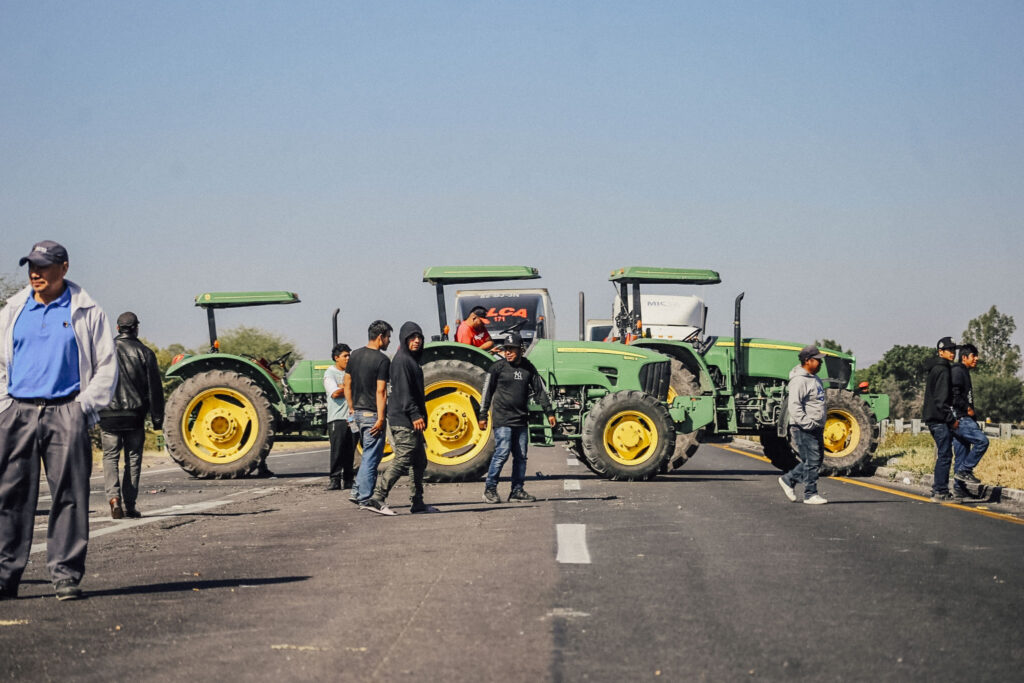
Continuing Neoliberal Policies Over Farmers’ Demands
December 8, 2025December 8, 2025
If the government fails to meet the needs of the population and continues to act in favor of the interests of the US and the financial sector, economic and social problems and discontent among affected sectors will worsen, leading to increased protests.

Palestinian Solidarity Movement Condemns Genocide Supporter Visit to Mexico’s Chamber of Deputies
December 7, 2025December 7, 2025
Last week, Morena Deputy Pedro Haces attempted to secretly reinstitute a friendship group with israel, but was denounced by other deputies from Morena and the Workers Party.
The post Tren Maya on the Tracks of History appeared first on Mexico Solidarity Media.
From Mexico Solidarity Media via this RSS feed
You must log in or # to comment.