

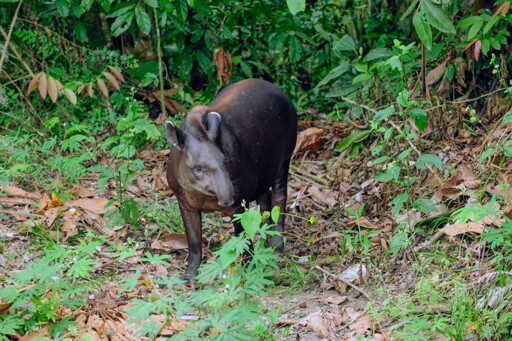
A new agreement that aims to streamline the monitoring and protection of the Amazon Rainforest was announced at the COP30 climate summit that wrapped up this week in Belém, Brazil. The Mamirauá Declaration is “a collective commitment to transform how biodiversity is monitored, governed and protected across the Amazon Basin.” Thirty organizations from around the world — including Brazil-based research organization the Mamirauá Institute, the The Polytechnic University of Catalonia in Spain, and U.S.-based New York University and XPRIZE Foundation — signed the agreement at an event on the sidelines of COP30. The first two organizations led the efforts to coordinate and promote the declaration. “The declaration is a call to bring together governments, NGOs, Indigenous people and local communities and the private sector together to measure the pulse of the forest,” Emiliano Ramalho, technical scientific director at the Mamirauá Institute, told Mongabay in a video interview. “Looking from above, you can say the forest is there, but to see if it is pulsing or not, you need to go there and monitor, and that is the key idea of the declaration.” Under a unified framework, the declaration aims to bring together long-term but scattered initiatives that have been monitoring the Amazon Rainforest for years. One of its biggest highlights is the active participation of Indigenous peoples and local communities in monitoring efforts. The declaration also calls for more capacity building in the countries that make up the Amazon Basin. The declaration was signed by thirty organizations from around the…This article was originally published on Mongabay
From Conservation news via this RSS feed
You must log in or # to comment.