

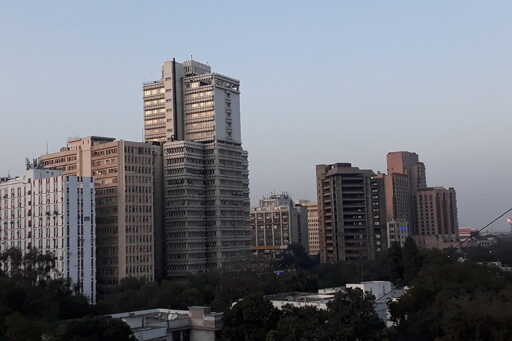
Parts of Delhi, Mumbai, Chennai, Kolkata and Bengaluru, India’s largest cities, are slowly sinking, mainly due to overextraction of groundwater, according to a recent study, reports Mongabay India’s Manish Chandra Mishra. Researchers used eight years of satellite radar data and found that 878 square kilometers (339 square miles) of land across the five megacities show signs of subsidence. This leaves more than 2,400 buildings at high risk of structural damage. If current trends continue, the number could rise to more than 23,000 buildings in the next 50 years, the study found. “Our motivation to study land subsidence and building damage risk in Indian megacities stems from the absence of prior research that explicitly investigates land subsidence and links differential settlement with observed structural damage,” Nitheshnirmal Sadhasivam, study co-author from Virginia Tech, U.S., told Mongabay India. “While the impact of land subsidence on infrastructure is a well-recognised geohazard globally, in cities such as Jakarta, Mexico City and Tehran, its implications for building stability in India have not been systematically assessed.” The study found that roughly 1.9 million people across the five cities live in areas that are sinking at a rate of more than 4 millimeters (0.16 inches) per year. Delhi, Chennai and Mumbai face the highest levels of subsidence: the annual rates of subsidence reach 51 mm (2 in) for parts of Delhi, 31.7 mm (1.25 in) for Chennai, and 26.1 mm (1 in) for Mumbai. “Across all five megacities, groundwater dependence and overexploitation emerge as the dominant local drivers of subsidence,” Sadhasivam said.…This article was originally published on Mongabay
From Conservation news via this RSS feed
You must log in or # to comment.