

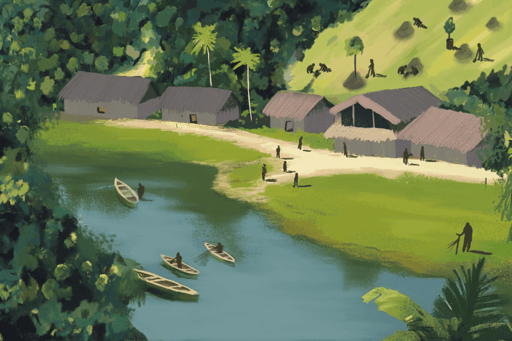
Olegario Sánchez Pinto, 74, wakes up at 7 a.m. every day to complete all the tasks he must perform as a member of the Indigenous guard in the Colombian community of San Martín de Amacayacu. He begins work early, using only his traditional walking stick to patrol the hamlet along the Amacayacu River, a two-hour boat ride from the city of Leticia on the Amazon River. First, he travels along the shore, which serves as a port where people arrive at and depart from San Martín. Next, he walks among the houses to find out if anyone is sick. In the event of an argument or fight, he immediately seeks out the curaca, or chief, the community’s highest authority. The curaca is responsible for resolving these problems, including imposing any penalties if necessary. Then, along with other guards, Sánchez travels along the ravines to determine whether anyone is cutting trees or fishing. In late March, according to Sánchez, he’s also very watchful for hunting. “That’s the breeding season, so animals can’t be hunted. During those days, tapirs can’t be killed because they’re pregnant. If you kill an animal with [a large] belly, that to us is a crime,” he says. Sánchez has more years of experience as a guard than almost anyone else in San Martín, an Indigenous Tikuna community. Over the years, he’s watched as dozens of his colleagues have left the Indigenous guard due to a lack of income. He recalls a former fellow guardian telling him, “I…This article was originally published on Mongabay
From Conservation news via this RSS feed