

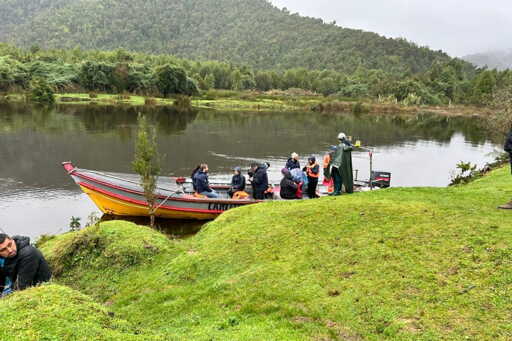
Huellelhue means “place for swimming” in Mapudungun. It’s also the name of one of the rivers that flow through the Lafken Mapu Lahual Multiple-Use Conservation Area, established in 2005 in southern Chile’s Los Lagos region. The name of this area is more than just a grouping of words, says Eduardo Vargas, president of the Nirehue community. “It’s a spiritual geography where the Mapuche Huilliche people have, for generations, woven their connection with the water, forest and life itself,” he says. The Huellelhue River estuary is home to natural beds of the choro mussel (Choromytilus chorus), a large mollusk native to the coasts of Chile and Peru. This filter-feeding species thrives in the estuary’s mix of fresh and brackish waters, where the unique ecological conditions support its reproduction and survival. For the three Indigenous communities that live along its shores — Caleta Huellelhue, Lonko Milef and Nirehue — the choro mussel carries deep cultural and environmental meaning. They recognize it as part of their alimentary heritage and their ancestral connection to the estuary. Yet decades of intensive harvesting by local divers and outsiders alike led to a drastic decline in its population. In response, Indigenous communities called on Chile’s Undersecretariat of Fisheries and Aquaculture (SUBPESCA) in 2018 to adopt urgent measures. The following year, authorities established the first harvesting ban. Thanks to this restriction, the natural mussel beds in the area have grown substantially, heralding the recovery of this emblematic species. Now, conservation strategies are underway that aim not only to…This article was originally published on Mongabay
From Conservation news via this RSS feed