

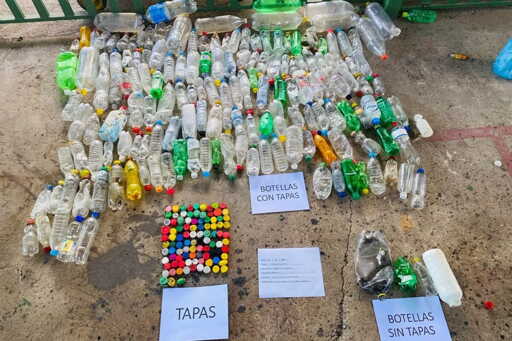
Sandwiched between the frigid swells of the Pacific and the warm pulses of Latin American cities lie stretches of turquoise beaches that attract migrating whales and beachgoers alike. But these shores have also been collecting an unwanted traveler: plastic bottles, one of the most persistent traces of ocean pollution. Central America, where dense populations and limited waste infrastructure coincide, hosts some of the most contaminated sites in the region, according to new research in the Journal of Cleaner Production. “It’s the first time a study looking at origin and abundance covers such a vast section of the Latin American Pacific,” said co-author Ostin Garcés-Ordóñez, a marine scientist at the Smithsonian Environmental Research Center in Maryland. “We analyzed bottles from cities, continental beaches, and islands, which allowed us to see contamination patterns we hadn’t observed before.” Citizen scientists in Costa Rica collecting plastic from continental beaches. Photo by Juan Manuel Muñoz-Araya. Hundreds of citizen scientists across Mexico, Central America, and South America participated in the research, led by Garcés-Ordóñez and the Chile-based network Cientificos de la Basura (Litter Scientists), tracing where the bottles came from and what their journeys reveal about regional pollution. Working with local researchers and educators, volunteers collected bottles from beaches, rivers, and nearby islands across 10 countries. In Costa Rica, where only five of the country’s 84 municipalities have trash facilities that separate recyclable from non-recyclable waste, co-author Juan Manuel Muñoz-Araya, marine scientist and aquarium coordinator at Pacific Marine Park in Costa Rica, coordinated dozens of students…This article was originally published on Mongabay
From Conservation news via this RSS feed