

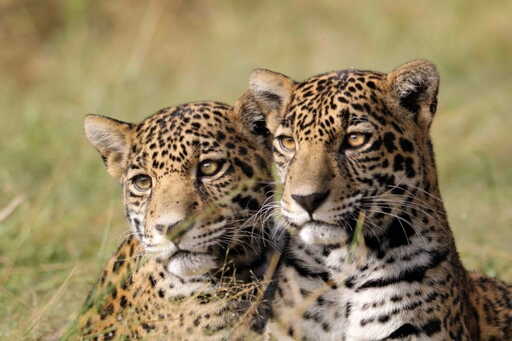
Every Nov. 29 is International Jaguar Day, created to raise awareness about threats the jaguar (Panthera onca) faces, including habitat loss and poaching. While the Amazon and Brazil’s Pantanal biomes are strongholds for the jaguar, hosting a high density of the animals, the species has lost most of its historic range, a reality that conservationists are working to reverse. In places such as Argentina and Guatemala, jaguar numbers were pushed to the brink of extinction. But in some places, jaguars are finally bouncing back. Here are some highlights from Mongabay’s recent jaguar coverage: Crochet project helps jaguar numbers double near the Iguazú Falls In 2009, the jaguar population in Brazil’s Iguaçu National Park crashed to just 11 individuals. Now, more than a decade later, there are at least 105 jaguar individuals roaming the Iguazú region on the Brazil-Argentina border, contributor Sarah Brown reported. Community support and a shift in public perceptions about jaguars were vital in the conservation turnaround. The Jaguar Crocheteers project, for example, employs more than a dozen women to crochet jaguar-themed items for sale as part of an awareness campaign. For many local women, the project has become a main source of income. “It’s not often we’re able to connect people from different towns around a shared cause. But all of them are united by the jaguars,” Claudiane Tavares, a coordinator at the Jaguar Crocheteers project, told Mongabay. Wild jaguar cub born in Argentina’s Gran Chaco after three decades A 5-month-old jaguar cub was spotted along the…This article was originally published on Mongabay
From Conservation news via this RSS feed
You must log in or # to comment.