

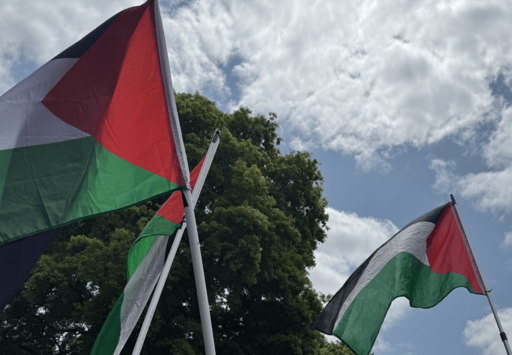

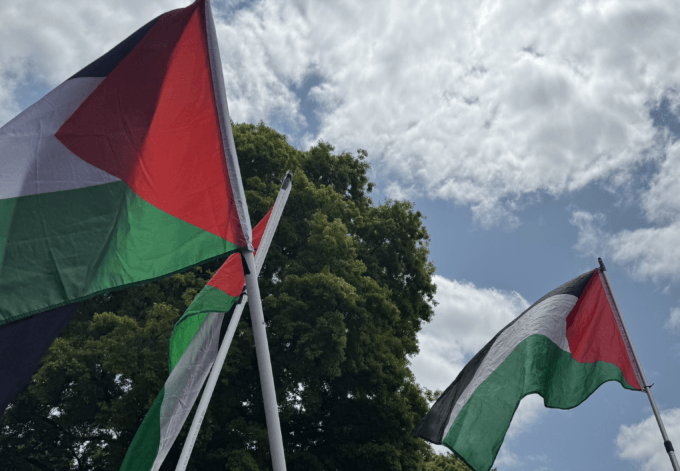
Photograph by Nathaniel St. Clair
On June 20, members of Palestine Action broke into a Royal Airforce base at Brize Norton, Oxfordshire, going on to spray paint two military aircraft activists claimed were being used in “direct participation in the commission of genocide and war crimes across the Middle East.” This was deemed so horrible as to draw the ire of then Home Secretary Yvette Cooper, who went on to invoke section 3 of the Terrorism Act to proscribe the organisation.
At the time, it seemed impulsive, rash and most likely intended to placate Israeli voices that something was being done about these bleeding hearts in Albion. Toby Cadman, Member of the International Bar Association’s War Crimes Committee Advisory Board, was in no doubt that the proscription was fashioned “as a blunt instrument to silence certain voices on Palestine at a moment when public opinion and government policy are sharply at odds.”
It did not take long for those well versed about human rights to protest this scrappy measure as absurd and needlessly authoritarian. The UN Human Rights Office of the High Commissioner, counting among their number Francesca Albanese, Ben Saul and Irene Khan, issued a press release in early July expressing their bafflement at the proscription. “According to international standards, acts of protest that damage property, but are not intended to kill or injure people, should not be treated as terrorism.” Since the addition of Palestine Action to the naughty list of outlawed organisations, over 2,200 arrests have been made citing terrorism legislation, with 254 people charged with terrorism offences merely for participating in peaceful protests.
Even within government circles, this measure did not fly smoothly. That most terrier-like human rights activist and former diplomat Craig Murray got his hands on a leaked report by the Joint Terrorism Analysis Centre (JTAC) revealing that the impulsive decision to proscribe the organisation had been a fumbling episode riddled with mendacity. The JTAC could hardly be said to be devotees of Palestine Action, but they did struggle, at points, to see the alleged, outsized terrorist demon shadowing their actions. “The majority of the group’s activity would not be classified as terrorism under Section 1 of the Terrorism Act 2000.”
The process is well underway to challenge the order as a breach of Articles 10 and 11 of the European Convention of Human Rights, which protect freedom of expression and freedom of assembly and association. On October 17, the Court of Appeal confirmed that Huda Ammori, co-founder of Palestine Action, could seek a judicial review of the proscription decision by the Home Office. Three judges upheld the July decision by the lower court to grant judicial review, rejecting the flimsy arguments by the Home Office that Ammori could merely seek to “deproscribe” the organisation via application to the Secretary of State, then appeal further to the Proscribed Organisations Appeal Commission (POAC), if refused. This could hardly be an adequate remedy.
The appeals court also found that the Secretary of State had failed to consider that the acts of protest used by Palestine Action could not meet the criminal threshold. The wider support shown for the organisation had also been ignored. The judges further singled out a mischief common to many governments: that the addition of Palestine Action to the list of proscribed organisations was done for an improper purpose. Organisations dedicated to civil disobedience should not fall within the proscription regime, yet here we were, seeing rattled politicians terrified by the actions of a less than incendiary organisation.
To give the finding a fine rounding off, the judges also noted that the criminalisation of the organisation potentially breached the Equality Act 2010, notably section 149. There had been little regard paid to eliminating discrimination, advancing equality of opportunity, and fostering good relations.
The organisation has been able to count on some powerful submissions to aid their cause. Liberty, the UK’s foremost domestic human rights organisation, paired with Amnesty International as intervening parties to assist the High Court in reaching its decision.
The feisty arguments of these bodies against the proscribing of Palestine Action draw from Lord Hoffman’s firm observation in a case concerning, rather strikingly, the actions of organised protesters keen to create mayhem on a US airbase. Not only did the judge refer to that “long and honourable history” of civil disobedience in the UK, he also thought reference to the suffragettes a reliably sturdy comparison. When it came to such actions as the destruction of property, it was “the mark of a civilised community” that such protestation and demonstration could be accommodated. There was a fundamental “moral difference” between those engaged in civil disobedience and those engaged in ordinary lawbreaking.
On November 26, Raza Husain KC told urged the court to consider that the proscription was “repugnant to the tradition of the common law and contrary to the European Convention on Human Rights.” The government had “imposed extreme measures on a protest group (which enjoyed widespread popularity among the British public) seeking to expose, protest and prevent serious violations of international law by Israel, and the complicity of the UK government and companies in the UK therewith, including by seeking to obstruct the continuing supply of weapons and components to Israel.”
Ultimately, issues of proportionality will be central to any successful judicial review. The property damage that arose in the case could not be compared with those instances counter-terrorism legislation was intended to cover, which considers the intent to commit acts of violence against people. The object of the organisation had to also be considered, distinguishing aims abhorrent to a society respecting human rights, and those whose intention was to uphold international law.
Saul, the UN Special Rapporteur on counter-terrorism and human rights, also intervened in the case to challenge the proscription as unlawful for being incompatible with Articles 10, 11 and 14 (the non-discrimination provision) of the ECHR, and grounds of public law. Assistance to that end has been supplied by notes from the UN special rapporteur on the rights of peaceful assembly and association, Gina Romero, and Khan, the UN Special Rapporteur for the promotion and protection of the right of freedom of opinion and expression.
Across the globe, protest is being curtailed by jittery authorities eager to see a rabid terrorist in the clothing of a demonstrator. This clownish effort by the Starmer government against Palestine Action, one of a long and running list, has brought the importance of civil disobedience and lawful assembly to the fore. Will the high court bite?
The post Clownish Proscriptions: Challenging the Palestine Action Ban appeared first on CounterPunch.org.
From CounterPunch.org via this RSS feed
You must log in or # to comment.