

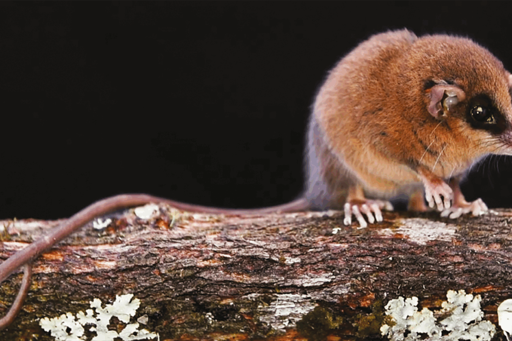
In 2018, Brazilian biologist Silvia Pavan traveled to Río Abiseo National Park, in Peru’s San Martín region, following the trail of a squirrel species first described from there in the 1990s. At the time, Pavan was collecting genetic samples to study the evolution of South American squirrels. She decided to organize an expedition to Río Abiseo to search for additional specimens of an individual squirrel kept in the National Museum of Natural History, which had never been formally named or described. “It was a species known from a single specimen collected a long time ago, for which we had no genetic samples,” Pavan tells Mongabay Latam. “So, I proposed to National Geographic that we organize an expedition to where it had originally been found.” Marmosa chachapoya was discovered in Río Abiseo National Park. Image courtesy of the National Service of State-Protected Natural Areas (SERNANP). During the expedition, the team managed to see the mysterious squirrel only once, Pavan recalls. However, the journey resulted in the discovery of a new marsupial: Marmosa chachapoya. Inhabiting cloud forests, this new-to-science mouse possum was observed at an elevation of 2,664 meters (8,740 feet) in an ecosystem renowned for its high level of endemism. M. chachapoya is likely not the only new-to-science species found here. Researchers have encountered at least two other species of mammal unknown to science, and are now analyzing and processing the data. “Marmosa chachapoya, sp. nov., is one of several recently discovered new species from the Parque Nacional del Río Abiseo,…This article was originally published on Mongabay
From Conservation news via this RSS feed