
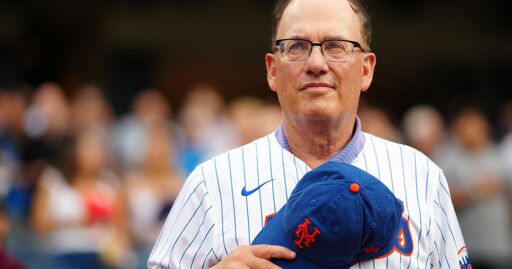
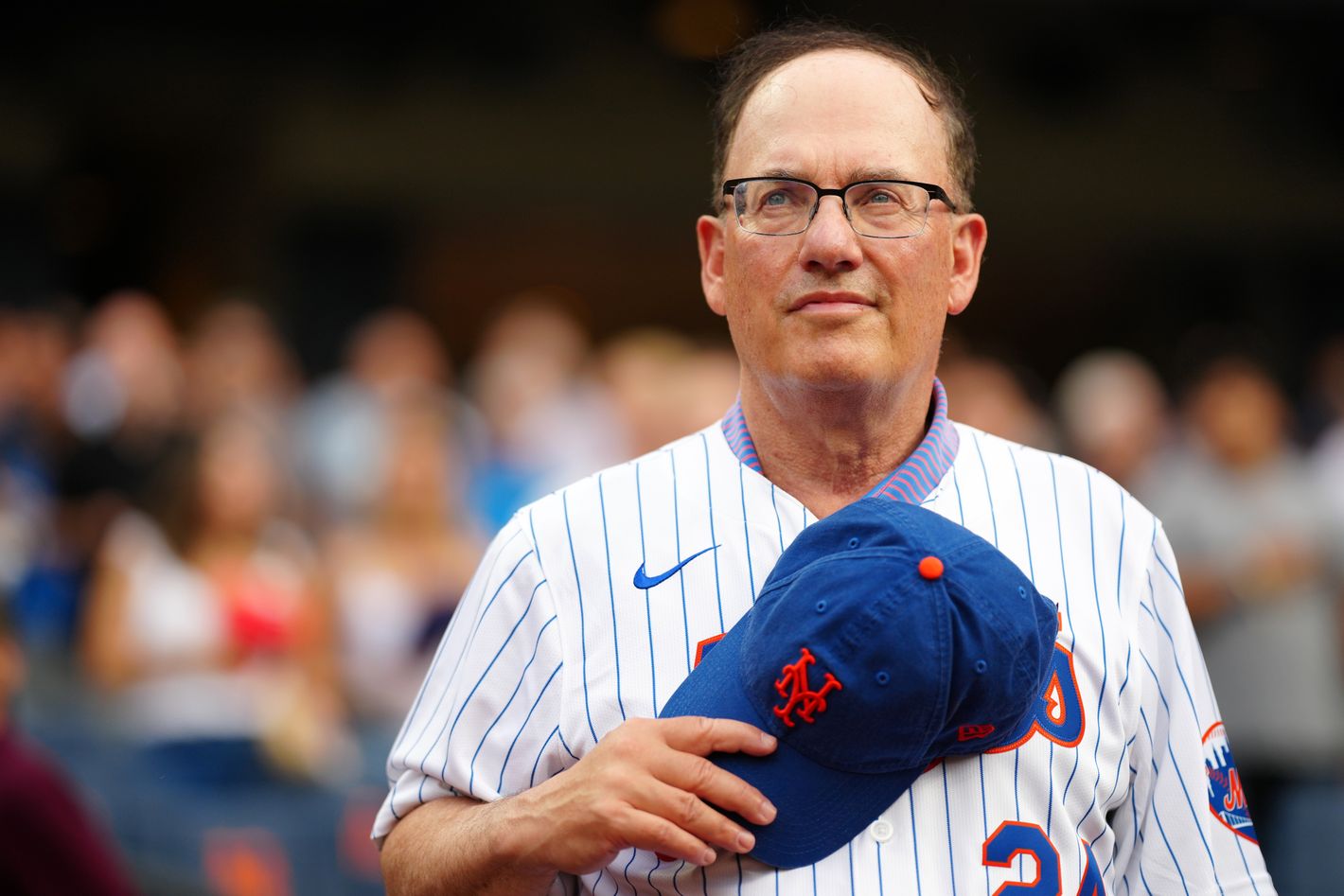
Photo: Daniel Shirey/MLB Photos/Getty Images
Not long after he bought the Mets for $2.4 billion, the hedge-fund baron Steven A. Cohen had a deal in mind that was several times more lucrative. He wanted to build a massive casino and resort next door to the Mets’ home in Queens, Citi Field. If it worked, it would be one of the city’s largest real-estate development projects in decades. But while the deal was potentially more lucrative, it was also politically thorny. The competition to win one of three state-approved licenses to build a casino in the city would be ferocious, and he would have to overcome local opposition to putting legalized gambling in the heart of a working-class community. So in the spring of 2022, Cohen’s deputies started locking down every political operative, community organizer, and local influence-peddler they could.
Over and over again, it looked like the lobbying campaign would collapse under its own weight. There was infighting, shock reversals, and a couple of scandals. But on Monday, a state board awarded Cohen’s firm one of the precious bids. It means Cohen is one last rubber stamp away from winning “a license to print money, literally,” as one casino insider told me last year. But not just that. It means his stature in New York has suddenly grown from merely giant to absolute kaiju-size.
The 78-acre project is expected to cost $6.35 billion to build, plus another $1.75 billion in community infrastructure. Tens of thousands of people will work on and around “Metropolitan Park,” as Cohen’s team is calling it, making him one of the borough’s biggest employers. They’re projecting Metropolitan Park will pay out more than $33.5 billion in taxes alone over 30 years, making him one of the state’s largest taxpayers. Insiders say the State Gaming Commission is all but certain to formally grant the final approval by year’s end. Mayor-elect Zohran Mamdani has gone from casino skeptical to grudging acceptance. Governor Kathy Hochul instantly hailed the “billions in funding” that the three casinos would unlock for the state.
“Steve is already the king of Queens, because of the Mets. This just adds another chapter to the lore,” that same casino insider told me on Monday. “And as much as the guy fucking irritates me, he deserves a lot of credit. It’s going to completely transform that part of Queens, for better or worse. And, you know, it wasn’t easy.”
For starters, all of those fixers Cohen hired for six- and seven-figure contracts — including firms connected to Andrew Cuomo’s former chief of staff, one of Michael Bloomberg’s top aides, and Eric Adams’s top fundraisers — weren’t exactly in love with one another, or with Cohen’s main deputy, Michael Sullivan. The main point of friction: how Sullivan’s aggressive, ostentatious campaigning in Queens was alienating Jessica Ramos, a key state senator with a reputation for being territorial and thin-skinned. “At some point, you bang your head on the window,” one operative in Cohen’s orbit moaned in early 2024. “You know, it’s fine. Maybe I just don’t care.”
Ramos seemed to have a stranglehold on Cohen’s casino. The place where Cohen wanted to put it was technically parkland. By state law and tradition, Ramos, as the resident legislator, had to introduce a special bill to get anything built there. Ramos told me last year she wouldn’t do it — and took aim at Cohen for “holding our entire community hostage” by saying he’d build a casino there or nothing at all. She announced her campaign for mayor four months later.
Cohen’s people kept saying that they’d do an end-run around Ramos. They had experience getting their way with local pols, allegedly threatening one with a primary challenge if he didn’t agree to the casino (a charge that Cohen’s reps denied). Plus, $2 million per year in lobbying costs had to be worth something, right?
In this case, they had a geographical loophole to the law. The tiniest sliver of their proposed resort — not much more than a parking lot on the south side of Roosevelt Avenue — was in the district of another senator, John Liu. He had taken to the pages of the Daily News to blast the idea of casinos coming to the boroughs. “There can be no doubt,” he wrote,” that these casinos “will lead to increased rates of gambling addiction, financial hardship and strained familial relationships for Asian-American New Yorkers.” But Liu, it turns out, also had a price. It was $100 million, which Cohen’s team pledged for a pedestrian and bike bridge that would span the nearby Flushing Creek. Instead of Ramos, Liu introduced the bill needed for Cohen’s casino in the senate, and it passed.
Other obstacles kept coming up. Hard Rock International, Cohen’s gambling partner, was forced to fire a top executive for allegedly violating rules against money laundering. Rival bidders circulated opposition research that Cohen couldn’t meet the state’s character requirements, because of his previous run-ins with the feds and his investments in gunmakers. “Ooooh!” Cohen said sarcastically, when this magazine asked him about it. “My attitude is I’m not worried about it.”
Mamdani, days before the mayoral primary, told reporters he was generally “in opposition to casinos.” He also was famously allergic to billionaires, and Cohen was enough of one to buy the same Picasso twice, the second time for $155 million.
But it was Mamdani who quickly changed his mind. Cohen’s deputy Sullivan had formed key alliances with many of the city’s biggest unions, which believed they could benefit from casino construction. (The billionaire’s chief of staff even referred to them as “my union brothers” at one town hall meeting.) At an event with the Hotel Trades Council, which had made casinos including Cohen’s a top priority, Mamdani said about the casinos, “I’ve been open about my personal skepticism, and yet I also know this is the law.”
Legalized gambling was first introduced to New York State after 9/11, when the legislature okayed slot parlors, mostly connected to local horse racing tracks. About a dozen years later, Albany green-lit licenses for seven full-blown casinos. The first four were reserved for upstate; the remaining three casino licenses were earmarked for the New York City area.
The competition for those licenses started with 11 bids, many of them rather quirky. There was the plan to turn the top three floors of Saks Fifth Avenue flagship into a mini–Monte Carlo and Jay-Z’s bid to turn the old Total Request Live building in Times Square a gambling hall. A private-intelligence guru even pushed for a resort alongside the United Nations building, complete with a giant Ferris wheel — er, scratch that, make it a museum of democracy. One by one, the bids were either dropped or nixed by the local community advisory committees, which had veto power over their neighborhood. A gambling megaplex in Hudson Yards, gone; an Atlantic City remix by the Coney Island boardwalk, out. MAGA superdonor Miriam Adelson withdrew her bid after spending more than $400 million to prep the site of the Nassau Coliseum for gambling. Jay-Z and billionaire developer Marc Holliday took the L after recruiting everyone from the Reverend Al Sharpton to Charlamagne tha God to former NYPD commissioner Bill Bratton to boost their bid.
Finally, there were three bids left for three licenses. Bally’s wanted to convert the old Trump golf course in the Bronx into a resort — a deal that would pay the Trump Organization $175 million. Resorts World wanted to radically expand its low-rent slot parlor by the crumbling Aqueduct race track with help from local celebrities like Nas and Kenny “the Jet” Smith. And then there was the biggest, richest, most complex proposal of all: Cohen’s. It is supposed to include a Radio City–size concert hall, 1,000 hotel rooms, 38,000 square feet of spa and fitness areas, a sportsbook, and 286,000 square feet of gaming space.
The choice was left up to a five-member board, led by a law professor who admitted she had never been in a casino. As expected, they chose all three. Shouts of “Shame on you! Shame on you!” erupted in the CUNY Graduate Center auditorium when the board announced its decision. One of the protesters said Cohen and his fellow casino moguls would turn the city’s poorest, most vulnerable residents into “cash cows.” It’s a fair criticism: gambling — especially gambling like the 5,000 slot machines Cohen intends to install — tends to take money out of working people’s pockets.
How much money, exactly? Recent history isn’t all that promising. One of the casinos in upstate New York had to chase a $585 million deal with the county to stay in business. The local Bally’s casino in Chicago made only half of the $125 million it predicted, as the New York Times recently noted. The Encore casino in Boston keeps seeing its revenue go down and down and down. Resorts World is already talking about negotiating with the state to pay a lower tax rate.
But even if Cohen’s casino brings in only a fraction of its projections, he is now sitting on a gusher of cash and influence. The political muscle he bought as the biggest donor to Eric Adams in 2021 and to the state Democratic committee in 2024 has grown. “Cohen had the hardest play to run in this campaign and ran it,” another casino industry insider told me. In the end, even Jessica Ramos’s representative on her local community advisory committee wound up voting for the billionaire and his casino complex. Ramos claimed that rep went rogue. But one person familiar with her thinking about the Cohen project described it like this: “I did my fucking best here, but this guy’s got way better cards than I do.”
Related
From Intelligencer - Daily News, Politics, Business, and Tech via this RSS feed
You must log in or # to comment.