


his editorial by Diego Torres appears as the introduction to the December 2025 issue of Hablemos de Migración*, a newsletter on migration issues published by the Frente Amplio de Mexicanos y Migrantes. We encourage you to subscribe. The English version of the December 2025 issue is available for download.*

Talking about migration at the end of 2025 implies reflecting on the most relevant events that have marked human mobility in the region. The migratory phenomenon remains profoundly complex and is now largely determined by the policies implemented by US President Donald Trump. His actions and rhetoric have once again placed migrants at the center of public debate, creating an adverse climate characterized by restrictive measures and an openly xenophobic approach.
Talking about migration in the Trump era requires analyzing the measures that his administration will likely deepen even further in the coming months: the expansion of detention centers, the increase in ICE agents, and budget adjustments that, even without being directly directed against the migrant population, will be used to justify confrontational narratives. Likewise, the renegotiation of the USMCA will continue to impact the conditions that force thousands of people to migrate, especially in sectors like Mexican agriculture, historically affected by trade imbalances with the United States.
Talking about migration in the labor sphere means making visible the systematic violations of the rights of undocumented workers. Many people, due to fear or lack of knowledge, do not report labor abuses. Even those who have work permits face exploitative practices, are placed on blacklists, and are subjected to informal mechanisms that prevent them from obtaining employment abroad again if they claim their rights. This reality unfolds in a context of limited institutional response from the Mexican government.

Talking about migration within the framework of the USMCA review opens an opportunity to demand that workers be included in negotiation processes. This applies both to those who work in Mexico—who may migrate if the structural inequalities embedded in the agreement are not corrected—and to temporary workers in Canada and the United States, who require their rights to be effectively guaranteed. The persistence of labor schemes resembling modern forms of servitude highlights the urgency of a stronger state intervention.
Talking about migration, during a period traditionally associated with what we call “reverse migrant caravans”—migrants with documents who temporarily travel south for the year-end holidays—reveals that even this group has been affected by the tightening of U.S. policies. Temporary workers, legal residents, and even U.S. citizens of Latin American descent have avoided traveling outside the country for fear of facing obstacles upon their return.
Talking about migration, in the face of migratory flows that—although momentarily reduced due to the current climate of uncertainty—will persist as long as poverty and violence continue (not necessarily linked to one another) in various regions of the country, forces us to recognize the growing influence of organized crime in irregular mobility. Migration has become a highly profitable illicit market, making its eradication extremely difficult and exacerbating violations of the rights of people in transit.
Talking about migration also means acknowledging that neither the United States nor Mexico has demonstrated—nor will they demonstrate— sufficient political will to meaningfully address the root causes of irregular human mobility. In the United States, undocumented migration provides cheap labor and sustains industries such as private detention centers, agriculture, the service sector, and construction. In Mexico, remittances— which represent more than sixty billion dollars annually— have created a structural dependency that discourages comprehensive return and reintegration policies. Simultaneously, organized crime continues to profit from smuggling, extortion, kidnapping, the forced use of migrants in illicit activities, and human trafficking.
Talking about migration also means acknowledging that neither the United States nor Mexico has demonstrated—nor will they demonstrate— sufficient political will to meaningfully address the root causes of irregular human mobility.
Talking about migration, with regard to groups in vulnerable situations, requires acknowledging the structural gaps faced by women, Indigenous peoples, children and adolescents, and LGBTQ+ individuals. Lack of opportunities, discrimination, and multiple forms of violence compel them to migrate, exposing them to additional risks duringtheir journey and upon arrival.
Talking about migration also means warning migrant communities about the complex scenario projected for the coming months. Nevertheless, history shows that migrant communities have been capable of organizing, resisting, and advancing— even in adverse contexts. In the United States, diverse social sectors have begun to express their rejection of Trump’s policies, as demonstrated by the No King mobilization, which has helped highlight the importance of defending migrants’ rights.
Talking about migration on the threshold of a new year allows us to call on the Mexican state to strengthen support mechanisms for detained migrants and, at the same time, promote policies that expand economic, labor, and social opportunities, enabling the regular, orderly, and voluntary return of those who wish to come back.

Let’s Talk About Migration
December 2, 2025December 2, 2025
Trump’s actions & rhetoric have once again placed migrants at the center of public debate, creating an adverse climate characterized by restrictive measures & open xenophobia.
Crisis in Puebla’s Countryside
December 2, 2025December 2, 2025
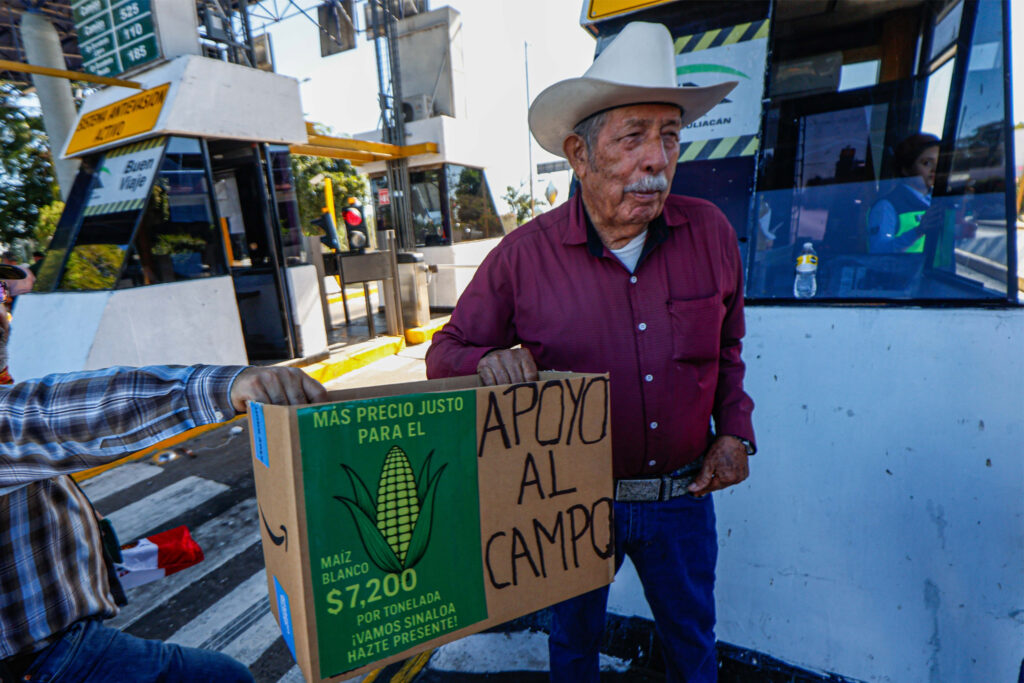
INEGI figures prove it: agriculture in Puebla state is collapsing. In one year, 103,219 workers, almost 20% of the agricultural workforce, lost their jobs.

People’s Mañanera December 2
December 2, 2025December 2, 2025
President Sheinbaum’s daily press conference, with comments on 8.8 million house calls & pharmacare for senior citizens, Dignified Treatment, Ricardo Salinas tax debt, remittances, digital dirty war, & Pope Leo XIV.
The post Let’s Talk About Migration appeared first on Mexico Solidarity Media.
From Mexico Solidarity Media via this RSS feed