

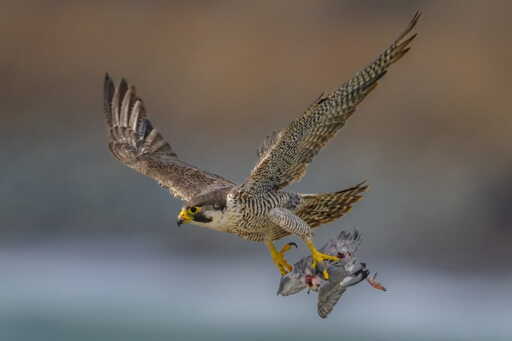
The U.S. and Canada have failed in their bid to loosen restrictions on the international trade in peregrine falcons, with delegates to CITES, the global wildlife trade convention, voting against it at an summit underway in Samarkand, Uzbekistan. The two countries had submitted a joint proposal to move peregrine falcons (Falco peregrinus) from CITES Appendix I, which bans all commercial international trade and affords the highest protections, to Appendix II, which allows regulated commercial trade with necessary import and export permits. Peregrine falcons are the most widespread raptors on Earth, with 19 subspecies found on all continents except Antarctica. They nest in high cliffs on coasts, in mountains, and even skyscrapers in cities. In the mid-20th century, indiscriminate use of pesticides pushed these birds to the brink of extinction. Canada, which introduced the proposal on the floor at the meeting, said the species is now classified as least concern on the IUCN Red List, having bounced back from historic lows, and therefore doesn’t require full protection from trade. However, falcon scientists had slammed this argument ahead of the CITES summit, citing concerns that many subspecies from Asia, Africa and South America weren’t included in the IUCN’s global assessment. Given that these subspecies are understudied, it’s unclear how their populations are faring in the wild, the scientists said. Even among the well-studied subspecies, scientists have noticed recent declines in Sweden, Canada and the U.S., although it’s not clear why. Scientists say they suspect bird flu might be a factor. Canada and…This article was originally published on Mongabay
From Conservation news via this RSS feed