

This is an edition of The Atlantic Daily, a newsletter that guides you through the biggest stories of the day, helps you discover new ideas, and recommends the best in culture. Sign up for it here.
Think of the cattle auctioneer’s chant as a prayer. To the untrained ear, it’s nonsense, a stream of words compressed beyond recognition. If you know what to listen for, phrases emerge from the hum and buzz: Will you go four? Will you give five? The job of the auctioneer is to whip bidders into a frenzy, selling cows, heifers, bulls, and steers at the highest price possible through the power of constant supplication.
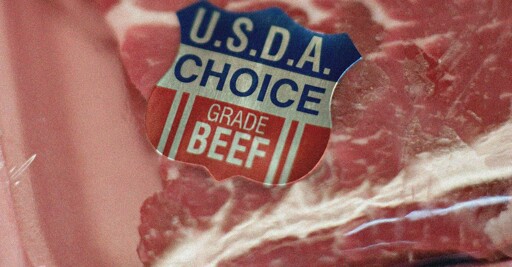
Until recently, those prayers had been answered. Feeder-cattle futures traded up through the fall, driven in part by President Donald Trump’s tariffs on foreign-food imports. Beef prices reached new highs this year too. Ground-beef is up more than 50 percent compared with 2020 (and some restaurants have adjusted their menus accordingly); next year, they could be 60 percent higher than they were this September. But growing concerns about inflation and affordability seem to have forced Trump to reconsider his trade-war strategy: Ahead of Thanksgiving, he announced that he was rolling back tariffs on beef. Prices at grocery stores haven’t budged, and ranchers, whose fortunes rose with those tariffs, are now suddenly at odds with a president who was once their champion.
The prices of cattle (the animals themselves) and beef (the processed meat on grocery-store shelves) have recently moved in tandem, but that’s not always the case. That may sound counterintuitive, given that the only ingredient in beef is cattle, but behind this relationship is a quagmire of competing interests and supply chains. It’s a long way from the pasture to the grocery store—cattle producers sell animals to feedlots and meat-packers, who then funnel beef to retailers. When the president took to Truth Social in October to demand that ranchers “get their prices down,” he failed to acknowledge that producers don’t control the cost of beef on their own.
High beef prices are also connected to broader issues shrinking the American herd: a major drought across western states in 2020, and the resurgence of the New World screwworm, a parasite that eats animals alive. The American cattle herd is now the smallest it’s been since 1951. When tariffs restricted foreign imports, meat-packers had to pay more for this decreasing supply, exerting upward pressure on beef prices. And yet, according to the trade publication Beef Magazine, demand has been remarkably stable over the past four years.
For Americans, the world’s biggest consumers of beef per capita, that consistency could have something to do with meat’s place in our culture. Beef products, and the cowboys that were once central to their production, are core to the national mythos. Protein is king these days; Robert F. Kennedy Jr., the secretary of Health and Human Services, adheres to a carnivore diet and plans to “Make America Healthy Again” by updating U.S. dietary guidelines to recommend more meat.
Trump appears to understand that a government that tells its citizens to consume more meat should also do its part to make meat more accessible. Two weeks ago, he dramatically reduced a tariff on Brazilian beef imports. His administration has also suggested that it will raise the quota for duty-free imports of Argentinian beef from 20,000 to 80,000 metric tons. Trump’s recent moves are a boon to American meat-packers who can buy more foreign beef on the cheap, but his capricious attitude toward tariffs poses a problem for ranchers, who raise cattle with the expectation of selling them years later. Each calf represents a long-term bet; why should producers invest in growing the herd when crucial policies seem to change every few months?
It’s unclear how much the influx of foreign product will affect grocery-store beef prices in the long term, but cattle prices have fallen since the White House announced these adjustments. The National Cattlemen’s Beef Association said in a statement that it “cannot stand behind the President while he undercuts the future of family farmers and ranchers.” An industry insider told Al Jazeera that “there was not a person in the cattle business on any level that was not insulted” by Trump’s October Truth Social post, in which he reminded cattle producers that his past tariff on Brazilian beef was “the only reason” they “are doing so well, for the first time in decades.”
The sky-high tariffs Trump suddenly implemented earlier this year were meant to rectify what he saw as global-trade imbalances—unfair deals that harmed Americans’ bottom line. But perhaps their greatest legacy for consumers has been higher prices on a wide variety of goods against a backdrop of rising inflation. “The average family will pay $1,800 more for groceries, clothing, and other necessities thanks to the Trump administration’s trade policies in 2025,” my colleague Annie Lowrey wrote last month. Now, as tariffs are being rolled back with the same apparent recklessness, ranchers are learning that loyalty to the president will get them only so far.
Related:
David Frum: Where’s the cheap beef? (From 2021)America is done pretending about meat.
Here are three new stories from The Atlantic:
Hegseth risked endangering troops with Signal messages.What Josh Shapiro knows about Trump votersCondemning millions for one man’s crime
Today’s News
The House Oversight Committee obtained new records from major financial institutions tied to its Jeffrey Epstein probe and released images and video of Epstein’s private island supplied by authorities in the U.S. Virgin Islands.Homeland Security Secretary Kristi Noem said that agents from her department have begun “Operation Catahoula Crunch” in New Orleans, targeting undocumented immigrants.The Trump administration halted green-card and citizenship processing for immigrants from 19 countries that had been placed under travel restrictions earlier this year.
Dispatches
The Weekly Planet: Electricity should be free at noon, Leah C. Stokes argues.
Explore all of our newsletters here.
Evening Read

Illustration by Paul Spella / The Atlantic
Why Taylor Swift’s Accent Has Changed
By Olga Khazan
As [Taylor] Swift’s star rose, something else shifted: her voice. Researchers at the University of Minnesota analyzed recorded interviews with Swift throughout her career and found that after she moved to Tennessee, she picked up a southern accent. She began to pronounce my like “mah” and boom like “bee-oom”—features not typically present in a Pennsylvania accent. Matthew Winn, a co-author of the study, told me that these changes suggest that Swift’s voice subtly altered to fit in with the Nashville scene. “If you sing country music but you talk like someone from New York or Pennsylvania,” Winn said, “people might not take you as seriously.”
More From The Atlantic
Gershom Gorenberg: The extraordinary logic of Netanyahu’s bid for a pardonDoes Heritage support discrimination against women?Ukraine’s corruption scandal is bad. But exposing it is a win.Colleges are preparing to self-lobotomize.
Culture Break

Illustration by The Atlantic. Sources: Leonardo Cendamo / Getty; Patrick Lichfield / Condé Nast / Getty.
Read. Stylish face? Secret visionary? A new book argues for the underrated part of Jane Birkin’s legacy, Rafaela Bassili writes.
Reminisce. Tom Stoppard achieved the impossible, Alexandra Petri writes. His plays hold us in the moment outside of time.
PS
Over the past few weeks, I have become totally fixated on CattleUSA.com, which hosts livestreams directly from animal exchanges and stockyards. These auction houses look remarkably similar across the country: odeums bathed in cold fluorescents, with seats facing the auctioneer’s booth. Beneath the booth is the pen, where staffers guide animals through the In door and prod them through the Out. Sometimes, you can catch a goat auction too. I can’t quite put my finger on what’s so mesmerizing about it all, but I recommend checking it out, even if you’re not in the market.
— Will
Rafaela Jinich contributed to this newsletter.
When you buy a book using a link in this newsletter, we receive a commission. Thank you for supporting The Atlantic*.*
From The Atlantic via this RSS feed
You must log in or # to comment.