

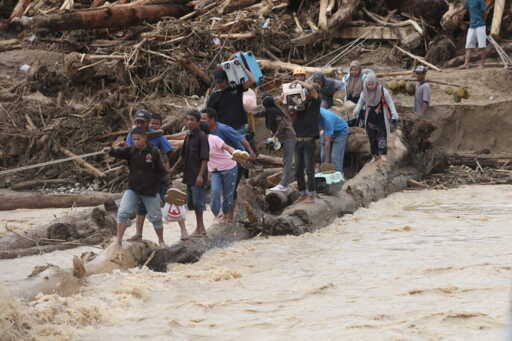
At least 1,400 people have died as a result of flooding and landslides across Sri Lanka, Indonesia, Thailand and Malaysia, with many more still missing. The unusual combination of a tropical typhoon and two tropical cyclones is behind the mounting humanitarian disaster. Scientists and meteorologists note that Cyclone Senyar formed just north of the equator, which is extremely unusual. The unlikely phenomenon and combination of three separate storms have turbo-charged the damage across the region. “I have covered natural disasters, and usually, there is an area where landslides are contained, but this time, landslides have affected all the villages that we saw as we made our way here,” Al Jazeera reporter Jessica Washington said of her on-the-ground observations in Sumatra, an island in northern Indonesia with a population of 60 million. In Thailand, the city of Hat Yai near the Malaysian border experienced 335 millimeters (13 inches) of rain in one day, the highest rainfall recorded there in 300 years. “By 9 a.m., the water was chest deep,” gas station worker Jantarakarn Kaewjan from Hat Yai told Reuters. “It was all caused by rain.” Typhoon Koto in the South China Sea traveled from the Philippines toward Vietnam while Cyclone Ditwah caused devastation across the southern tip of Sri Lanka. At the same time, the Malacca Strait, a narrow strip of water between Malaysia and Indonesia, very near the equator, experienced a cyclone, Cyclone Senyar, for the first time in 135 years. “This is something we haven’t seen before in our…This article was originally published on Mongabay
From Conservation news via this RSS feed
You must log in or # to comment.