
Photo: Peter D. Blair/Getty Images
The on-again, off-again search for the wreckage of the Malaysian airliner that went missing 11 years ago is back on. On Wednesday, the country’s transportation ministry announced that marine-survey company Ocean Infinity would begin scanning the Indian Ocean seabed on December 30, with the project set to take 55 days, conducted “intermittently.”
MH370, which took off from Kuala Lumpur on March 8, 2014, was scheduled as a red-eye flight to Beijing and carried 239 passengers and crew members. But the Boeing 777 went electronically dark 40 minutes into the flight, and mysterious satellite communications signals later indicated that it had flown to a remote area of the southern Indian Ocean before evidently crashing. Only a few dozen pieces of debris have ever been found.
The new search appears to be a continuation of an effort Malaysia first announced last November, when it said Ocean Infinity would be searching about 6,000 square miles under the terms of a “no find, no fee” deal that would see Malaysia pay the company $70 million only if it found the plane’s wreckage.
Ocean Infinity, which operates a fleet of more than a dozen marine-survey vessels all around the world, had previously scanned a much larger area of 43,000 square miles in just three months, so the new mission is relatively modest in scope. In March, the company dispatched a 256-foot vessel called Armada 78 06 approximately 1,000 miles west of Perth, Australia. There, the vessel scanned an area that had already been searched, but thanks to gaps in the data, it was possible the wreckage was missed. The vessel then searched a new area nearby that a pair of independent French investigators had identified as a likely end point.
All in all, Armada 78 06 covered about 2,000 square miles, or roughly a third of the previously announced area. Having found nothing, Ocean Infinity paused the search on April 3. “I think right now it’s not the season,” Malaysia’s transport minister said, referring to the onset of winter in the Southern Hemisphere. “I think they … will resume the search at the end of this year.”
Now summer is about to return, and conditions are favorable to tackle the remaining two-thirds of the project. The vessel most likely to carry out the work is the state-of-the-art Armada 86 05, which was launched early this year. Though the ship is capable of operating autonomously, in this case, it will likely carry a human crew. The vessel is currently engaged in a project to scan for historical shipwrecks in the San Bernardino Strait, between the Philippine islands of Samar and Luzon. After that work is completed, Armada 86 05 will likely steam 1,500 miles west to Singapore, where it will refuel and take on fresh supplies and crew before sailing 2,700 miles southwest to the search area, an abyssal plain approximately three miles deep.
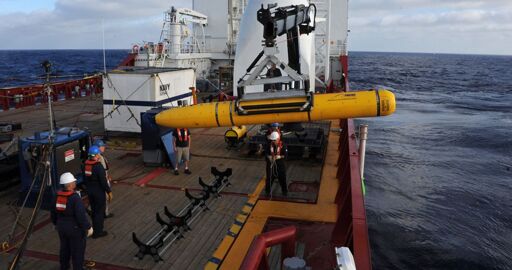
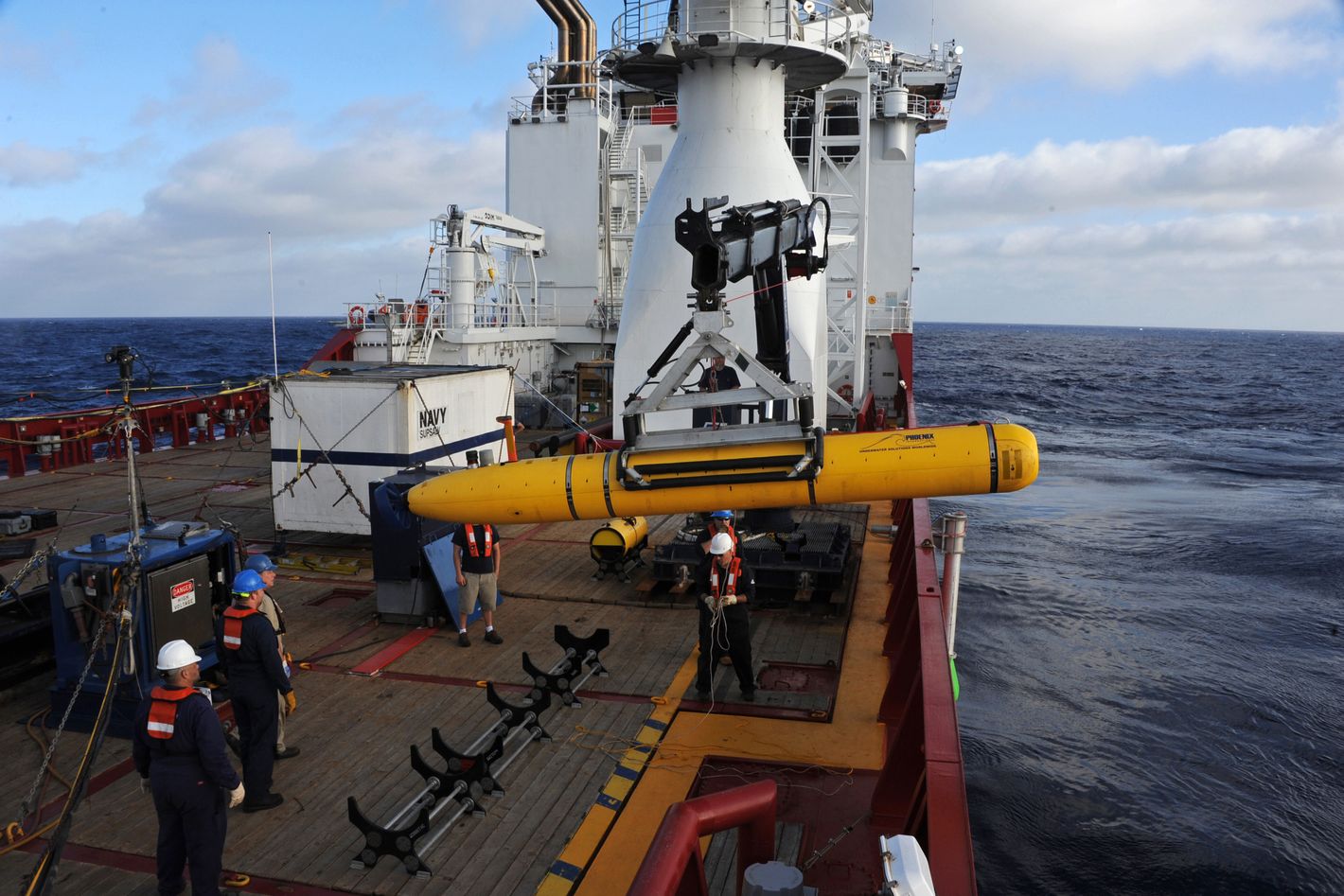
Once on station, the ship will deploy three Hugin AUVs, or autonomous underwater vehicles. These robot subs, which resemble bright-orange torpedoes, are capable of operating at depths of nearly four miles for up to three days before they need to be retrieved and recharged. Each AUV can cover about 42 square miles per day with its side-scan sonar, which produces photograph-like images. Given that rate of coverage, the three AUVs could, in theory, cover the remaining 4,000 square miles in about a month. But Ocean Infinity is busy with many marine-survey projects around the world, so the ship might be needed elsewhere before it can finish in one go.
One of the great puzzles of the MH370 disappearance is why the plane’s wreckage hasn’t already been located on the seabed. After the plane disappeared from Malaysian radar, a piece of communications equipment that had been turned off was mysteriously turned back on again. The equipment then began transmitting signals that, because of a malfunction in the system, turned out to include hints as to where the plane had gone. Australian government scientists used that data to create a map showing the plane’s most likely location. They calculated that an area of 46,000 square miles had a 97 percent chance of containing the wreckage. But the wreckage wasn’t found there, nor in the additional 43,000 square miles Ocean Infinity subsequently searched.
That absence suggests something really unusual happened. Signals sent to Inmarsat soon after the plane ran out of fuel indicates that the plane was in a near-vertical dive. The fact that the plane’s wreckage hasn’t been found in the vicinity implies that someone in the cockpit — presumably the captain, Zaharie Ahmad Shah — manually pulled the plane out of the dive and into a glide that took it beyond the search area. But then, instead of easing the plane into the water Sully-style, that person seemingly crashed it violently into the ocean, based on the small size of interior cabin debris that later washed ashore in the western Indian Ocean.
It’s hard to imagine why Shah, or anyone else, would have wanted to behave in such a way. But if the search is unsuccessful, even stranger possibilities will have to be considered.
From Intelligencer - Daily News, Politics, Business, and Tech via this RSS feed
You must log in or # to comment.