

As of December 1, officials across the U.S. have executed 44 people in 11 states, making 2025 one of the deadliest years for state-sanctioned executions in recent history. According to the Death Penalty Information Center, three more people are scheduled for execution before the new year.
The justification for the death penalty is that it’s supposed to be the ultimate punishment for the worst crimes. But in reality, who gets sentenced to die depends on things that often have nothing to do with guilt or innocence.
[
Related
By Any Measure, Capital Punishment Is a Failed Policy](https://theintercept.com/2019/12/03/death-penalty-capital-punishment-data/)
Historically, judges have disproportionately sentenced Black and Latino people to death. A new report from the American Civil Liberties Union released in November found that more than half of the 200 people exonerated from death row since 1973 were Black.
Executions had been on a steady decline since their peak in the late 1990s. But the numbers slowly started to creep back up in recent years, more than doubling from 11 in 2021 to 25 last year, and we’ve almost doubled that again this year. Several states have stood out in their efforts to ramp up executions and conduct them at a faster pace — including Alabama.
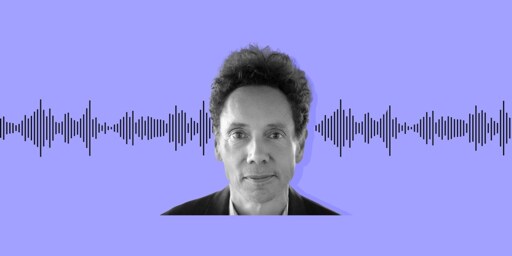
Malcolm Gladwell’s new podcast series “The Alabama Murders” dives into one case to understand what the system really looks like and how it operates. Death by lethal injection involves a three-drug protocol: a sedative, a paralytic, and, lastly, potassium chloride, which is supposed to stop the heart. Gladwell explains to Intercept Briefing host Akela Lacy how it was developed, “It was dreamt up in an afternoon in Oklahoma in the 1970s by a state senator and the Oklahoma medical examiner who were just spitballing about how they might replace the electric chair with something ‘more humane.’ And their model was why don’t we do for humans what we do with horses?”
Liliana Segura, an Intercept senior reporter who has covered capital punishment and criminal justice for two decades, adds that the protocol is focused on appearances. “It is absolutely true that these are protocols that are designed with all of these different steps and all of these different parts and made to look, using the tools of medicine to kill … like this has really been thought through.” She says, “These were invented for the purpose of having a humane-appearing protocol, a humane-appearing method, and it amounts to junk science.”
Listen to the full conversation of The Intercept Briefing on Apple Podcasts, Spotify, or wherever you listen.
Transcript
Akela Lacy: Malcolm and Liliana, welcome to the show.
Malcolm Gladwell: Thank you.
Liliana Segura: Thank you.
AL: Malcolm, the series starts by recounting the killing of Elizabeth Sennett, but very quickly delves into what happens to the two men convicted of killing her, John Parker and Kenny Smith. You spend a lot of time in this series explaining, sometimes in graphic detail, how the cruelty of the death penalty isn’t only about the execution, but also about the system around it — the paperwork, the waiting. This is not the kind of subject matter that you typically tackle. What drew you to wanting to report on the death penalty and criminal justice?
MG: I wasn’t initially intending to do a story about the death penalty. I, on a kind of whim, spent a lot of time with Kate Porterfield, who’s the psychologist who studies trauma, who shows up halfway through “The Alabama Murders.”
I was just interviewing her about, because I was interested in the treatment of traumatized people, and she just happened to mention that she’d been involved with the death penalty case — and her description of it was so moving and compelling that I realized, oh, that’s the story I want to tell. But this did not start as a death penalty project. It started as an exploration of a psychologist’s work, and it kind of took a detour.
AL: Tell us a little bit more about how the bureaucracy around the death penalty masks its inherent cruelty.
MG: There’s a wonderful phrase that one of the people we interviewed, Joel Zivot, uses. He talks about how the death penalty — he was talking about lethal injection, but this is also true of nitrogen gas — he said it is the impersonation of a medical act. And I think that phrase speaks volumes, that a lot of what is going on here is a kind of performance that is for the benefit of the viewer. It has to look acceptable to those who are watching, to those who are in society who are judging or observing the process.
“They’re interested in the impersonation of a medical act, not the implementation of a medical act.”
It is the management of perception that is compelling and driving the behavior here — not the actual treatment of the condemned prisoner him/herself. And once you understand that, oh, it’s a performance, then a lot of it makes sense.
One of the crucial moments in the story we tell is, where there is a hearing in which the attorneys for Kenny Smith are trying to get a stay of execution, and they start asking the state of Alabama, the corrections people in the state of Alabama to explain, did they understand what they would do? They were contemplating the use of nitrogen gas. Did they ever talk to a doctor about the risks associated with it? Did they ever contemplate any of the potential side effects? And it turns out they had done none of that. And it makes sense when you realize that’s not what they’re interested in.
They’re interested in the impersonation of a medical act, not the implementation of a medical act. The bureaucracy is there to make it look good, and that was one of the compelling lessons of the piece.
AL: And it’s impersonating a medical act with people who are not doctors, right? Like people who are not, do not have this training.
MG: In that hearing, there’s this real incredible moment where one of the attorneys asks the man who heads Alabama’s Department of Corrections, did you ever consult with any medical personnel about the choice of execution method and its possible problems? And the guy says no. You just realize, they’re just mailing it in. Like they have no — the state of Alabama is not interested in exploring the kind of full implications of what they’re doing. They’re just engaged in this kind of incredibly slapdash operation.
“It has to look acceptable to those who are watching, to those who are in society who are judging or observing the process.”
AL: Liliana, I wanna bring you in here. You’ve spent years reporting on capital punishment in the U.S. and looked into many cases in different states. Why are states like Florida and Alabama ramping up the number of executions? Is it all politics? What’s going on there?
LS: That is one of the questions that I think a lot of us who cover this stuff have been asking ourselves all year long. And to some degree, it’s always politics. The story of the death penalty, the story of executions, so often really boils down to that.
We are in a political moment right now where the climate around executions, certainly, but I think in general, the kind of appetite for or promotion of vengeance and brutality toward our enemies is really shockingly real right now. And I was reluctant about a year ago to really trace our current moment to Trump. The death penalty has been a bipartisan project; I don’t want to pretend like this is something that begins and ends with somebody like Trump. That said, it’s really shocking to see the number of executions that are being pushed through, especially in Florida. And this is something that has been ramped up by Gov. DeSantis for purely political reasons. This death penalty push in Florida began with his political ambitions when he was originally going to run for president. And I think that to some degree is a story behind a lot of death penalty policy, certainly going back decades, and certainly speaks to the moment we’re in.
[
Related
“Agony” and “Suffering” as Alabama Experiments With Nitrogen Executions](https://theintercept.com/2024/10/08/alabama-nitrogen-gas-execution-alan-miller/)
I did want to just also touch on some of what Malcolm was talking about when it comes to the performance of executions themselves. Over the past many years, I’ve reported on litigation, death penalty trials, that have taken place in states like Oklahoma and here in Tennessee where I live, where we restarted executions some years ago after a long time of not carrying any out. And these trials had, at the center, the three-drug protocol that is described so thoroughly in the podcast.
It is absolutely true that these are protocols that are designed with all of these different steps and all of these different parts and made to look — using the tools of medicine to kill — and made to look like this has really been thought through. But when you really trace that history — as you do, Malcolm, in your podcast — there’s no there there. These were invented for the purpose of having a humane-appearing protocol, a humane-appearing method, and it amounts to junk science. There was no way to test these methods. Nobody can tell us, as you described in your podcast, what it feels like to undergo this execution process. And I think it’s really important to remember that this is not only the story of lethal injection, this is the story of executions writ large.
When the electric chair came on the scene generations ago, it was also touted as the height of technology because it was using electricity and it was supposed to be more humane than hanging. There had been botched hangings that were seen as gruesome ordeals. So there’s this bizarre way in which history repeats itself when it comes to these methods that are promoted as the height of modernity and humanity —and it’s just completely bankrupt and false.
AL: Malcolm, do you want to add something?
MG: Yeah, we have a big focus in the case I’m describing, Kenny Smith, was notorious because he had a botched execution where they couldn’t find a vein. And one of the points that Joel Zivot makes is that, of course, it’s not surprising that they, in that case and in many others, they can’t find a vein because that is a medical procedure that is designed to be undertaken in a hospital setting by trained personnel with the cooperation of the patient. Usually we’d find a vein, and the patient cooperates because we’re trying to save their life or make them healthier. This is a use of this procedure that is completely different. It is outside of a medical institution, not being done by people who are experienced medical professionals, and is not being done with the cooperation of the patient. The patient in this case is a condemned prisoner who is not in the same situation as someone who’s ill and trying to get better.
AL: I want to just walk our listeners through this. So this is, again, one of the pieces of the series, this three-drug protocol. First there’s a sedative, then there’s a paralytic, and then there’s finally potassium chloride, which is supposed to stop the heart. How did that protocol come to be developed?
MG: It was dreamt up in an afternoon in Oklahoma in the 1970s by a state senator and the Oklahoma medical examiner who were just spitballing about how they might replace the electric chair with something “more humane.”
And their model was, well, why don’t we do for humans what we do with horses? Which was a suggestion that had come from Ronald Reagan, then governor of California. So they just generally thought, well, we can do a version of what we do in those instances, only we’ll just ramp up the dose. This is also a kind of anesthesia sometimes.
AL: This is advertised as something that is supposed to be painless.
MG: And these drugs were also in use in the medical setting, but their idea was, we’ll take a protocol that is loosely based on what is used in a medical setting and ramp up the doses so that instead of merely sedating somebody, we’re killing them.
“ It wasn’t thought through, tested, analyzed, peer-reviewed. It was literally two guys.”
And it wasn’t thought through, tested, analyzed, peer-reviewed. It was literally two guys, dreaming up something on the back of an envelope. And one of the guys, the medical examiner, later regretted his part in the whole procedure, but the genie was out of the bottle. And everybody jumped on this as an advance over the previous iteration of killing technology.
AL: In addition to being advertised as painless, it’s also supposed to be within the bounds of the Eighth Amendment protection against cruel and unusual punishment. Can you tell us about that?
MG: In order to satisfy that prohibition against cruel and unusual punishment, you have to have some insight as to what the condemned prisoner is going through when they are being subjected to this protocol. The universe of people engaged in the capital punishment project were universally indifferent to trying to find out how exactly this worked. They weren’t curious at all to figure out, for example, was there any suffering that was associated with this three-drug protocol, or which of the three drugs is killing you? Or, I could go on and on and on.
They just implemented it and because it looked good from the outside, because you have given someone a sedative and a paralytic, it’s impossible to tell from the outside whether they’re going through any kind of suffering. It was just assumed that there should be no, there must be no suffering going on the inside.
And the Eighth Amendment does not say that people should not be subjected to the appearance of cruel and unusual punishment. It says, no, the actual punishment itself for the individual should not be cruel and unusual. So there was, at no point could anyone, in the early history of this, did anyone truly satisfy the intent of the Eighth Amendment.
AL: Liliana, you’ve written a lot about this protocol as well, and the Supreme Court has taken a stance on it. Tell us about that.
[
Related
When It Comes to the Death Penalty, the Supreme Court Legalized Torture Long Ago](https://theintercept.com/2019/04/06/supreme-court-death-penalty-torture-bucklew/)
LS: So one thing that’s really important to understand about the Eighth Amendment and the death penalty in this country is that the U.S. Supreme Court has weighed in on the death penalty numerous times, but has never invalidated a method of execution as violating the Eighth Amendment ban on cruel and unusual punishment. And that fact right there I think speaks volumes.
But one of the cases that I go back to over and over again in my work about lethal injection and about other execution methods, dates back to the 1940s, and it’s a case involving a man named Willie Francis, who was a teenager, a Black teenager who had been condemned to die in Louisiana. They sent him to the electric chair in 1946, and he survived. He survived their initial attempts to execute him. It’s a grotesque ordeal, there’s been a lot written historically about this.
That case, they stopped the execution. He appealed to the U.S. Supreme Court, and a majority of justices found that attempting to kill him again, wouldn’t violate the Eighth Amendment, and they sent him back in 1947, they succeeded in killing him. But the language that comes out of the court in this case really goes a long way to helping us understand how we ended up where we are now. They essentially said, “Accidents happen. Accidents happen for which no man is to blame.” And there’s another turn of phrase that’s really galling in which essentially they call this ordeal that he suffered “an innocent misadventure.” And this language, this idea that this was an innocent misadventure finds its way into subsequent rulings decades later.
So in 2008, I believe it was, the U.S. Supreme Court took up the three-drug protocol, which at the time was being used by Kentucky. This was a case called Baze v. Rees. There was a lot of evidence, there was a lot that the justices had to look at that should have given them pause about the fact that this protocol was not rooted in science. That there had been many botched executions — in terms of the inability to find a vein, in terms of evidence that people were suffering on the gurney.
[
Related
Chilling Testimony in a Tennessee Trial Exposes Lethal Injection as Court-Sanctioned Torture](https://theintercept.com/2018/08/05/death-penalty-lethal-injection-trial-tennessee/)
The U.S. Supreme Court upheld that protocol, and yet right around the time that they handed down that ruling, states began tinkering with the lethal injection protocol that had been the prevailing method for so long.
Without getting too deep in the weeds, the initial drug — the drug that was supposed to anesthetize people who were being killed by lethal injection — had been originally a drug called sodium thiopental, which was thought to be, believed to be, for good reasons something that could basically put a person under, where they wouldn’t necessarily feel the noxious effects of the subsequent drugs. States were unable to get their hands on this drug for a number of reasons, and subsequently began swapping out other drugs to replace that drug. And different states tried different things. A number of states eventually settled on this drug called midazolam, which is a sedative, which does not have the same properties as the previous drug — and over and over again, experts have said that this is not a drug that’s going to be effective in providing and anesthetizing people for the purpose of lethal injection.
The Supreme Court once again ruled that this was true. In Oklahoma, this was the case Glossip v. Gross, which the Supreme Court heard after there had been a very high profile really gruesome, botched execution, a man named Clayton Lockett who was executed in 2014. This ended up going up to the Supreme Court. And I covered that oral argument and what was really astonishing about that oral argument wasn’t just how grotesque it all was, but the fact that the justices were very clearly, very annoyed, very cranky about the fact that, only a few years after having upheld this three-drug protocol, now they’re having to deal with this thing again. And again, they upheld this protocol, despite a lot of evidence that this was completely inhumane, that there was a lot of reason to be concerned that people were suffering on the gurney, while being put to death by lethal injection.
And so the reason I go back to the Willie Francis case is that it really tells us everything that we need to know. Which is that if you have decided that people condemned to die in this country are less than human, and that their suffering doesn’t matter, then there’s no limits on what you are willing to tolerate in upholding this death protocol that we’ve invented in this country. And so the Supreme Court has weighed in not only on the three-drug protocol, but on execution methods in general. And they have always found that there’s not really a problem here.
“If you have decided that people condemned to die in this country are less than human, and that their suffering doesn’t matter, then there’s no limits on what you are willing to tolerate in upholding this death protocol that we’ve invented in this country.’
MG: At a certain point, it becomes obvious that the cruelty is the point. The Eighth Amendment does not actually have any kind of impact on their thinking because they are anxious to preserve the very thing about capital punishment that is so morally noxious, which is that it’s cruel.
AL: Malcolm, one interesting thing that you talk about in this series is this concept of judicial override in Alabama, where a judge was able to impose a death sentence even if the jury recommended life in prison. This went on until 2017. As we know, death penalty cases can take decades, so it’s possible that there are still people on death row who have been impacted by judicial override. What’s your sense about how judges who went that route justified their decisions, if at all?
MG: So Alabama was one of a small number of states who, in response to the Supreme Court’s hesitancy about capital punishment in the 1970s, instituted rules which said that a judge can override a jury’s sentencing determination in a capital case.
So if a jury says, “We want life imprisonment without parole,” the judge could impose a death penalty or vice versa. The motivation for these series of override laws — and there are only about three or four states in Florida, Alabama, a couple of others had them — is murky. But I suspect what they wanted to do was to guard against the possibility that juries would become overwhelmingly lenient.
The concern was that if the public sentiment was moving away from death penalty to the extent that it would be difficult to impose a death penalty in capital cases, unless you allowed judges to independently assert their opinion when it came to sentencing. And I also suspect that there’s, in states like Alabama, there was a little bit of a racial motivation that they thought that Black juries would be unlikely to vote for the death penalty for Black defendants, and they wanted to reserve the right to act in those cases.
And what happens in Alabama is that other states gradually abandon this policy, but Alabama sticks to it — not only that, they have the most extreme version of it. They basically allow the judge to overrule under any circumstances without giving an explanation for why.
And when they finally get rid of this, they don’t make it retroactive. So they only say, “Going forward, we’re not going to do override. But we’re not going to spare people who are on death row now because of override — we’re not going to spare their lives.” And so it raises this question about, the reason we call our series “The Alabama Murders” is that when you look very closely at the case we’re interested in, you quickly come to the conclusion there’s something particularly barbaric about the political culture of Alabama. Not news, by the way, for anyone who knows anything about Alabama. But Alabama, it’s its own thing, and they remain to this day clinging to this notion that they need every possible defense against the possibility that a convicted murderer could escape with his life.
AL: Speaking of this idea of the title of the show, I also want to bring up that I did not know that the autopsy in an execution, and I don’t know that this is unique to Alabama, but that it marks the death as a homicide. I was actually shocked to hear that.
MG: Yeah, isn’t that interesting? That is the one moment of honesty and self-awareness in this entire process.
AL: Right, that’s why it’s shocking. It’s not shocking because we know it’s a homicide. It’s shocking because they’re admitting to it in a record that is accessible to the public at some point.
[Break]
AL: Malcolm, you mentioned the racial dynamic with Alabama in particular, but Liliana, I want to ask if you could maybe speak to the historic link between the development of the death penalty and the history of lynching in the South.
LS: So it’s really interesting. Alabama is, in many ways, the poster child for this line that can be drawn between not only lynching, but slavery to lynching, to Reconstruction, to state-sanctioned murder. And that’s an uneasy line to draw in the sense of — there’s a reason that Bryan Stevenson, who is the head of the Equal Justice Initiative, has called the death penalty the “stepchild of lynching.”
[
Related
Alabama’s Lynching Memorial and the Legacy of Racial Terror in the South](https://theintercept.com/2018/06/17/lynching-museum-alabama-death-penalty/)
He calls it the stepchild of lynching and it’s because, there’s something of an indirect link, but it’s an absolutely — that link is real. And you really see it in Alabama and certainly in the South. I think it was in 2018, I went down to Montgomery a number of times for the opening of EJI’s lynching memorial that they had launched there and this was a major event. At the time I went with this link in mind to try to interrogate and understand this history a little bit better. And I ended up writing this big long piece, which I only recently went back to reread because it’s not fresh in my mind anymore.
But one of the things that is absolutely, undoubtedly true is that the death penalty in the South in its early days was justified using the exact same rationale that people used for lynching, which was that this was about protecting white women from sexually predatory Black men.
“The death penalty in the South in its early days was justified using the exact same rationale that people used for lynching.”
And that line, that consistent feature of executions — whether it was an extrajudicial lynching or an execution carried out by the state — has been really consistent and I think overlooked in the history of the death penalty. And part of the reason it’s overlooked is that, again, going back to the Supreme Court, there have been a number of times that this history has come before the Supreme Court and other courts, and by and large, the reaction has been to look away, to deny this.That is absolutely true in the years leading up to the 1972 case, Furman v. Georgia, which Malcolm alluded to earlier, there was this moment where the Supreme Court had to pause executions. And this was a four-year period in the ’70s. 1972 was Furman v. Georgia. 1976 was Gregg v. Georgia. Part of the reason that Furman, which was this 1972 case, invalidated the death penalty across the country, was because there was evidence that executions, that death sentences were being handed down in what they called an arbitrary way. And in reality, it wasn’t so much arbitrariness, as very clear evidence of sentences that were being given disproportionately to people of color, to Black people, and history showed that that was largely motivated by cases in which a victim was white. It was a white woman maybe who had been subjected to sexual violence. There is that link, and I think it’s really important to remember that.
In Alabama, one of the really interesting things too, going back to judicial override, there’s this kind of irony in the history of judicial override in the way that it was carried out by judges. Alabama, when they restarted the death penalty in the early ’80s, was getting a lot of flack for essentially having a racist death penalty system. Of course, there was a lot of defensiveness around this, and there were judges who, actually, in cases where juries did not come back with a death sentence for a white defendant, there were cases where judges then overrode that decision in a sort of display of fairness.
One of the things that I found when I was researching my piece from 2018 was that there was a judge in, I believe it was 1999, who explained why he overrode the jury in sentencing this particular white man to die. And he said, “If I had not imposed the death sentence, I would’ve sentenced three Black people to death and no white people.” So this was his way of ensuring fairness. “Well, I’ve gotta override it here,” never mind what it might say about the jury in the decision not to hand down a death sentence for a white person.
“They needed the appearance of fairness.”
Again, it goes back to appearance. They needed the appearance of fairness. And so Alabama really does typify a certain kind of racial dynamic and early history of the death penalty that you see throughout the South, not just the South, but especially in the South.
AL: One of the things proponents of the death penalty are adamant about is that it requires some element of secrecy to survive.
Executions happen behind closed walls, in small rooms, late at night. The people involved never have their identities publicly revealed or their credentials. The concern being that if people really knew what was involved, there would be a massive public outcry. Malcolm, in this series you describe in gruesome detail what is actually involved in an execution. For folks who haven’t heard the series, tell us about that.
MG: In Alabama, there is a long execution protocol. A written script, which was made public only because it came out during a lawsuit, which kind of lays out all the steps that the state takes. And Alabama also has, to your point, an unusual level of secrecy.
For example, in many states, the entire execution process is open, at least to witnesses. In Alabama, you only see the person after they’ve found a vein. So the Kenny Smith case, we were talking about where they spent hours unsuccessfully trying to find a vein — that was all done behind closed doors.
[
Related
In Alabama, Officers Accused of Violence and Misconduct Carry Out Secretive Executions](https://theintercept.com/2024/09/24/alabama-execution-team-misconduct-death-row/)
And the second thing that you pointed out is the people who are involved remain anonymous, and you can understand why. It is an acknowledgment on the part of these states that they are engaged in something shameful. If they were as morally clearheaded as they claim to be, then what would be the problem with making every aspect of the process public?
But instead, they go in the opposite direction and they try and shroud it. They make it as much of a mystery as they can. And it’s funny, so much of our knowledge about death penalty procedures only comes out because of lawsuits.
“If they were as morally clearheaded as they claim to be, then what would be the problem with making every aspect of the process public?”
It is only under the compulsion of the judicial process that we learn even the smallest tidbit about what’s going on or what kind of thought went into a particular procedure. When we’re talking about the state taking the life of a citizen of the United States, that’s weird, right? We have more transparency over the most prosaic aspects of government practice than we do about something that involves something as important as taking someone’s life.
AL: Liliana, you’ve witnessed two executions. Tell us about your experience, and particularly this aspect of secrecy surrounding the process.
LS: Let me just pick up first on the secrecy piece because one of the really bizarre aspects of the death penalty, when you’ve covered it in different states and looked at the federal system as well, is that there’s just this wide range when it comes to what states and jurisdictions are willing to reveal and show.
What they are not willing to reveal is certainly the individuals involved. A ton of states have or death penalty states have passed secrecy legislation essentially bringing all of that information even further behind closed doors. The identity of the executioners was always sort of a secret. But now we don’t get to know where they get the drugs, and in some states, in some places, the secrecy is really shocking. I just wrote a story about Indiana, which recently restarted executions. And Indiana is the only active death penalty state that does not allow any media witnesses. There is nothing, and that’s exceptional.
And if you go out and try as a journalist to cover an execution in Indiana, it’s not going to be like in Alabama or in Oklahoma, where the head of the DOC comes out and addresses things and says, whether true or not true, “Everything went great.” No, you are in a parking lot at midnight across from the prison. There is absolutely nobody coming to tell you what happened. It’s a ludicrous display of indifference and contempt, frankly, for the press or for the public that has a right and an interest in knowing what’s happening in their names. So secrecy — there’s a range, I guess is my point, and yes, most places err on the side of not revealing anything, but some take that a lot further than others.
In terms of the experience of witnessing an execution, that’s obviously a big question. I will say that both those executions were in Oklahoma. That is a state that has a really ugly sordid history of botched executions going back longer than 10 years.
But Oklahoma became infamous on the world stage about 10 years ago, a little more, for botching a series of executions. I’ve been covering the case of Richard Glossip for a while. Richard Glossip is a man with a long-standing innocence claim whose death sentence and conviction was overturned only this year. Richard Glossip was almost put to death by the state of Oklahoma in 2015, and I was outside the prison that day. And it’s only because they had the wrong drug on hand that it did not go through.
[
Read Our Complete Coverage
Murder at the Motel](/collections/murder-at-the-motel)
And so going into a situation where I was preparing to witness an execution in Oklahoma, I was all too keenly aware of the possibility that something could go wrong — and that’s just something you know when you’re covering this stuff. And instead, Oklahoma carried out the three-drug protocol execution of a man named Anthony Sanchez in September of 2023. I had written about Anthony’s case. I had spoken to him the day before and for the better part of a year. And I think I’m still trying to understand what I saw that day because, by all appearances, things looked like they went as smoothly as one would hope, right?
He was covered with a sheet. You saw the color in his face change. He went still. And as a journalist or just an ordinary person trying to describe what that meant, what I was seeing — I couldn’t really tell you, because the process by design was made to look that way, but I could not possibly guess as to what he was experiencing.
Again, that’s because lethal injection and that three-drug protocol has been designed to make it look humane and make it look like everything’s gone smoothly.
I will say one thing that has really stuck with me about that execution was that I was sitting right behind the attorney general of Oklahoma, Gentner Drummond, who has attended — I think to his credit, frankly — every execution that has been carried out in Oklahoma under his tenure. And he was sitting in front of me and a member of the one witness who was there, who, I believe, was a member of Anthony’s family was sitting one seat over. After the execution was over, she was quietly weeping, and Gentner Drummond, the attorney general who was responsible for this execution, put his hand on her and said, “I’m sorry for your loss.” And it was this really bizarre moment because he was acknowledging that this was a loss, that this death of this person that she clearly cared about — he was responsible for it.
And I don’t know that he has ever said something like that since, because a lot of us journalists in the room reported back. And it’s almost like, you’re not supposed to say that — there shouldn’t be sorrow here, really. This is justice. This is what’s being done in our name. And I’m still trying to figure out how I feel about that. Because by and large in the executions I’ve reported on, you don’t have the attorney general himself or the prosecutor who sent this person to death row attending the execution. It’s out of sight, out of mind.
AL: Malcolm, as we’ve talked about and has been repeatedly documented, the way that the death penalty has been applied has been racist and classist, disproportionately affecting Black and Latino people and poor people. It has also historically penalized people who have mental health issues or intellectual disabilities. Even with all that evidence, why does this persist? How has vengeance become such a core part of the American justice system?
MG: As I spoke before, I think what’s happened is that the people who are opposed to death penalty are having a different conversation than the people who are in favor of it.
[
Related
A Push to Repeal the Death Penalty Gains Ground Across the Western United States](https://theintercept.com/2019/12/03/death-penalty-abolition/)
The people who are in favor are trying to make a kind of moral statement about society’s ultimate intolerance of people who violate certain kinds of norms, and they are in the pursuit of that kind of moral statement, willing to go to almost any lengths. And on the other side are people who are saying that going this far is outside of the moral boundaries of a civilized state.
Those are two very different claims that proceed on very different assumptions. And we’re talking past each other. It doesn’t matter to those who are making a broad moral statement about society’s intolerance what this condition, status, background, makeup of the convicted criminal is — because they’re not basing their decision on the humanity of the defendant, the criminal defendant. They’re making a broad moral point.
“I’ve often wondered whether in doing series, as I did, that focus so heavily on the details of an execution, I’m contributing to the problem.”
I’ve often wondered whether in doing series, as I did, that focus so heavily on the details of an execution, I’m contributing to the problem. That if opponents make it all about the individual circumstances of the defendant, the details of the case, was the person guilty or not, was the kind of punishment cruel and unusual — we’re kind of buying into the moral error here.
Because we’re opening the possibility that if all we were doing was executing people who were 100% guilty and if our method of execution was proven without a shadow of a doubt to be “humane,” then we don’t have a case anymore.
AL: Right, then it’d be fine.
MG: So I look at what I’ve done — that’s my one reservation about spending all this time on the Kenny Smith case, is that we shouldn’t have to do this. It should be enough to say that even the worst person in the world does not deserve to be murdered by a state.
That’s not what states do, right, in a civilized society. That one sentence ought to be enough. And it’s a symptom of how distorted this argument has become — that it’s not enough.
AL: Liliana, I want to briefly get your thoughts on this too.
LS: I think that people who are opposed to death penalty and abolitionists oftentimes say, “This is a broken system.” And we talk about prisons in that way; “this is a broken system.” I think it’s a mistake to say that this is a broken system because I don’t think that this system, at its best, as you’ve just discussed, would be fine if it only worked correctly. I think that that’s absolutely not the case. So I do agree that, this system — I don’t hide the fact that I’m very opposed to the death penalty. I don’t think that you can design it and improve it and make it fair and make it just.
“I don’t think that you can design it and improve it and make it fair and make it just.”
I also think that part of the reason that people have a hard time saying that is: If you were to say that about the death penalty in this country, for all of the reasons that may be true, then you would be forced to deal with the criminal justice system more broadly, and with prisons and sentencing as a whole. And I think that there’s a real reluctance to see the problems that we see in death penalty cases in that broader context, because what does that mean for this country, if you’re calling into question on mass incarceration and in the purpose that these sentences serve.?
AL: We’ve covered a lot here. I want to thank you both for joining me on the Intercept Briefing.
MG: Thank you so much.
LS: Thank you.
The post Lethal Illusion: Understanding the Death Penalty Apparatus appeared first on The Intercept.
From The Intercept via this RSS feed
You must log in or # to comment.