

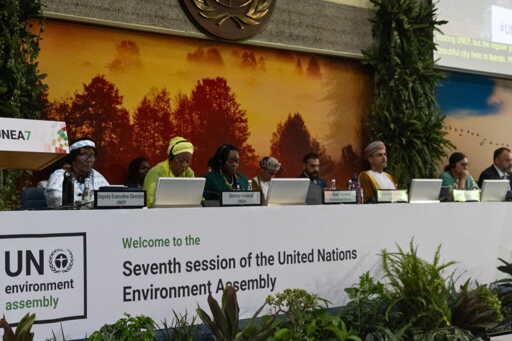
From Dec. 8-12, Kenya will host delegates from governments, civil society, industry and scientific agencies for the United Nations Environment Assembly at a time of profound environmental challenges and growing geopolitical uncertainty. In the sixth session of the UNEA held in 2024, leaders promised to act on the triple planetary crisis of climate change, biodiversity loss and pollution. But global emissions have continued to climb, the world is not on track to meet biodiversity goals and negotiations over plastic pollution have reached a standstill. Major geopolitical disputes, from trade wars to political conflicts, threaten to weaken international efforts to protect the environment. Even the head of the United Nations Environment Programme (UNEP), Inger Andersen, acknowledged the challenge of meeting this moment. Speaking recently to experts who gathered in Nairobi ahead of the talks, she described 2025 as a “mixed year,” celebrating progress on protecting marine biodiversity in international waters but warning that the world is still falling behind on climate change, biodiversity loss, land degradation and plastic pollution. For Africa — already facing droughts, floods, collapsing ecosystems and rising pollution — these talks are a test of whether global action can match the urgency of the continent’s environmental crises. Delegates attend the daily morning meeting to coordinate activities at UNEA-7. Image courtesy of UNEP/Kiara Worth via Flickr (CC BY-NC-SA 4.0) Civil society leaders say the gap between promises and reality has now become intolerable. “Africa is expecting concrete solutions for the world’s problems,” Augustine Njamnshi of the Pan African Climate…This article was originally published on Mongabay
From Conservation news via this RSS feed
You must log in or # to comment.