

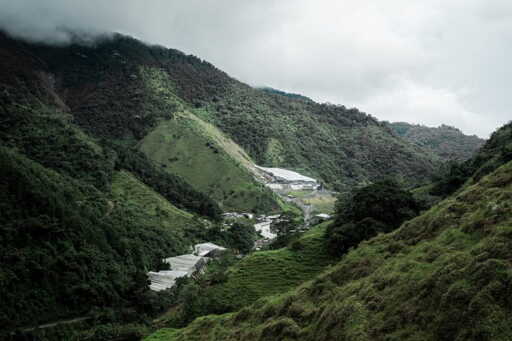
“People bathe in the river, they eat from the river — they live, dance and sing there,” says Dora Agudelo Vazquez. “Their whole lives are bound to the river.” Agudelo Vazquez, one of the guardians of the Atrato River, is sitting on a park bench in the main square of her hometown of El Carmen de Atrato, in Colombia’s northwestern Chocó department. “In these 30 years of mining, the river has suffered a lot,” she says. By night, this square is full of life. Beneath the stone façade of the central church, vendors sell hot food from densely packed marquees, many of which display the words “Minera El Roble — Estamos Contigo” (“We Are With You”). Children jump between small groups of heavy-booted workers who gather around the food stalls. Their overalls carry the same logo: Minera El Roble. El Roble, Colombia’s only active copper mine, is about 3 kilometers (1.9 miles) north of the town square. It sits at the base of a valley crossed by the Atrato River, which flows over about 700 km (435 miles) and in 2016 was recognized as a subject of constitutional rights by a Colombian court. This court also ordered the creation of the Guardian Commission, consisting of 14 guardians entrusted with monitoring compliance with the ruling. But Agudelo Vazquez, along with several environmental NGOs and local community groups, allege that El Roble is harming the river’s health, accusing the mine of failing to meet conservation commitments, having weak regulatory oversight and polluting…This article was originally published on Mongabay
From Conservation news via this RSS feed
You must log in or # to comment.