

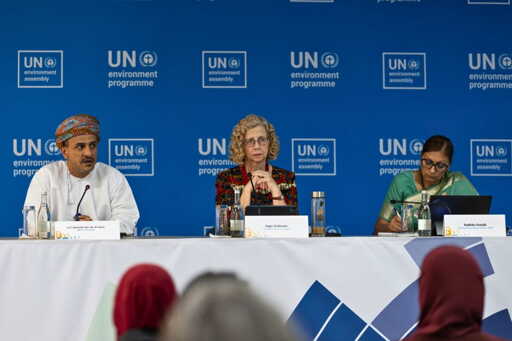
The United Nations Environment Assembly (UNEA), the world’s top decision-making body on the environment, opened its seventh session in Nairobi on Monday, aiming to take action on critical environmental challenges amid deep geopolitical divisions. Global emissions have continued to climb, the world is not on track to meet biodiversity goals and negotiations over plastic pollution have reached a standstill, threatening livelihoods and economies across the world. Meeting under the theme “Advancing sustainable solutions for a resilient planet,” UNEA-7 convenes at a time when multilateralism is under intense strain. As several officials acknowledged, wars, protectionist economic policies and widening global divisions are undermining the ability of nations to reach consensus on climate change, biodiversity loss and pollution — issues that require collective action. Yet in Nairobi, on the U.N.’s campus, there was a sense that the world wants to push forward with action. Opening the session, UNEA president Abdullah Bin Ali Al-Amri of Oman reminded delegates that despite the turbulence, multilateral cooperation remains the only credible pathway. “UNEA was created to be the conscience of the global environment, a forum where science and diplomacy converge to safeguard the planet that sustains us all. Multilateralism delivers when we pair science, solidarity and solutions,” he said. Al-Amri urged countries to pursue ambition, solidarity and science-based decision-making. Incrementalism, he warned, is no longer adequate. “Incrementalism is insufficient to cope with the pace of change. Commitments must translate into projects, investments, legal frameworks and measurable gains,” he said. His remarks acknowledged the tension between rising global fragmentation and…This article was originally published on Mongabay
From Conservation news via this RSS feed
You must log in or # to comment.