

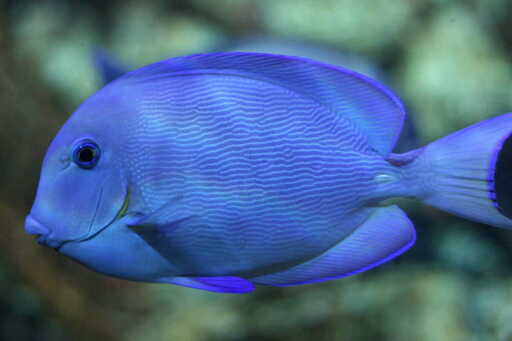
Fish were discovered to make sounds more than 2,000 years ago, but they have gone largely unheard by humans. While a typical, bustling coral reef may be home to dozens of fish species, until recently, identifying specific species’ sounds was practically impossible. Previous methods of studying fish sounds often involved divers interfering in the fishes’ habitats, or researchers recording fish in captivity, which frequently meant forcing them to make sounds under stress by handling them or giving them electric shocks. Now, scientists have used a new combination of underwater audio and visual recording to identify the sounds of 46 fish species in their natural environment, the largest collection of wild fish sounds ever recorded. The new device, described recently in the journal Methods in Ecology and Evolution, can extract individual fish noises from cluttered underwater audio recordings and identify which fish made each sound. The UPAC-360° underwater audio-visual camera isolates individual fish sounds from a sea of different noises. Image adapted from Dantzker et. al, Methods in Ecology and Evolution “We were shocked about how many fish we could record and identify in a relatively short amount of time,” said study coauthor Aaron Rice, an ecologist at Cornell University in Ithaca, New York. There are more than 4,000 fish species listed by the IUCN as vulnerable, endangered, or critically endangered. By tracking their sounds, scientists hope to better understand where the fish live, how their numbers are changing, when they are most active, and which behaviors make them vulnerable to…This article was originally published on Mongabay
From Conservation news via this RSS feed