

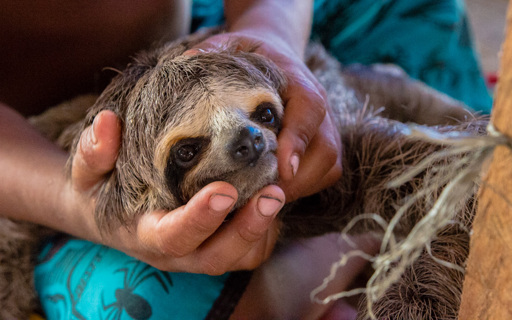
Known for their peaceful appearance and the impression that they’re always smiling, sloths now have extra protection to prevent their exploitation by a cruel and illegal pet trade. CITES, the global wildlife trade convention, agreed at its recent summit in Samarkand, Uzbekistan, to include two sloth species in a list that imposes stringent requirements for their international trade. This means that all 185 parties to CITES (184 countries plus the European Union) will be subject to strict rules including a requirement that exporting countries provide studies proving that the transaction will not affect the species’ conservation. The two species newly listed in CITES Appendix II are Linné’s two-toed sloth (Choloepus didactylus), native to the Amazon, and Hoffmann’s two-toed sloth (Choloepus hoffmanni), which lives in the southern Amazon and parts of Central America. Two-fingered sloths are known to be more aggressive and faster than their three-toed relatives. The proposal to strengthen their protection came from Brazil, Costa Rica and Panama, as a way “to prevent illegal trafficking from increasing and its populations from declining.” According to delegates from the three countries, wildlife traffickers have been tearing the sloths from the forests to be presented as attractions in tourist itineraries through South America; some tourists even buy a baby sloth to take home as a kind of exotic pet. Researchers have recorded instances of this illegal trade in public markets in Iquitos, Peru, and Manaus, Brazil. “Demand for sloth species has increased in recent years, particularly for live animals taken from the…This article was originally published on Mongabay
From Conservation news via this RSS feed
You must log in or # to comment.