

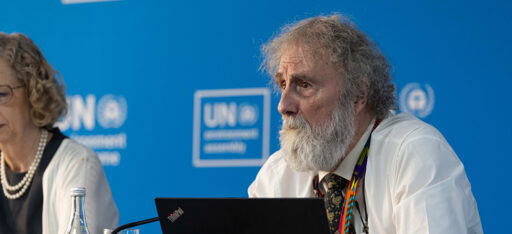
When U.S. President Donald Trump addressed the United Nations General Assembly in late 2025 and dismissed climate change as a “con job”, the scientific community reacted with alarm. Months earlier, The Guardian had reported that his anti-climate agenda could result in 1.3 million additional deaths globally. Prior to that, in August, CNN documented how scientists were coordinating to counter Trump’s attempts to erase credible climate research from the record. The news was emblematic of a wider trend: The rapid spread of climate disinformation, a resurgence of greenwashing and a global political environment increasingly hostile to science — even as emissions rise, biodiversity collapses and pollution reaches lethal levels. Against that backdrop, the U.N. Environment Program launched another report, which it called a flagship environmental assessment — the Global Environment Outlook 7 (GEO-7) — in Nairobi on Tuesday. Authored by 287 scientists from 82 countries, the report paints a stark picture: Greenhouse gas emissions continue climbing, 20-40% of global land is degraded, pollution kills 9 million people a year and 1 million species face extinction if current trends continue. Among the co-chairs of GEO-7 is Sir Robert Watson, one of the world’s most respected environmental scientists and a former chair of the IPCC, the U.N.’s top climate science body. In many ways, he has spent his career trying to ensure science informs political decisions. Watson was in Nairobi this week for the launch of the GEO-7. So, what would he tell a political leader who rejects the science entirely? Mongabay asked…This article was originally published on Mongabay
From Conservation news via this RSS feed