

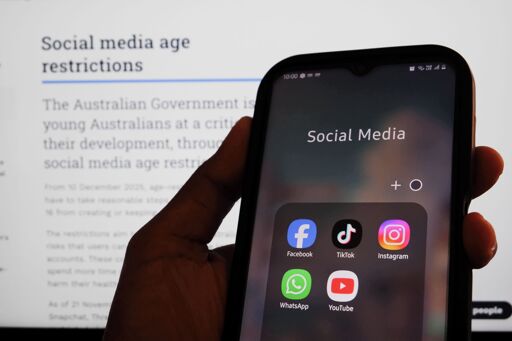
A new social media ban takes effect in Australia from today, preventing—or in theory, preventing—teenagers and children under 16 years of age from holding accounts on 10 popular platforms. These include Twitch and TikTok, who will now have to take “reasonable steps” to keep Australian under-16s off their platforms. If they don’t, they could face fines of up to AU$49.5 million (around $33 million in the US).
The world-first ban includes 10 platforms, including the below:
FacebookInstagramKickRedditSnapchatTikTokThreadsTwitchXYouTube
According to Australia’s eSafety Commissioner, the ban is designed to “protect young Australians from pressures and risks that users can be exposed to while logged in to social media accounts. These come from design features that encourage them to spend more time on screens, while also serving up content that can harm their health and wellbeing.”
The legislation has been met with inevitable backlash and heated debate, though if polling conducted by The Guardian is any indication, the majority of Australians support it.
In a strongly-worded celebration of the ban, Prime Minister Anthony Albanese positioned Australia as a pioneer in a movement that will inevitably catch fire around the world. “This will be one of the biggest social and cultural changes our nation has faced,” he wrote. “It is profound reform which will be a source of national pride in years to come.”
The eSafety Commissioner has three criteria for age restriction bans, listed below:
The sole purpose, or a significant purpose, of the service is to enable online social interaction between two or more end-usersThe service allows end-users to link to, or interact with, some or all of the other end-usersThe service allows end-users to post material on the service.
While the banned platforms fit the eSafety Commissioner’s three criteria for age restriction, there are some noticeable absences: Roblox, Discord and Steam have all come under fire for either hosting obscene or extremist material, or serving as environments for child exploitation.
Despite those clear red flags, according to the eSafety Commissioner itself, “Online gaming and standalone messaging apps are among a number of types of services that have been excluded under the legislative rules.”
The list of banned platforms will undergo regular assessment, according to the Commissioner, and there’s no guarantee the criteria won’t be adjusted.
Other governments are paying attention to Australia: Malaysia intends to ban all social media platforms for under-16s from January 1, 2026, though again, there’s no indication Steam will be affected. Other countries including Indonesia, New Zealand and Brazil are also considering legislation for teen social media use.
The question of whether a law should—or even can—prevent child social media use will remain open, but the fact that social media causes harm to adolescents is hard to deny at this point. The World Health Organisation found that more than one in 10 adolescents “showed signs of problematic social media behaviour, struggling to control their use and experiencing negative consequences”. Pew Research shows that nearly half of U.S. teens have been bullied or harassed online. In 2017, Facebook’s founding president Sean Parker described the platform as "a social-validation feedback loop … exactly the kind of thing that a hacker like myself would come up with, because you’re exploiting a vulnerability in human psychology.”
On the other hand, many use social media to access other material, like news, or communities dedicated to niche interests. The ban may have an adverse effect on kids in remote and regional areas of Australia, or kids belonging to marginalised communities.
Still, the Australian Prime Minister isn’t interested in subtleties, at least not today: “Start a new sport, learn a new instrument, or read that book that has been sitting there on your shelf for some time," he said today.
From PCGamer latest via this RSS feed
Many sites haven’t implemented age verification apparently
https://www.afr.com/companies/media-and-marketing/we-tried-to-break-australia-s-social-media-ban-it-wasn-t-hard-20251210-p5nmcx
However, testing by The Australian Financial Review found Meta platforms Facebook, Instagram and Threads, as well as Snapchat, TikTok and X were the only platforms to prohibit users signing up if they listed their age as under 16. As of 6am AEDT, the Financial Review created accounts on video streaming platforms Kick and Twitch despite listing the user age as below 16. Several hours after establishing the account, Kick prompted the user to verify their age, but the app remains fully accessible at this stage without verification.
Likewise, online forum Reddit – which said it would comply with law but is preparing a potential legal challenge to the new regulations – did not require users to input their age at all while setting up an account, with adult “18+ content” on the platform filtered using a toggle in the app’s settings without any age verification. On YouTube, owned by Google parent Alphabet, users can set up an account while listing their age as under 16 and comment and watch videos. Viewers can watch YouTube and TikTok without logging on, but even the under-16 account created by the Financial Review was able to easily access explicit content. While Facebook, Instagram and Threads, Snapchat, TikTok and X prevented people under 16 from signing up, all 10 social platforms let the Financial Review create accounts that listed an age of 18 without any further age verification.