

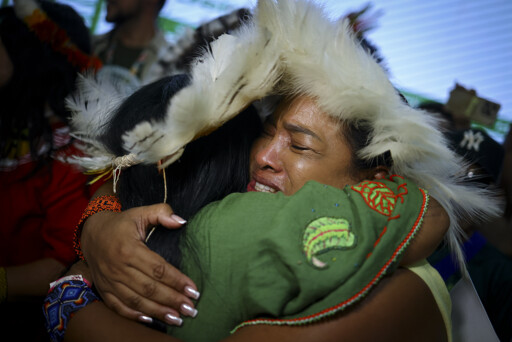
BELÉM, Brazil — Brazil promoted COP30 as both the “Indigenous COP” and the “Amazonian COP,” a summit that would finally center the peoples who have protected the rainforest for millennia. Belém, the host city on the mouth of the Amazon River, sits at the gateway of a biome home to more than a million Indigenous people, including groups living in voluntary isolation. Expectations rose as thousands of Indigenous representatives traveled to Belém, including more than 900 who entered the negotiating rooms — an unprecedented level of formal participation in U.N. climate talks long dominated by governments. For many, the gathering created a sense of shared purpose with communities facing similar threats elsewhere in the world. And despite the tensions that would follow, there were moments of progress that Indigenous groups acknowledged. Brazil announced advances in the demarcation of 10 Indigenous territories. Eleven signatories — Brazil, Costa Rica, Colombia, the Democratic Republic of Congo, Ecuador, Fiji, Ghana, Indonesia, Pakistan, Tanzania and Nigeria’s Cross River State — issued a joint commitment to expand and strengthen land tenure for Indigenous peoples, local communities and people of African descent by roughly 80 million hectares (198 million acres) by 2030. Indonesia’s main Indigenous alliance, AMAN, welcomed the pledge. In a statement, it urged Jakarta to deliver on its own promise made during COP30 to recognize 1.4 million hectares (3.5 million acres) of customary forests through ministerial decrees. “The 1.4 million-hectare commitment is an initial figure that must be expanded and strengthened to protect Indigenous Peoples…This article was originally published on Mongabay
From Conservation news via this RSS feed
You must log in or # to comment.