
As the United States takes the reins of the G20 and makes economic growth the top priority, the Trump administration is expected to use its year in charge to promote fossil fuels while shifting the focus away from climate action and clean energy.
With Washington assuming the presidency of the group of the world’s largest economies for the first time since 2009, US Secretary of State Marco Rubio opened with a notably blunt statement, declaring that “unlocking affordable and secure energy supply chains” would be one of three key themes, alongside deregulation and new technologies.
Although renewables are widely recognised as central to building a cost-effective and reliable energy system, that is not going to be the message from the US G20 presidency, experts said.
“They clearly want to push a fossil fuels-oriented agenda and one that’s also critical of green and climate technologies,” said David Waskow, director of the International Climate Initiative at the World Resources Institute (WRI).
Attack on South Africa
Washington’s rhetoric marks a clear shift from the tone set by the past year’s G20 host, South Africa, which placed climate action – particularly climate finance and the escalating impacts of global warming – at the centre of its diplomacy.
The urgency of climate action and a commitment to limit global warming to below 1.5C were recognised in a final declaration endorsed by leaders attending November’s summit in Johannesburg, which the US boycotted.
After the official handover of the presidency, the Trump administration mounted an all-out attack on South Africa with whom its relations were already sour. All pre-existing content was scrubbed from the G20 official website and replaced with a picture of the US president alongside the message “the best is yet to come”.
 Dec 5, 2025Energy
IEA: Slow transition away from fossil fuels would cost over a million energy sector jobs
A rapid transition would create enough new green roles to more than offset job losses in coal mines, power plants and oil and gas fields, a report findsRead more Dec 1, 2025Energy
For blighted Niger Delta communities, oil spill clean-ups are another broken promise
Many local people are disappointed by efforts to repair the devastation left by foreign oil firms even as the Nigerian government plans to restart drillingRead more
Then, in an unprecedented step, Rubio unilaterally announced the exclusion of South Africa from next year’s G20 meetings. In addition to repeating unfounded allegations of racism by the South African government against the country’s white Afrikaner minority, the US State Secretary attacked South Africa’s G20 as an exercise in “radical agendas” – including climate change – that ignored the US objections.
Rejecting the accusations, South Africa’s Minister of International Relations and Cooperation Ronald Lamola told Rubio the country remained “open to dialogue”, but “would not seek your approval to our path”.
US push for fossil fuel expansion
Max Yoeli, a senior US research fellow at Chatham House, said that, while the South African presidency focused on solidarity and equality, the US will likely pursue its own national interests with a more transactional approach at the G20.
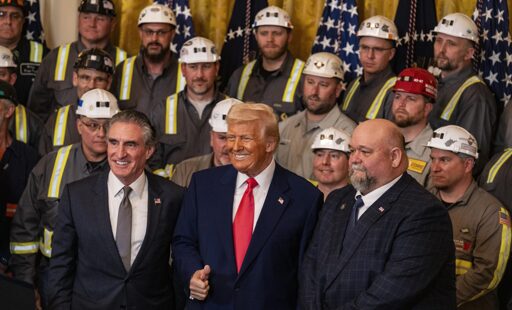
On energy, nearly a year since his return to office, President Trump has left no doubt about his administration’s strong backing for US fossil fuels, while labelling clean energy a “scam” and taking steps to actively halt its rollout across the country.
The new US national security strategy, published last week, said that restoring American energy dominance in oil, gas, coal and nuclear is a top strategic priority. The expansion of energy exports would “deepen relationships with allies while curtailing the influence of adversaries”, it added. The US is already the world’s largest producer and leading exporter of both oil and gas.
Yoeli said the Trump administration’s domestic regulatory agenda is very tilted to expanding drilling to boost hydrocarbons, while adding barriers to wind and solar deployment and slowing utility-scale clean energy rollout. “It is pretty clear they will pull in the same direction [at the G20],” he noted.
G20 tensions on energy and climate
What the US government could achieve concretely at the G20 is unclear. WRI’s Waskow said the Trump administration could try and insert pro-fossil fuel language and remove references to climate change in the official statements and communiques that are the main outputs of G20 summits.
But he predicted most other G20 member governments would mount a strong pushback. “It’s really quite unimaginable that others would be ready to go along with that agenda,” Waskow added.
The other six most advanced economies, including European countries, Canada and Japan, remain committed to tackling climate change and cutting greenhouse gas emissions – at least on paper.
Meanwhile, the BRICS group of the largest emerging economies called for a stronger response to climate change and reaffirmed their commitment to “just” energy transitions at a leaders’ summit last July. Despite this, the joint declaration also singled out fossil fuels’ “important role in the world’s energy mix”.
Against this geopolitical backdrop, it is possible that countries might be unable to reach consensus on a joint G20 declaration and the US could try to insert its opposition to climate action into a chair’s summary, Waskow said.
Chatham House’s Yoeli said that, with the Trump administration very focused on perceptions of its behaviour, it will be interesting to see how it balances rhetoric with concrete outcomes at the G20.
The post US set to push fossil fuels under its G20 presidency appeared first on Climate Home News.
From Climate Home News via this RSS feed
You must log in or # to comment.