

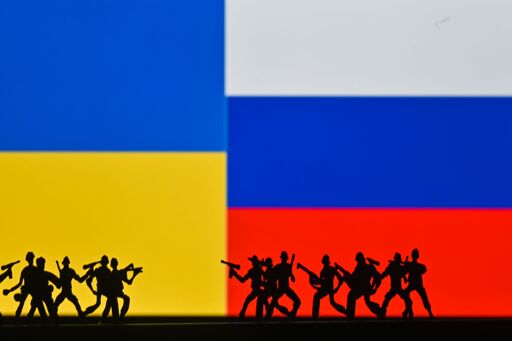
When Russia launched its full-scale invasion on Feb. 24, 2022, Ukraine cut diplomatic relations with Moscow, formally severing the main line of communication.
Yet, as the war enters its fourth year, discreet communication between Ukraine and Russia has continued — through humanitarian contacts, backchannels involving officials and… oligarchs.
While no diplomatic ties exist, multiple unofficial communication tracks have emerged.
“An official communication channel is something we need, and it even partially exists,” Ukrainian political analyst Ihor Reiterovych told the Kyiv Independent.
“Even between countries at war, there are issues that require people who can still talk.”
Why a channel still matters
Despite Russia’s lack of genuine interest in peace, experts say some degree of contact remains essential.
“If we look at history, communication between warring sides has always existed,” said lawmaker Oleksandr Merezhko, head of Ukraine’s parliamentary foreign affairs committee.
He recalled how, during the Vietnam War, the U.S. and North Vietnam maintained a covert communication track, most notably through secret meetings in Paris between U.S. National Security Adviser Henry Kissinger and representatives of North Vietnam.
“That is, such formations can exist.”
Ukraine’s Foreign Ministry told the Kyiv Independent that the only official information exchanges with Russia occur through Ukraine’s embassy in Belarus and relate to the termination of bilateral and international treaties.
“This channel is needed — even essential — at least from a humanitarian standpoint,” Reiterovych said. “And in principle, it continues to function today.”
The oligarch middleman
The first backchannel emerged soon after the invasion, leading to direct peace talks between Kyiv and Moscow in 2022 that ultimately went nowhere.
The two sides initially met in Belarus and later in Turkey. One of the people helping to set up the talks was Russian oligarch Roman Abramovich.
Abramovich’s involvement in the negotiations became known at the end of March 2022, when he appeared at the Dolmabahce Palace just before the start of the Istanbul talks.
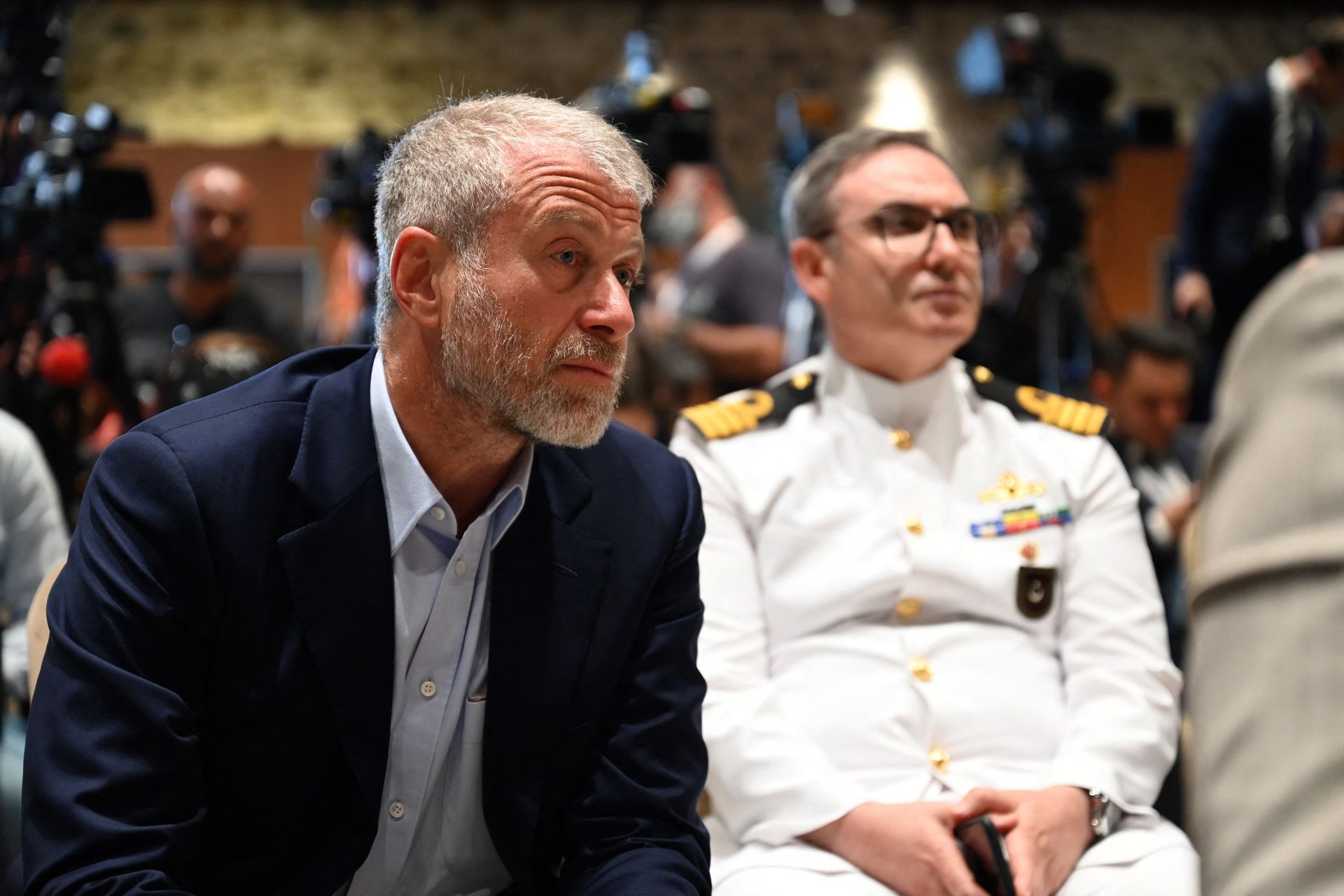
Russian oligarch Roman Abramovich attends a signature ceremony of an initiative on the safe transportation of grain from Ukrainian ports, in Istanbul, on July 22, 2022. (Ozan Kose/AFP via Getty Images)
Mykhailo Podolyak, an advisor to Ukraine’s presidential office, on March 31, 2022, described Abramovich as an “extremely effective mediator,” who “moderated the process partially.”
According to the Wall Street Journal, President Volodymyr Zelensky even asked Washington not to sanction Abramovich at the time so that he could continue mediating.
David Arakhamia, head of Zelensky’s Servant of the People parliamentary faction and a member of Ukraine’s 2022 negotiating team, confirmed that Abramovich was used as a channel to pass messages to Moscow.
“From the very beginning, he had this role — a back channel,” Arakhamia said.
Abramovich was also involved in the 2022 grain corridor deal that reopened Ukraine’s Black Sea ports for food exports. Sources told the Financial Times he played a role in brokering the agreement and attended the deal signing ceremony in Istanbul.
By 2023, according to the Wall Street Journal, the Russian billionaire’s mediation efforts shifted toward humanitarian matters rather than political negotiations.
Arakhamia told the Kyiv Independent that he could not confirm whether Abramovich remains involved, adding that he is “not involved in the negotiation track” himself.
What is certain is that just days before the first round of Ukraine-Russia direct talks in 2025, the oligarch was in the Kremlin meeting with the Russian president — under the polite cover of a “meeting of the board of trustees of the Bolshoi and Mariinsky Theaters.”
The humanitarian track
Beyond oligarch intermediaries, Ukraine and Russia maintain a more direct channel, established by Ukraine’s military intelligence, primarily for prisoner-of-war exchanges.
The Ukrainian Coordination Headquarters for the Treatment of Prisoners of War confirmed to the Kyiv Independent that this channel remains active and was initiated by Ukraine in 2022.
The first line of contact emerged in the chaotic early weeks of the invasion when Ukrainian officer Dmytro Usov used a phone taken from a dead Russian soldier to call the commander listed on it.
That improvised conversation evolved into a structured backchannel.
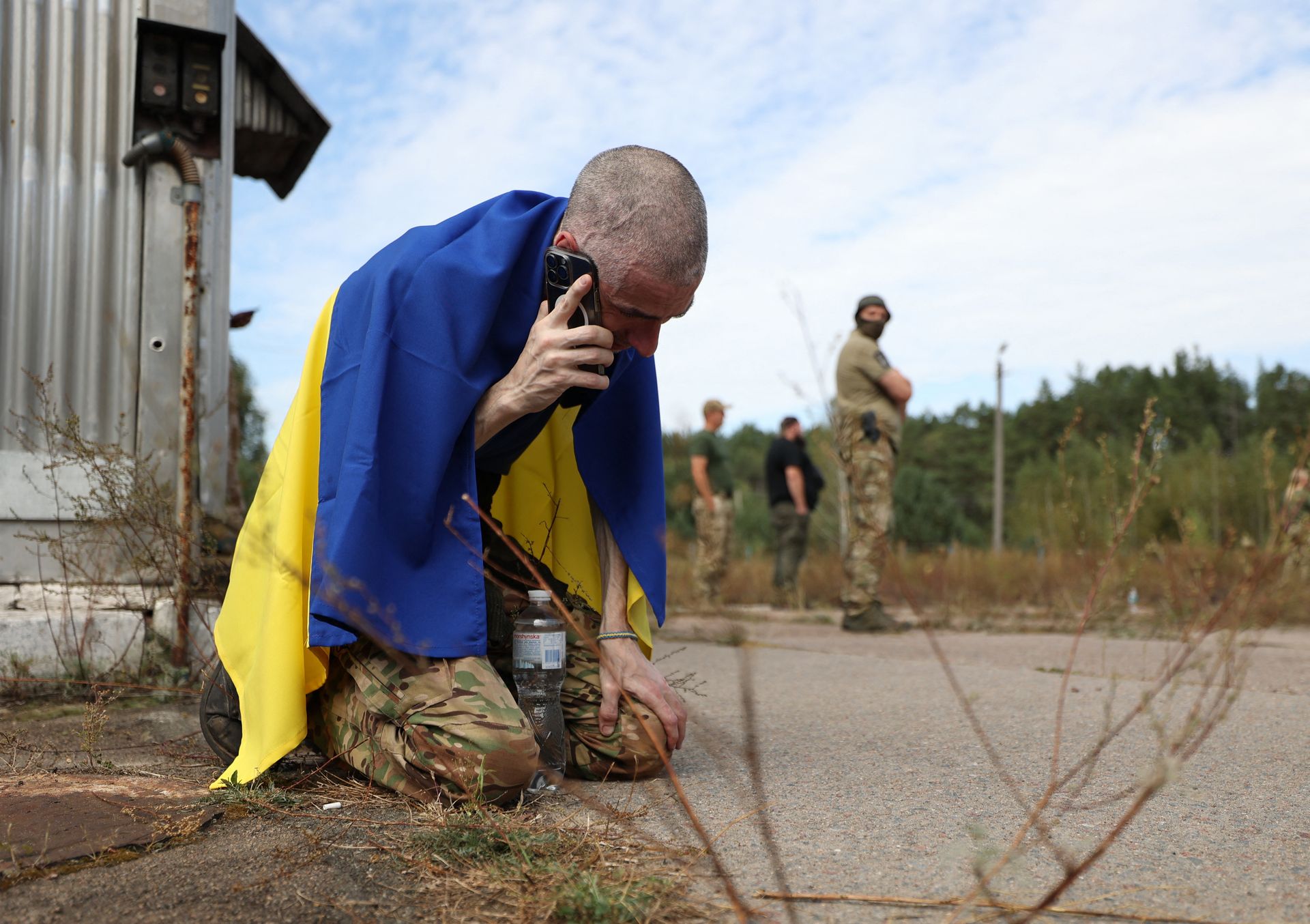
A Ukrainian serviceman calls home after being released from Russian captivity on Sept. 13, 2024. (Anatolii Stepanov/AFP via Getty Images)
Usov’s Russian counterpart turned out to be Alexander Zorin, a senior officer in Russia’s military intelligence and a veteran of Moscow’s involvement in Syria’s civil war.
The framework later expanded with the help of Turkey, Qatar, and Saudi Arabia, enabling major prisoner swaps between the two sides.
“There are humanitarian issues that require a line of communication,” Reiterovych said.
“Even though Russia violates humanitarian law, this mechanism must exist, and it continues to function in practice.”
Ukraine’s Foreign Ministry noted that such humanitarian contacts take place only through military intelligence and, in some cases, through the countries’ ombudsmen.
The unequal channel
During the U.S. push to end Russia’s war in Ukraine, with Washington’s mediation, another direct channel emerged between officials — but it was flawed from the start.
On May 16, Ukrainian and Russian delegations met in Istanbul — their first direct talks since 2022. Russian President Vladimir Putin appointed his aide, Vladimir Medinsky, as chief negotiator, while Ukraine’s delegation was led by then-Defense Minister Rustem Umerov.
After the second round of talks in early June, Umerov said communication with the Russian side had been “established regarding the stages of implementation of the agreements.”
The channel was confirmed by both Zelensky and Putin.
“They (Umerov and Medinsky) are in contact with each other,” Putin said in June.
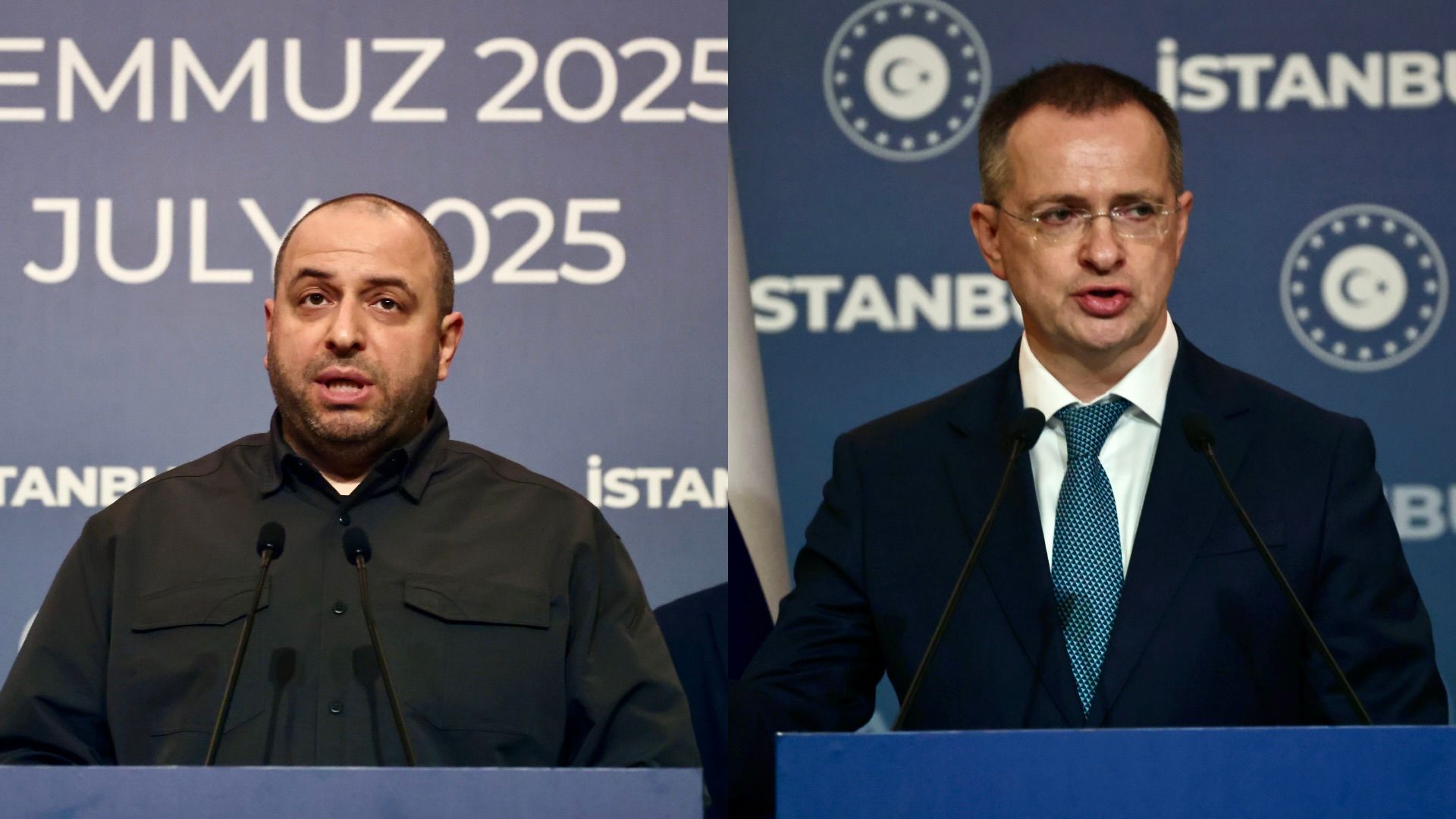
Ukraine’s then-Defense Minister Rustem Umerov and Kremlin aide Vladimir Medinsky on July 23, 2025 in Istanbul, Turkey. (Chris McGrath/Getty Images)
Umerov held multiple phone conversations with his Russian counterpart, forming part of the limited but direct communication maintained during negotiations.
Zorin, the Russian intelligence officer previously mentioned in connection with prisoner-of-war exchanges, also took part in direct talks between Russia and Ukraine.
While those meetings facilitated swaps of prisoners of war, they produced no political breakthrough and did not advance broader peace negotiations between the two sides.
Since then, there have been no confirmed direct talks between the two, and it remains unclear whether the Umerov–Medinsky channel still functions.
Ukraine’s Foreign Ministry said any such contacts are “reported publicly,” while Umerov did not respond to inquiries.
Merezhko said the choice of Medinsky as Russia’s negotiator underscored Moscow’s lack of seriousness about negotiations, describing him as “nobody.”
“He holds no real influence,” the lawmaker said, arguing that the Kremlin never intended for the channel to produce meaningful results.
Reiterovych agreed that the communication was lopsided.
“Umerov operates fully within Ukraine’s legal framework,” he said.
“Medinsky, on the other hand, is just an adviser. Even when he was a minister, he never approached Umerov’s level of authority.”
Corruption scandal backchannel
Another track emerged amid a major corruption scandal in Ukraine. This one may have worked directly against Kyiv’s interests.
According to audio recordings released by the National Anti-Corruption Bureau (NABU) in November, suspects tied to Ukraine’s nuclear monopoly Energoatom maintained links to a Russian official and may have transferred money to Moscow.
NABU has charged eight people with bribery, embezzlement, and illicit enrichment. One of them, Ihor Myroniuk, previously served as an aide to Andrii Derkach — a fugitive ex-lawmaker twice charged with high treason and now serving as a Russian senator.
In the recordings, Myroniuk claimed that Derkach and Ukraine’s Justice Minister Herman Halushchenko — who also appears in the tapes and formerly served as Energoatom’s vice president — were “acquainted.”
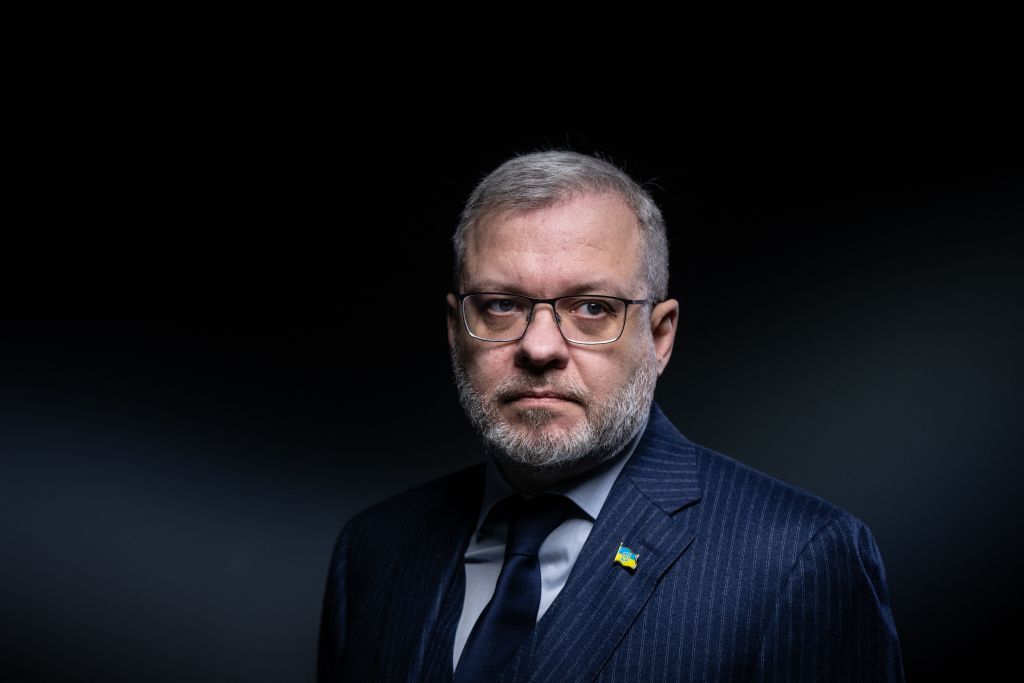
Ex-Justice Minister Herman Halushchenko, poses for a photo session in Paris on Dec. 12, 2022. (Martin Bureau /AFP via Getty Images)
He recounted how, in 2020, when Halushchenko was appointed to the company, Derkach allegedly called him and said: “Come by, I want to tell you how everything works there.”
At the time, Derkach was still a Ukrainian lawmaker.
According to the Anti-Corruption Bureau, kickbacks from Energoatom were laundered through a back office in downtown Kyiv owned by Derkach’s relatives.
The tapes also suggest the suspects may have transferred $2 million to Moscow.
“Two (million dollars) has left; it will be in Moscow in a week and a half,” another suspect, Ihor Fursenko, said in May 2025, according to the recordings.
The comment quickly fueled speculation that the money may have been intended for Derkach, who has a long record of serving the Kremlin, reinforcing concerns that he retained influence inside Ukraine and maintained connections at the highest levels.
Limited results
But if communication existed, why hasn’t it led to results?
Merezhko, who previously represented Ukraine in the Trilateral Contact Group with Russia and the OSCE before the start of the full-scale phase of the war, said the answer is simple: the Kremlin uses negotiations as a weapon.
“They never adhere to the agreements they sign and use the process itself as a tool of propaganda and warfare.”
Looking ahead, Reiterovych said that while the current backchannel yielded limited results, Ukraine and Russia will eventually need more empowered teams for any meaningful talks.
“When negotiations do happen — and sooner or later they will — they must involve figures truly authorized to make and implement decisions,” he said.
According to him, the war will most likely end through specific agreements reached “first and foremost by the military with each other.”
“Politicians will be there,” he said, “but it will most likely be the military who sign.”
That assessment aligns with recent developments. On Nov. 24, Ukraine’s military intelligence chief Kyrylo Budanov held talks with U.S. and Russian delegations in Abu Dhabi as part of Washington’s latest attempt to revive negotiations.
Read also: Trump’s new security doctrine gives Putin exactly what he wants
Hi, this is Tim. The author of this article. Thank you for taking the time to read it.
At the Kyiv Independent, we speak to top experts to bring you accurate, in-depth reporting. We don’t have a wealthy owner or political backing.
We rely on readers like you to support our work.
If you found this article interesting, consider joining our community today.
From The Kyiv Independent - News from Ukraine, Eastern Europe via this RSS feed
You must log in or # to comment.