
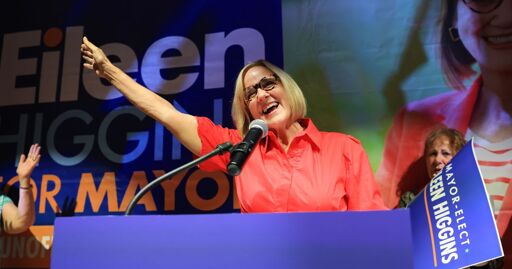
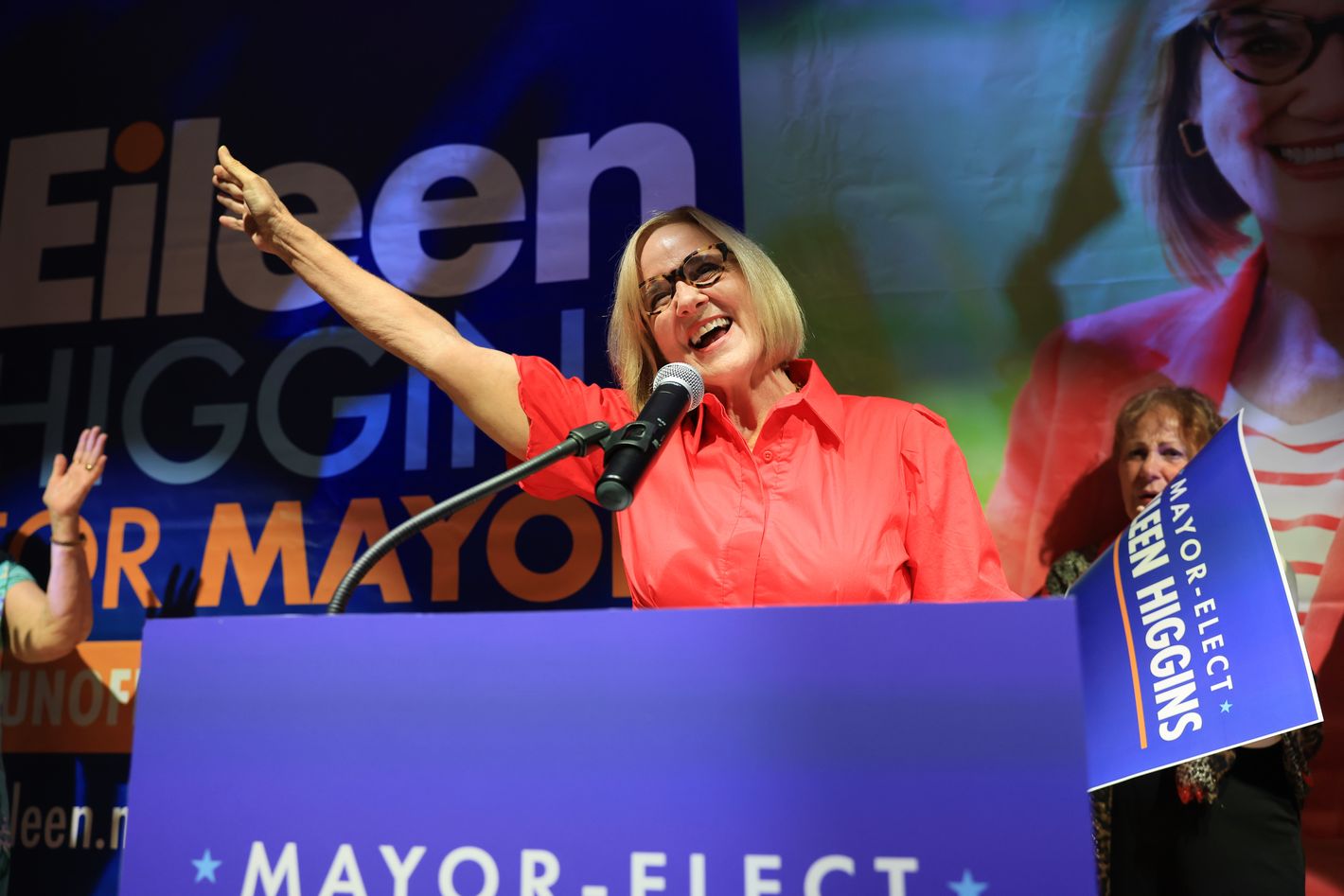
Photo: Joe Raedle/Getty Images
Stop me if you’ve heard this before: a Democratic woman wins a major post in a place that had been trending towards the GOP by campaigning on affordability It happened in New Jersey and Virginia gubernatorial contests in November. It came closer than expected to happening in a deep-red Tennessee congressional district’s special election on last week. And on Tuesday it happened again in Republican-controlled Florida, with a Democrat easily becoming mayor of Miami after 28 years of Republicans in that position.
In a runoff election, former county commissioner Eileen Higgins won nearly 60 percent against Republican former city manager Emilio Gonzalez, becoming the first Democrat to serve as mayor since 1997, and the first woman ever. It was technically a non-partisan election, but partisan backing for the two candidates left no one in doubt as to the “teams” involved. (The loser’s endorsees included Donald Trump and Ron DeSantis; Ruben Gallego, Rahm Emanuel, Pete Buttigieg and a variety of Florida Democrats campaigned for the winner.) Higgins is white but is fluent in Spanish; in her first campaign for Miami-Dade County Commissioner she called herself “La Gringa,” while Gonzalez is Cuban-American. Both had strong résumés of local leadership and international business experience. Both ran as reformers determined to address corruption in city government, which is pretty deeply entrenched in Miami’s clubby atmosphere. But Higgins had the winning message, as Florida Politics reported:
Higgins, a 61-year-old mechanical engineer by training and an eight-year County Commissioner with a broad, international background in government service, emphasized affordable housing — urging the city to build on public land and create a dedicated housing trust fund — and backed a plan to expand the City Commission from five to nine members, which she said would improve neighborhood representation.
She also backed more eco-friendly and flood-preventative infrastructure, faster park construction and better transportation connectivity and efficiency.
Affordability is an unavoidable issue in Miami, which experienced rapid growth and skyrocketing housing prices during and after the pandemic. And no one much denies climate change there either, given Miami’s high susceptibility to complete inundation by rising seas. And though many of Miami’s Hispanic voters are citizens, and a higher than typical share are Republicans, Trump’s mass deportation initiative is unpopular there. Higgins, whose county commission district included Little Havana, channeled some of the resentment illustrated in a recent local poll:
Fifty-nine percent of voters — including 55% of independents and 64% of Hispanics — are against removing otherwise law-abiding foreign residents, compared to 21% who are in favor of it and 20% who are uncertain where they stand on the matter.
The same share of voters (59%) opposes using local police to facilitate the detainment and deportation of immigrants here illegally who have not broken any other laws.
There was a lot going on in this Miami election, and it’s worth noting that Kamala Harris narrowly carried the city in 2024. But the size of Higgins’ win is an unmistakably good sign for Democrats heading towards 2026, and adds another data point to the contention that Trump’s 2024 gains in competitive parts of the electorate–particularly among Latinos–are receding in all parts of the country. It could also add to the pressure on Florida’s Republican legislature to conduct a last-minute gerrymander of the state’s U.S. House districts to protect its South Florida congressional incumbents and perhaps take out a Democrat. But as Bob Dylan once wrote: “You don’t need a weatherman to know which way the wind blows.”
From Intelligencer - Daily News, Politics, Business, and Tech via this RSS feed
You must log in or # to comment.