
Photo: Paras Griffin/Getty Images
The subheadline of a gauzy new update on the life and political career of Kamala Harris in the New York Times is a question that demands an honest answer: She was seen for two decades as a future face of the Democratic Party. Is she now suddenly a figure of its past? Subject to a possible future revision, the answer right now has to be: “Yes.”
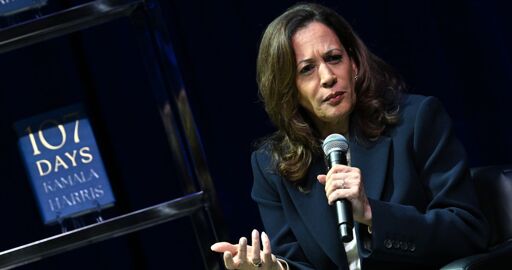
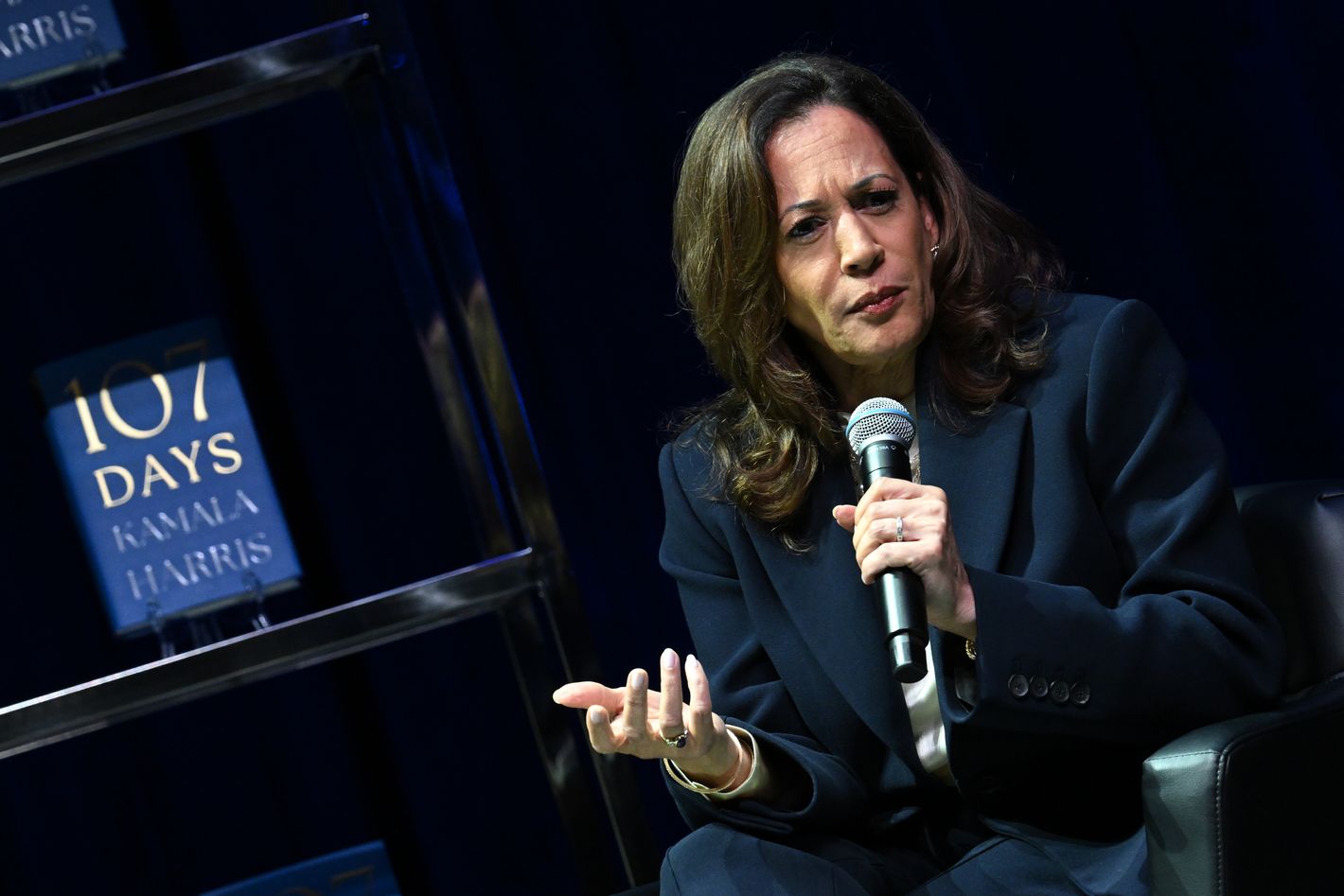
Pretty clearly, the former vice president and “more than two dozen current and past advisers and others close to her” interviewed by the Times’ Shane Goldmacher think she’s earned some time to reflect and recover from a tumultuous 2024 campaign year before plotting any future steps (other than the decision she’s already made not to run for Governor of California in 2026). Without question, she deserves as much time out of the spotlight as she wants. It’s less clear she’s entitled to drag us all back through the ordeal all Democrats shared with her last year in a too-soon memoir of the campaign, which she recently reemerged to flog. That book has reopened a lot of relatively fresh wounds, while adding fuel to the perpetual “struggle for the soul of the Democratic Party” that ideologues, pundits, and the opposition remain hopelessly infatuated with.
Worse yet, while she’s shared her unique impressions about what happened before, during and after Joe Biden’s tardy, reluctant and clumsy hand-off of the mantle of party leadership to his veep, she doesn’t seem to have absorbed many lessons about mistakes she made once she was in charge of the campaign to stop Donald Trump’s return to the White House, or have any distinctive ideas about how her party can successfully move forward. And while both the memoir and Goldmacher’s account underscore the personal pain she suffered from Trump’s win, you don’t get the sense she feels much responsibility for letting down the many people who are suffering far more than she is from the policies and misconduct of the 47th president. 2024 represented a terrible career setback for Kamala Harris. But it was foremost a national calamity in which she was both a victim and a perpetrator.
According to Goldmacher’s account, Team Harris believes the 2024 defeat lifted her to an exalted position she still occupies:
Ms. Harris does not fear losing to other Democrats if she runs again, one person close to her said. She is unconcerned about potential rivals seizing the spotlight because she is already so well known, another added. She believes she has more time than anyone to decide about 2028, said a third.
There once was a time when a defeated presidential candidate was referred to as the titular leader of the party until such time as a successor was chosen as nominee. Perhaps this is how Harris regards herself. Indeed, another Californian who served as vice president, lost a presidential contest, then lost a gubernatorial election to boot, ultimately won two terms as president. That was Richard Nixon, who was able to claw his way back to the top of the presidential field in 1968 mostly because his party’s 1964 nominee lost so disastrously, and because he tirelessly devoted himself to every demeaning chore in the party vineyards. A Kamala Harris comeback is certainly less improbable than Nixon’s, or for that matter, Donald Trump’s. She needs, however, to identify herself with some ennobling cause, some emerging issue, some perspective on politics that she never quite achieved during a failed presidential campaign (her second). Her accomplishments as a political pioneer — the first woman to become vice president, and the first Black woman, and just the second woman, to win a major-party presidential nomination — are secure and now largely irrelevant. She needs to make a fresh impression that’s more than a rebrand or a new vibe.
Maybe that will happen. Until it does, then yes, Kamala Harris is a “figure of the past” in Democratic politics, and of a past no one sane wants to relive. She, like her party, can move on or start anew.
From Intelligencer - Daily News, Politics, Business, and Tech via this RSS feed
You must log in or # to comment.