

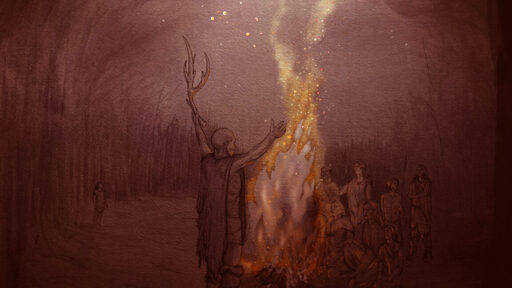
Heat-reddened clay, fire-cracked stone, and fragments of pyrite mark where Neanderthals gathered around a campfire 400,000 years ago in what’s now Suffolk, England.
Based on chemical analysis of the sediment at the site, along with the telltale presence of pyrite, a mineral not naturally found nearby but very handy for striking sparks with flint, British Museum archaeologist Rob Davis and his colleagues say the Neanderthals probably started the fire themselves. That makes the abandoned English clay pit at Barnham the oldest evidence in the world that people (Neanderthal people, in this case) had learned to not only use fire, but also create it and control it.
A cozy Neanderthal campfire
Today, the Barnham site is part of an abandoned clay pit where workers first discovered stone tools in the early 1900s. But 400,000 years ago, it would have been a picturesque little spot at the edge of a stream-fed pond, surrounded by a mix of forest and grassland. There are no hominin fossils here, but archaeologists unearthed a Neanderthal skull about 100 kilometers to the south, so the hominins at Barnham were probably also Neanderthals. The place would have have offered a group of Neanderthals a relatively quiet, sheltered place to set up camp, according to Davis and his colleagues.
From Ars Technica - All content via this RSS feed
You must log in or # to comment.