

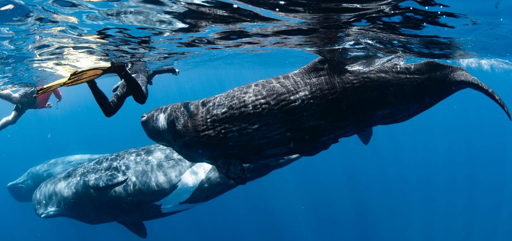
DILI, Timor-Leste — Whale tourism in Timor-Leste is booming. Tour operators report a healthy number of sightings and full bookings in the peak season of September to December, when hundreds of pygmy blue whales (Balaenoptera musculus brevicauda) make the journey through the Ombai-Wetar Strait on their way south to western Australia. Customers splurge $5,000 for a week of swimming with the lite version of the world’s largest animal in a country that has unmatched potential for whale watching, because of its deep, nutrient-rich waters close to the shore and relatively undisturbed marine environment. “For me, the whales represent the health of the ecosystem — they’re the most visible sign of something much bigger happening below the surface,” local conservationist and photographer Jafet Potenzo Lopes tells Mongabay in an interview. “When a blue whale or sperm whale passes along the coast, it’s not just a sighting; it’s a reminder that this coastline is still functioning in a way that many places have lost.” Timor-Leste’s marine mammal “superhighway,” traversed by migrating blue and sperm whales and resident pods of pilot whales, orcas and dolphins, attracts tourists from around the world. Operators are already fully booked for 2026 and 2027. “Even though [whale] encounters are never guaranteed, tourists will always try their luck,” says Rechelle Trasmonte, a Philippine national and dive organizer at Compass Diving, one of Timor-Leste’s six major whale tour operators. This season, however, serious concerns about malpractice have emerged. In an open letter shared with Mongabay in November, British underwater…This article was originally published on Mongabay
From Conservation news via this RSS feed
You must log in or # to comment.