



Aircraft parts generally have to meet very specific standards, because if certain parts fail, the aircraft falls out of the sky. This usually ends poorly, and is best avoided by using the proper equipment during repair and maintenance tasks. A great example of this comes to us from the UK, where a light aircraft crashed after an aftermarket 3D printed component failed. (via BBC)
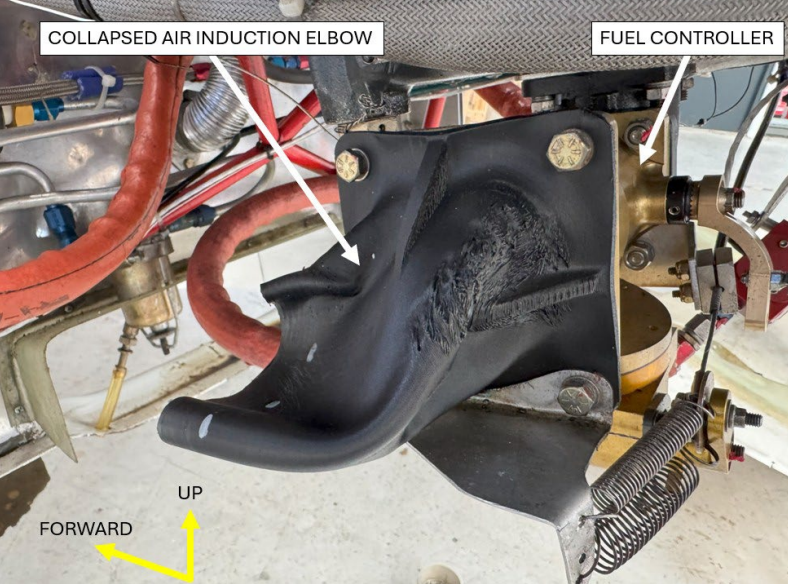
It’s not supposed to look like that. Credit: AAIB
The report from the Air Accidents Investigation Branch tells the story. The owner of a Cozy MK IV light aircraft had fitted it with a 3D-printed air intake elbow, which fed the engine. During the landing phase of a recent flight, the air intake collapsed, starving the engine of air and leading to a loss of power. With precious little altitude and speed, the pilot was unable to reach the runway, landing short and crashing into part of the airfield’s instrument landing system (ILS). Thankfully, the pilot only suffered minor injuries.
Post-crash analysis revealed that the aircraft owner had installed the 3D-printed component, purchased from an air show in the United States. The part was believed to be printed in a CF-ABS filament, with a supposed glass transition temperature of 105 C. Noting this was above the glass transition temperature of the standard fiberglass epoxy resin part used in these aircraft, the owner believed the part to be fit for purpose. However, post-crash testing revealed the 3D printed part had a glass transition temperature of under 55 C, and also lacked the aluminium tube reinforcement of the standard intake. Thus, when it was used in the hot engine bay of the small aircraft, it eventually grew hot enough to fail, causing the loss of power that led to the crash.
The basic lesson here is easy to understand. Don’t rely on an untested 3D printed part when life and limb are on the line. You wouldn’t 3D print a seatbelt, now, would you? Stick to stuff that won’t hurt you if it fails, and be safe out there.
[Thanks to George Graves for the tip!]
From Blog – Hackaday via this RSS feed