

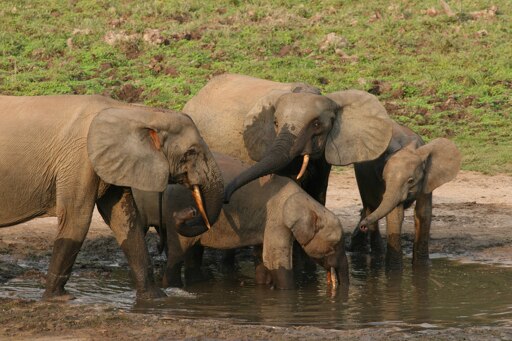
BOMBIA, Guinea — As day breaks over the green hills around the town of Bombia, the raucous cries of chimpanzees echo through the forests of the Kankouyah mountain range. Recently, the sounds of the wild have been mingled with the distant growling of bulldozers. The air, once laden with the aromatic scent of damp leaves and wood, is now thick with dust and diesel fumes. A few kilometers south of the village, a ribbon of red earth cuts through the vegetation: the railway corridor for the Simandou project. This mining megaproject is intended to connect the iron ore deposits of Simandou to the deepwater port currently under construction at Moribaya in on the Atlantic coast of Guinea. This is an economic lifeline for the country, but an open wound for biodiversity. The railway corridor, which runs more than 650 kilometers (400 miles), crosses several vulnerable areas, home to some of the last remaining populations of forest elephants (Loxodonta cyclotis) and western chimpanzees (Pan troglodytes verus) in Guinea. According to experts from the Guinean Office of National Parks and Wildlife Reserves (OGPNRF), these elephants’ ancestral migratory routes pass through wetlands now fragmented by the railway corridor. A railway embankment along the Simandou railway corridor. Image by Younoussa Naby Sylla for Mongabay. “Guinea is home to more than 5,000 chimpanzees in the Moyen-Bafing region alone,” Mamadi Tounkara, head of the OGPNRF’S legal and litigation department, tells Mongabay. “But the passage of earthmoving equipment, the noise of explosives, and the fragmentation of the…This article was originally published on Mongabay
From Conservation news via this RSS feed