

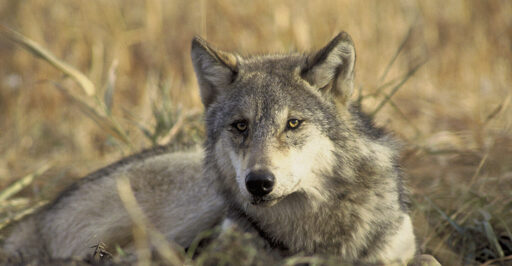
This is the fourth part of Mongabay’s series on the expanding wolf population in California. Read Part 1, Part 2 and Part 3. A lone gray wolf (Canis lupus) named OR-7 — then a 2 ½-year-old male — created history when he crossed over the state line from Oregon into California in 2011, becoming the first wolf to set foot in the state after nearly a century. His arrival, followed by his descendants who then established new packs, became a thumping conservation success for an endangered species in present-day California. Meandering the vast wilderness that straddles the border between the two states, OR-7 visited a few ranches in northern California on his 4,830-kilometer (3,000-mile) journey, including Mark Coats’ place in Siskiyou County. Coats, who was recuperating from an injury at the time, vividly remembers that visit. He’s raised cattle for more than five decades now. “My neighbor came over and said, ‘Mark, there’s a wolf on your ranch. Don’t shoot it. They’ll put you in jail,’” Coats said. That night, he found OR-7’s footprints on his property. Various predators had killed his cattle over the years: coyotes (C. latrans), black bears (Ursus americanus) and mountain lions (Puma concolor). But wolves were new. After the last gray wolves were shot down in the 1920s, generations of California’s ranchers raised their cattle without having to worry about — or prepare for — this predator in their landscape. OR-7’s visit panicked Coats and his fellow ranchers. “I was already losing five calves a…This article was originally published on Mongabay
From Conservation news via this RSS feed