

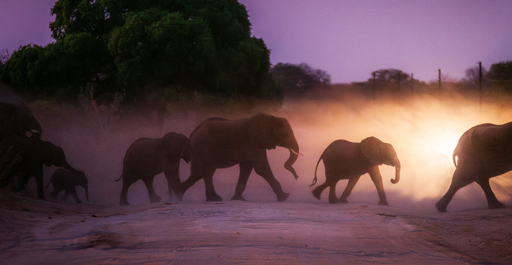
Since being collared in Zambia two years ago, a young bull elephant known to researchers as Z16 has walked nearly 12,000 kilometers, or 7,500 miles — three times the distance between New York and Los Angeles. In that time, Z16 has traversed four countries and visited six national parks. In Southern Africa overall, populations of elephants are stable, or even growing, but space for them is not. This pressure has increased human-elephant conflict and fueled calls from some for elephant culls. Z16’s epic trek underscores a quieter, more hopeful solution to the region’s so-called “elephant problem”: keeping the routes that connect fragmented ranges open through the creation and protection of wildlife corridors. Situated in the northwestern corner of the Sobbe Wildlife Conservancy, in Namibia’s long, narrow Zambezi region, the Sobbe Corridor provides a link for elephants moving between Botswana, Zambia and Angola. When environmental anthropologist Emilie Köhler began her fieldwork in Sobbe in January 2023, she saw the crooked boughs of trees inside the corridor shaped by countless generations of African savanna elephants (Loxodonta africana) rubbing their backs as they passed through. “They come into [Namibia’s] Mudumu National Park, then they use the Sobbe Corridor to move into the Zambezi State Forest [also inside Namibia] and then go into Zambia and Angola,” she says. “It connects different protected areas, but also links movements between different countries, which makes it extremely important.” Elephants embark on a daily journey to the Zambezi River from safe havens away from human settlements. Image ©…This article was originally published on Mongabay
From Conservation news via this RSS feed