

Subscribe here: Apple Podcasts | Spotify | YouTube | Overcast | Pocket Casts
There are an estimated 14 million people living in the U.S. illegally, and only so many ways to find them. Even with ICE’s roughly $28 billion annual budget, even with a massive recruitment campaign and the rapid deployment of Border Patrol, the Trump administration may not be able to accomplish its goal of 1 million deportations every year. So the administration has started to lean more heavily on a different strategy: asking migrants outright to leave voluntarily. The Department of Homeland Security launched a $200 million advertising campaign explicitly urging migrants to “self-deport.” “Do what’s right,” DHS Secretary Kristi Noem said. “Leave now.” More recently, Donald Trump called on social media for “REVERSE MIGRATION,” and later clarified that he wanted to “get ’em out of here; I want to get ’em out.”
In this episode, we follow one couple as they make a decision: Should they stay and build a life in the U.S., or submit to Noem’s orders and leave? Matt Borowski is an undocumented immigrant from Poland, but he did not tell Maddie Polovick that until their second date. By then, she was already falling in love. They got married five years ago on a mountain peak in Colorado and settled in Chicago, close to her best friend and some of her family. By the time Border Patrol showed up in Chicago this fall, Borowski’s few legal paths to citizenship had dried up. One day, he broached the idea of moving to Poland, and she cursed him out. But he kept bringing it up, because day by day, it was becoming harder to avoid: The place they wanted to make home did not want him. They had to decide.
The following is a transcript of the episode:
Hanna Rosin: Just a quick note: This episode contains some cursing that you may not usually hear on this show.
On September 6, President Trump posted a fabricated image on Truth Social of a burning Chicago skyline with helicopters flying overhead. “‘I love the smell of deportations in the morning,’” he wrote, a reference from Apocalypse Now.
[Sounds of protests]
Rosin: A couple of days later, the Department of Homeland Security announced “Operation Midway Blitz.”
TV anchor 1: Operation Midway Blitz will “target the criminal illegal aliens who flocked to Chicago and Illinois—”
TV anchor 2: —agents and demonstrators pushing and shoving outside an ICE facility just outside the city this morning—
TV anchor 3: From tear gas being deployed outside a Logan Square market to an alderperson being handcuffed checking on a man who had been detained and injured.
[Sounds of protests]
Rosin: These types of scenes have since played out all across the country in the pursuit of one ambitious goal: at least a million deportations every year.
But even with ICE’s $28 billion annual budget—the largest for a law enforcement agency in the federal government—it still may not be possible to deport the 14 million or so people who are here illegally.
So maybe these ICE raids aren’t just ends; they are means to something else: to get people to choose to leave voluntarily.
[Music]
Rosin: And there’s more than one way to accomplish that.
There’s the overt way: Make people afraid to go to work or take their kids to school or even leave their homes.
And then there’s a more subtle way, where the constant pressure wears down something that once felt real: this American idea, or maybe hope, that there could be a future here.
Maddie Polovick: People knew what the election meant for us. But I just couldn’t bring myself to say it.
Rosin: Last spring, we met a young couple in Chicago. One’s a U.S. citizen, and the other is undocumented, from Poland.
Matt Borowski: Yeah, honestly, when this started happening, I thought it was only a matter of time before this hits closer to us.
Polovick: Yeah.
Borowski: It was only a matter of time.
Rosin: They may not be the kind of couple that most people think of when it comes to this issue, because they have more choices than most.
But the past year had them asking exactly the question this administration wants them to ask: Is it just better to leave?
Borowski: There are Black Hawk helicopters flying over my head. Apartment complexes are being attacked in the middle of the night. Right now, it does feel like things are kind of just falling apart.
Rosin: For the last several months, we asked them to document how they would make that decision.
Polovick: Today’s our five-year anniversary. (Laughs.)
Rosin: They sent us more than a hundred recordings—
Family member: Cheers to family.
Family member 2: To family!
Rosin: And more than 40 hours of the life they’ve made.
Polovick: Oh my God. How do you feel? (Laughs.)
Borowski: Whew.
Polovick: (Laughs.)
Polovick: There’s just so many lemons here. At some point, you’re like, Okay, can we make some fucking lemonade?
Borowski: But they’re not lemons.
Polovick: What are they?
Borowski: It’s shit.
Polovick: Okay.
Rosin: And day by day, it was getting harder to hide.
Borowski: I’ve heard reports of ICE being around and sniffing around, but never a raid like this. And now I’m freaking out.
Rosin: I’m Hanna Rosin. This is Radio Atlantic. And this is one snapshot of one couple who are about to make a choice.
Rosin: How did you and Matt meet?
Polovick: We met online, and it was really one of those things, like, as soon as we started talking, as soon as we had our first date, it was like, Okay, there’s something special about this guy.
Rosin: On Maddie Polovick and Matt Borowski’s first date, they went to a restaurant in Chicago known for their Tater Tots.
On their second date, Matt told her that he was undocumented.
[Music]
Rosin: And was your reaction like, Uh-oh, or what was your reaction?
Polovick: (Sighs.) I would say I was taken aback. I think if I knew a little bit more about the situation, the hurdles that he has navigated and would navigate, I think if I would’ve known that, I would’ve been more concerned. But at the time, I was just very like, Huh, okay. It’s enough to give me pause. But I enjoyed his company enough that I was like, Okay!
Rosin: (Laughs.)
Polovick: This is good information.
Rosin: Yeah.
Polovick: I would like to proceed, but—
Rosin: Yeah.
Polovick: Maybe there’s a little bit of hesitation in my brain, but it’s okay. (Laughs.)
Rosin: The more serious things got between them, though, the more questions Maddie had.
Polovick: And at least at that time, ’cause we weren’t talking about leaving America yet, at least, it was like—us staying in America was really the only thing that was on the table, so it was like, Okay, with the immigration stuff in particular, this is going to live with him, and am I okay with that? Am I okay with this becoming my life?
Rosin: For Matt, that life had meant never being able to plan ahead, had meant applying for a job as a teenager and breaking down when the owners found out that he’d lied about his paperwork, and continuing to lie about his paperwork because what other choice did he have?
Matt’s life had always been precarious, which was tolerable when he was alone. But now, there was Maddie.
Borowski: Can you, for my sake—
Polovick: What?
Borowski: —elaborate on the whole derailing your life thing a little bit more?
Polovick: It was—
Borowski: Because I’m thinking about it again, and I’m thinking about those conversations.
Polovick: Yeah.
Borowski: So I need to be kind of—not reminded, but I almost wanna hear how close we were to not working.
Polovick: We were never close.
Borowski: But you know what I mean when I say that. Like—
Polovick: We were never close. (Sniffles.) I said this before, and I’ll say it again: When I met you and started falling in love with you, it felt like coming home after a really long time of being away.
Borowski: Yeah.
[Music]
Rosin: Maddie and Matt got married five years ago on a mountain peak in Colorado. It was just the two of them. They wore the same clothes that they’d worn on their first date, and they had a picnic of snacks from Trader Joe’s.
Love can conquer a lot of things, but the immigration system is not one of them.
And because of the way Matt had come to America—illegally, with his mom from Poland, when he was 6—there was no real pathway for him to citizenship. And for someone in his situation, marrying a U.S. citizen does not undo that.
At one point, he did have protected status under DACA, Deferred Action for Childhood Arrivals, who are sometimes called “Dreamers.” But there was also a point in his life when he had no money, nowhere to live, and no support from his family. So he missed one window to renew his DACA application, which meant that he would have to file a new one.
But no new applications have been processed for years. Trump has opposed the program going back to his first term.
Matt’s only real option would be to leave the country and apply for a visa, which would automatically trigger a 10-year ban—so no option that allows him to keep building a life in the U.S. with Maddie.
Now, as an undocumented person, Matt can hide better than some because he’s white and speaks English without an accent. Maddie, who’s half white and half Black, has joked that ICE is more likely to stop her than him.
Borowski: It’s no question that the color of my skin and my nationality helps me. It just does. And I’m very aware of that, and I’m honestly very lucky, in a fucked-up way, but it’s not like I’m afraid of a witch hunt or something. It’s more so just any sort of benign incident where my status could be looked up. And it’s very easy to find that I do not have papers.
Rosin: Mm-hmm. Does your wife think you’re being paranoid or reasonable?
Borowski: A mixture of both.
[Music]
Rosin: Compared to a lot of undocumented people in Chicago, Matt has it easy. But compared to people who can live and work here safely, he lives a life of real and constant uncertainty.
Matt could never really count on a career, never leave the country, never vote, never be pulled over or arrested on the off chance that it could lead to something worse.
And then last year, some hope: Under the Biden administration, DHS announced a policy called Keeping Families Together, which would allow some undocumented spouses of U.S. citizens to apply for legal status while they stayed in the country.
Polovick: It felt like a godsend. I remember he woke me up one day in June and was like, You will not believe the news that has just come out.
Rosin: The program was tailor-made for them.
Polovick: ’Cause there were very specific restrictions on it. You had to have been married for several years. You had to have entered the United States at a certain time. And so we spent all summer riding this high of, like, We are finally gonna get Matt status. This is finally gonna happen. Oh my God.
It was only supposed to be, like, a few weeks. But a few weeks turned into another few weeks, and then it turned into a month. And that was when the hammer fell.
Rosin: The same week that Trump won his reelection in November, on a campaign filled with the promise of mass deportations, a judge in Texas said that the Biden administration had overstepped its legal authority. He struck down the Keeping Families Together policy for good.
Matt and Maddie were back to square one, back to feeling like they were being pushed out of the place that they wanted to make a home if someone would just let them.
Matt packed a go bag, stashed away some cash, and made sure to always have his Polish passport within reach.
Borowski: My sister-in-law who’s Polish, her aunt, who has a green card, was detained at O’Hare not long ago. And things like that are just like, Okay, she was detained, and she was let go. Green card—okay, fine. That’s not gonna happen with me if they look into my situation.
[Music]
Borowski: I’m never gonna forget this. It was the most vivid dream about being home I’ve ever had.
Rosin: Matt had lived in the U.S. for 24 years; he didn’t know any other place as home. But sometimes in his dreams, there was this other place.
Borowski: I really did feel like I was there for a second, and it was the closest I’d ever felt to feeling that way. Everything is so vivid, and I can see it. I’m almost there, you know?
Rosin: There are still things Matt remembers about Poland. His town in the southeast of the country was quiet, rural. He remembers farming equipment, picking strawberries in a field, and he remembers living in a house with his mom, uncle, and grandparents.
Borowski: This was, what, nine, 10 years after the Soviet Union fell. So obviously, we had TVs, but we didn’t have cable; we didn’t have anything like that. So it was a very simple life, is the best way I can put it, yeah. And we would all just sit together and watch storms. And that was it. It’s peaceful, ultimately.
Rosin: Why is a storm peaceful? That’s an unusual word for a storm.
Borowski: Well, if it’s from a distance. If it’s at a distance, it is peaceful. Yeah, I don’t know—destruction at a distance, it’s an interesting thing to think about.
Rosin: Matt and his mom left Poland in 2001, got on a plane without Matt saying a proper goodbye, and landed in Mexico City, where he says they walked across the border and into the U.S. illegally.
Eventually, they made their way to Chicago. His mom met up with a guy from Poland who became his stepdad, although the two of them never officially married. Several years later, they had another kid: his half brother, Jakub, who’s American.
If one day he up and moved, disappeared to another country in the same way that he left, Matt says the only person he would miss would be Jakub.
He hasn’t spoken to his parents in years.
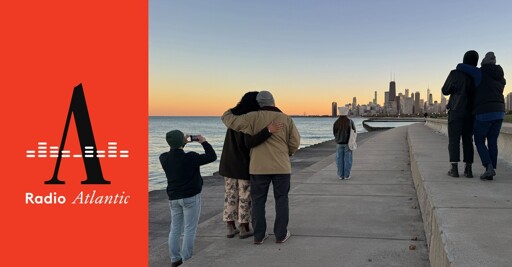
Polovick: We had been going on all of these walks at the park by us, and then there was one day we went on a walk on the pier—great view of the city. And so we had gone out there on a walk, and that was when Matt first floated the idea of Poland.
[Music]
Rosin: After trying and failing so many times to find a legal way to stay in the U.S., the more Matt thought about it, the more Poland made sense as a place they could live instead.
For every immigration roadblock that Matt faced here in the U.S., Maddie could clear them easily in Poland. Because they were married and Matt would be a citizen, Maddie could get temporary residency right away.
So last year, he brought it up.
Borowski: I would describe her as angry. I would describe her as angry; I would describe her as defiant.
**Polovick:**I told him verbatim: I am not fucking moving to Poland.
Borowski: Initially, she just shut down. She was not having it.
Polovick: I was irate. I stormed off on this pier. I left him, and I was like, No, I’m not—you’re—get the fuck out of here.
Borowski: She would probably tell you that she felt like I was taking her away from something or taking something away from her.
Polovick: It was hard for us to relate to each other sometimes because it felt like I was being asked to give up more than he was. I don’t wanna go further away from my family. I moved here with my best friend from college. So people like that, that I’m like, No, I don’t wanna leave her.
And so there was this whole world that I had built for myself that now I was being asked to possibly have it all ripped away.
Rosin: Before Matt and Maddie could stop going around in circles and have a real conversation about Poland, they had to look at this deeper question: What is home?
On the one hand, for Maddie, Matt was home. It’s why, she said, she fell in love with him. But home for her was also her brother, her best friend from college, her favorite bar. How could she leave all that?
So in February, Matt tried to cut through their fighting with a plan.
Polovick: And Matt is like, Yeah, Mad, I think you should visit.
**Borowski:**I bought the plane ticket, and I said, You’re going because if you don’t go, I feel like you’re gonna resent me.
Polovick: I did not want to go. But it wasn’t because I didn’t want to go; it was because I knew if I went, it means that this is real. And for a while, I was like, Yeah, okay. Yeah, maybe. We’ll see. And admittedly, I kind of was hoping that he would forget about it and it wouldn’t be brought up again, and I’d just kind of let life pass by, and then: Maddie, I think you should visit.
Borowski: This is Maddie talking about going to Poland to check it out since I can’t.
Polovick: I just—I really did feel myself getting emotional, like, my eyes getting prickly as I was seeing it.
Rosin: In May, around the same time the Trump administration was offering migrants $1,000 to “self-deport,” Maddie had just come back from her trip.
Before going, they’d both agreed that if she didn’t like Poland—if she had any negative feelings whatsoever—it was off the table.
[Music]
Rosin: When you were there, could you see your own self anywhere?
Polovick: Yeah, I could. I could.
The way that I felt when I was there was the same way that I felt when I met him, which was, This feels right. It just, like, in my bones, it made sense to me.
This thing that felt like, Oh, I’m not someone that would leave America. I’m not smart enough or courageous enough to do that. I don’t know. But when I was there, it was like, No, you can do this, and it will be okay.
Polovick: Yep. (Laughs.) Oh, I took this ’cause I thought it was funny.
**Borowski: “**Sensual pierogi”?
Polovick: (Laughs.) I was like, What is a sensual pierogi? So we gotta go there, and we gotta find out what their sensual pierogi are.
Borowski: The fuck.
Polovick: We gotta find out what their sensual pierogi are.
Rosin: So how serious are you guys? On a scale of one to 10—one is just like, Meh, let’s go to Poland, and 10 is like, We have plans; I’m saving for a plane ticket, scouting for an apartment—where are you on that scale?
Borowski: Ten.
Rosin: Ten?
Borowski: Ten. We’re, like—
Rosin: Damn.
Borowski: It’s set. It’s set. It sucks, but it’s like, Okay. (Laughs.) Honestly, that’s kind of what it’s like. It’s like, Okay, fine. Because of the way I grew up, I am very good at letting things go, which is not necessarily a positive thing, but it’s a survival mechanism. I’m very good at letting things go, and I’ll just deal with it later.
Borowski: Hold on. My heart’s racing now.
Polovick: My heart is racing. (Laughs.) My heart is racing. Do you really think we should get these now? I’ve yet to see it below a thousand.
Borowski: I’ve never seen it below a thousand.
Rosin: Maddie was maybe not so good at letting things go, or at least she hadn’t had much practice.
But they seized the moment: A deal is a deal.
Borowski: —flying back—you look like you’re shaking.
Polovick: I am.
Borowski: Oh my God. (Laughs.)
Polovick: I am. I am shaking.
Borowski: It’s okay. It’s okay. Hey, baby girl. It’s okay.
Polovick: Yeah.
Rosin: At the end of May, they sat down to book their flights to Poland. They picked seats on the right side of the plane because that was the side where you could see the city as you left.
Borowski: Okay, so outbound flight Tuesday, November 4, 2025.
Polovick: Departing 5:20 Chicago.
Borowski: Arriving 11:40 a.m. in Kraków.
Polovick: I feel so shaky.
Borowski: You ready? Yeah?
Polovick: (Voice breaks.) I think we should do it. I think we should do it. How do you feel?
Borowski: Let’s do it.
Polovick: Okay.
Borowski: You wanna put your hand on the mouse? Just put it on my hand. Three, two, one. Oh.
Polovick: (Laughs.)
Borowski: That’s anticlimactic. Three, two, one. (Laughs.) Fucking stop! Okay. I’m just gonna do it.
Polovick: It’s ’cause you’re hitting it at the wrong—
Borowski: Fucking right-click.
Polovick: My heart is pounding.
Borowski: This is the most ridiculous thing ever.
Polovick: Oh my God. Okay, don’t reload the page.
Borowski: Ooh, okay.(Laughs.) Oh, fuck this place. Let’s fucking go! Come on!
Polovick: I can’t believe—
Borowski: (Laughs and claps.)
Polovick: I’m so ready to go.
Borowski: Let’s do this!
Polovick: (Laughs.)
Borowski: Let’s fucking go.
Polovick: Yeah.
Borowski: Let’s fucking go.
Polovick: Yeah. Yeah. (Laughs.)
Borowski: Come on!
(Sounds of couple kissing.)
Polovick: Yeah. (Laughs.)
Borowski: (Laughs.)
[Music]
Rosin: It’s one thing to buy a plane ticket. But it’s another to realize what you might be leaving behind.
That’s after the break.
[Break]
Polovick: Okay, we’re recording. Okay, so this is kind of some bittersweet news to share with you guys, but it is exciting.
Rosin: At the start of summer, Maddie—who worked at a nonprofit in Chicago—let her co-workers know that she would be leaving her job.
Polovick: My last day here will be mid-October. And the reason it’s coming to an end is because, in early November, Matt and I are moving to Poland—
Co-worker 1: Oh, Maddie!
Polovick: —and we’re moving to Poland because of—some of you know this—but Matt is undocumented. And over the duration of our relationship, especially in the last year, things have gotten a lot worse, right? We work in this community. We serve immigrants.
Rosin: For Matt, this move was a homecoming of sorts. He’d lived in America for the majority of his life, but he’d kept up with his Polish, and he still had some extended family back in Poland.
Co-worker 2: —that leading up to October is probably gonna be very difficult, as well, emotionally, so—
Rosin: For Maddie, of course, this move was different.
Co-worker 2: If you have any questions, feel free to ask me or Maddie. I’m sure you have plenty of questions. But we have so much more to look forward to. And you can always come back here if you’d like. (Laughs.)
Co-worker 1: Maddie, don’t be afraid. That’s all I have to say, Maddie. Don’t be afraid.
Rosin: Maddie was leaving behind a career. She did not speak the language, would not know anyone in Poland besides Matt. And although she could return to the U.S., it would only be for shorter visits.
A life with Matt meant they were probably never going to live in America again.
Polovick: That’s what I’m resenting right now. I’m resenting that I’m having to move—just bear with me—but I’m having to move to this fucking country, and I have to learn this fucking language.
Rosin: They had given themselves enough time to get ready for the move—and enough time to second-guess it.
Borowski: Are you gonna be okay?
Polovick: I don’t have another option. And I mean that literally. I don’t have another option—I have to find a way to be okay. So I have to do the things that I have to do. That’s how I will be okay.
Borowski: Don’t forget Polish.
Polovick: And don’t forget Polish. And don’t forget to do my knee exercises. And don’t forget to find time to talk to my friends before I leave America and literally never live here ever fucking again. And—do you want to keep going?
Borowski: Look, you saying this shit does not make me feel better.
Polovick: I’m saying that facetiously. It’s just, like—there’s just a lot.
Borowski: It’s not facetious. It doesn’t come off as facetious.
Polovick: (Sighs.)
Borowski: I know you have a lot to do. What the fuck have I been doing since January? Everything. I know there’s a lot to do. I know. It’s not funny anymore.
Polovick: Okay, well, I’m—I don’t know. Do you want me to apologize for being bitter?
Borowski: No.
[Music]
Rosin: Matt had his own reservations too. One was that the move would hurt his relationship with Maddie. Another was that he was turning his back on the home that meant more to him than he sometimes let on.
On his last day of work—when his colleagues showered him with cards, tamales, and hugs, and helped him nearly close the bar down after work—he was caught off guard.
Borowski: So yeah, it’s just hard to let that go, man. It’s—shit. Yeah, just a lot of connections were made over the last three years, more than I, I guess, paid attention to.
Polovick: Yeah.
Borowski: Yeah. It makes me wanna stay. As hard as the job is and as hard as it is living here, that voice in the back of my head is like, You should stay, man. Look at all this—
Polovick: I know.
Borowski: —and you wanna start over?
Rosin: Most of all, they were leaving behind Maddie’s family, who had become Matt’s family now too.
Rosin: Who was the first person you told in your family that you were leaving?
Polovick: I would say—seriously, I would say it was my dad.
Rosin: What did he say?
Polovick: He understood, and he was not surprised that we were making this choice.
Buddy Polovick: Yeah. Lots of stages of grief. We accept it. The thing that gives me comfort is knowing that they’re gonna have a healthy, secure life, and it’s gonna be good.
[Music]
Sherri Polovick: I think of so many other families that are going through this and they don’t have a happy outcome, and they have a worse outcome of someone being deported to a country that either they fled or they don’t live in, and I feel like this is the best outcome possible, so.
Buddy Polovick: Yeah. It’ll be okay.
Sherri Polovick: It’s just our story. We’re just one.
[Sounds of whistles and people shouting]
Rosin: With a little more than a month left before their flights, everything around them seemed to be ramping up. ICE and Border Patrol had Chicago on edge, and Trump was threatening to send in the National Guard.
Donald Trump: Well, we’re going in. I didn’t say when. We’re going in. When you—
Rosin: Tensions were also escalating in Poland after news broke that they’d shot down Russian drones in Polish airspace.
News anchor: —news out of Poland: the military there accusing Moscow of an act of aggression after Polish and NATO forces scrambled to shoot down—
Rosin: And Maddie was having panic attacks.
Polovick: Okay, I am really freaking out. (Exhales.)
Borowski: Gimme your hand. Gimme your hand. Gimme your hand. It’s okay.
Polovick: Oh my God. I feel like I’m gonna throw up.
Borowski: Hey, hey, hey. It’s okay. It’s okay. It’s okay. It’s okay. Oy, oy, oy. It’s okay. Deep breaths. Deep breaths. In and out. In and out. In and out.
Polovick: (Breathes and sniffles.)
Borowski: Keep holding my hand. It’s okay.
Polovick: I’ve had so many dreams over the years where I have this terror that comes over me because I’m like, Oh my God, what have we done? We’ve left America. We can’t go back. What have we done?
And I’ve had that dream so many times. But also, at the same time, there’s just so much joy ’cause I’m like*, We’re out. We did it. We’re not in America anymore*. But like, What have we done?
Buddy Polovick: Yeah.
Polovick: That’s what I’m thinking about, is like, Okay, it’s gonna be real this time. It’s not gonna be a dream.
Polovick: Do you think I’m weak?
Borowski: No. No.
Polovick: I just wonder how you think about me sometimes with this.
Borowski: I think about you as my wife, and I love you a lot. I think about you as my wife who is fucking amazing for being willing to get on a plane with me and fly 5,000 miles across the Atlantic and settle somewhere new. That’s what I think of you.
I will be eternally grateful for what you’re doing. Whew, tears.
Polovick: How’s it looking in there?
Drew Polovick: We’re good.
Polovick: Yeah?
Buddy Polovick: The sardine can is being packed as we speak.
Polovick: Wow, well—
Rosin: On their last day in America, all of Maddie’s family; Matt’s brother, Jakub; and all of their luggage were loaded into a van to go to the airport.
Polovick: Air France, 5C—5C. We’re this way. Okay, so I think Matt and I are gonna check all of our bags, and then we’ll say goodbye.
Rosin: Who will you miss the most, do you think?
Polovick: Oh. I’m gonna miss my brother.
Rosin: Mm.
Polovick: Yeah. I’m gonna miss my brother the most.
[Music]
Polovick: Ooh, I think it’s hitting me a little bit. (Sniffles.) It’s okay—I’m excited. Yeah. I’m glad that we got to live in the same city for a little bit. That was really special. (Laughs.)
Drew Polovick: Don’t say that. (Laughs.)
Polovick: (Laughs.) I know. I know. I know.
Drew Polovick: That’s why I brought my sunglasses inside.
Polovick: (Laughs.)
Borowski: Hey, as soon as I walked in, I cried. As soon as I walked in, I cried.
Polovick: Shit, I’m getting really warm in this. (Laughs.) I’m a little sweaty—I don’t know about you guys. (Laughs.)
Borowski: I just had my passport scanned for the first time.
Polovick: Oh my God, yeah.
Rosin: After all the bags had been checked and the boarding passes printed, the only thing left to do was the thing that they’d been dreading.
They found a space off to the side, and for a moment, they were quiet.
Borowski: It’s that time, right?
Rosin: Matt went to his younger brother, Jakub, first.
Borowski: Remember when I moved back for a little while when I was, like, 22, 23, and I left really quickly, and we had the same sort of thing happen—you remember?
Jakub: Yeah.
Borowski: I think of it as that, except now that I’m leaving and I’m going where I’m going, you at the very least know that I can be safe, you know?
Jakub: (Cries.) I love you.
Borowski: I love you, man. I love you too.
Rosin: They said goodbye to Maddie’s mom.
Sherri Polovick: Oh, I don’t wanna say goodbye, Mad.
Polovick: We’re gonna see each before we know it.
Borowski: —because I look at you as Mom now, you know? Yeah. Like, everything I wanted in one.
Rosin: They said goodbye to Maddie’s brother.
Polovick: I know. I know.
Drew Polovick: I’m so mad at you. (Laughs.)
Polovick: (Laughs.)
Drew Polovick: I changed my mind—this is the new maddest I’ve ever been.
Polovick: (Laughs.)
Rosin: And then, it was time.
Polovick: Oh, shit. Is this it?
Borowski: This is it.
Family member: Wait, how do you say goodbye in Polish?
Polovick: Goodbye? Well, there’s, like, 12 different ways to say anything.
Family member: Farewell.
Borowski: Farewell. I just say it like this: Do zobaczenia.
Family members: Do zobaczenia.
Borowski: That’s “until next time.”
(Polovick, Borowski, and their families repeatedly say, “Do zobaczenia,” to one another.)
Polovick: Okay. Let’s do it.
Family member: They’re off.
Borowski: Bye.
Family member: Love you guys.
Polovick: See you on the other side.
[Airplane dings]
Rosin: As the plane lifted off—there, in seats 17D and 17F, with a one-way ticket—they found themselves caught between two homes: one full of the people who loved them, a few thousand feet below, and the other full of uncertainty, a few thousand miles ahead.
Borowski: Ah, fuck.
Polovick: (Exhales.)
Rosin: The day before their flight, we’d asked Matt if he felt like he was giving something up by leaving America. And he said that he did.
When we asked him what he felt he was giving up—a country, a city, an idea—his answer was: “On what could’ve been.”
[Airline employee makes an announcement: “Ladies and gentleman, welcome to Warsaw. It is 20 past four. You may now deactivate flight mode. Please keep your seatbelt fastened until the seatbelt sign has been switched off.”]
[Music]
Rosin: This episode of Radio Atlantic was produced by Jinae West. It was edited by Ethan Brooks. Rob Smierciak engineered and composed original music. Ena Alvarado fact-checked. Claudine Ebeid is the executive producer of audio at The Atlantic, and Andrea Valdez is our managing editor.
Listeners, if you enjoy the show, you can support our work and the work of all Atlantic journalists when you subscribe to The Atlantic at TheAtlantic.com/Listener.
I’m Hanna Rosin. Thank you for listening.
From The Atlantic via this RSS feed