

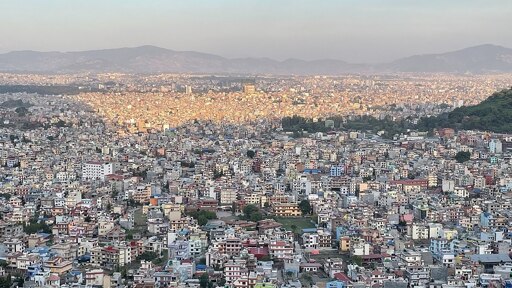
The transformation of Nepal’s urban landscape has brought us to a pivotal moment. Having observed this evolution as an environmental engineer, I believe its current growth trajectory is unsustainable, despite its potential. Although Nepal contributes a negligible 0.1% to global greenhouse gas emissions, the country still disproportionately suffers the increasing impact of climate change and is one of the most climate-vulnerable countries worldwide. It is evident in the average annual maximum temperature in Nepal, which has been increasing at a rate of 0.056° Celsius (0.1008° Fahrenheit) per year between 1971 and 2014. Unpredictable weather, extreme events, and threats to agricultural productivity define our daily reality as one of the most climate-vulnerable nations. Moreover, our domestic actions are dangerously exacerbating this vulnerability. A rapid, largely unplanned urban population increase from 17% to more than 27% between 2011 and 2021 has fueled this issue. This is not just due to organic migration, but was instigated by the 2017 restructuring and reclassification of local administrative boundaries under the federal system. This restructuring converted 58 existing municipalities and numerous village development committees (VDCs) into a total of 293 municipalities. Table 1: Nepal Urbanization Trajectory and Administrative Reclassification (2011-2021). This chaotic growth places immense, unbearable pressure on existing urban infrastructure and compromises our environmental quality. Water and sanitation shortages threaten public health and social stability in densely populated areas. The most severe consequence of this unplanned expansion is the breakdown of the natural/urban interface. Haphazard development encroaches on agricultural lands, which are vital for national…This article was originally published on Mongabay
From Conservation news via this RSS feed