

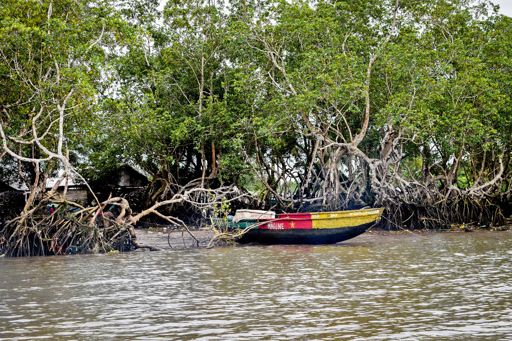
DOUALA, Cameroon — Henry Belle Ekam, 37, cuts a frustrated figure as he paddles his boat to the shore in the Bojongo neighborhood of Cameroon’s largest city, Douala. The fisherman has been out on the waters of the Wouri Estuary for hours, and all he’s brought back to show for his effort is a tiny catfish. “It’s so frustrating,” he says, putting away the empty net. “A few years back, you didn’t need to go far to have a good harvest. Everything has changed.” The coastal landscape here has changed, and with it the fishing fortunes of resident communities. Experts point to retreating mangrove forests as one of the reasons for the troubles the Ekam and other fishers here are facing. The Cameroon Mangrove Ecosystem Restoration and Resilience (CAMERR) project, launched in November 2022 by a group of international NGOs in partnership with the Cameroonian government and local organizations, is one of the largest mangrove restoration projects in the country. It aims to restore 1,000 hectares (nearly 2,500 acres) of mangroves over 30 years. The focus of the initiative is the estuary of the Wouri River, with the city of Douala on its southeastern shore. The Watershed Task Group (WTG), a local nonprofit leading the effort, says it has restored more than 100 hectares (250 acres)f mangroves in the Cameroon and Ntem river estuaries. In Bojongo (part of the Douala or Cameroon estuary), under another initiative of the local administrative council and with funding from the United Nations Environment Programme…This article was originally published on Mongabay
From Conservation news via this RSS feed