

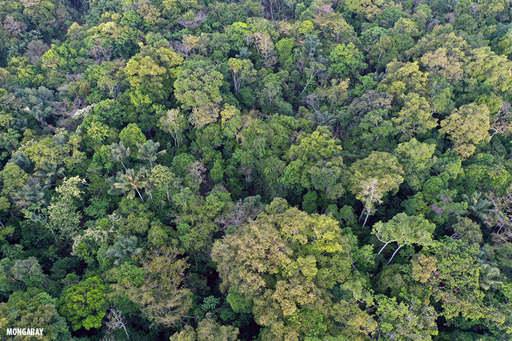
Forest logging decreases during rainy seasons. Deforestation caused by mining might not be as seasonal as previously thought. One of the largest drivers of deforestation in Latin America is large-scale agriculture; in the Congo Basin, it’s small-scale agriculture. These are some of the highlights from a new data set and alert system that shed light on the myriad drivers of deforestation in the tropics. Online deforestation-tracking platform Global Forest Watch (GFW) has, for years, tracked forest-cover loss around the world in real time. The tool has proved useful to conservationists, scientists and local communities. To date, however, the platform only alerted users to deforestation events — but not about what caused those events. The newly launched drivers of deforestation alerts system uses artificial intelligence models to classify deforestation alerts in the Amazon, Congo Basin and Indonesia — home to nearly all of the world’s tropical rainforest cover — based on what might be causing them. “Until recently, we haven’t known what’s been causing the disturbances,” Sarah Carter, research associate at GFW, told Mongabay in a video interview. “Knowing that gives a lot of information to users who either want to take action or want to investigate if it’s something potentially illegal.” In fact, it was feedback from users that prompted GFW to work on developing the new alert system. While information on tree cover loss is extremely useful, it often takes a lot of time and effort to visit the location and investigate the reasons behind it. The new alert…This article was originally published on Mongabay
From Conservation news via this RSS feed
You must log in or # to comment.