

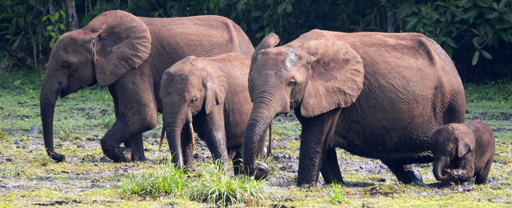
The Congo Basin, the world’s largest tropical rainforest after the Amazon, is under mounting pressure. The Congo’s vast green canopy, stretching across six countries and storing more carbon than the Amazon, is vanishing at an alarming rate — losing an average of 1.79 million hectares (4.42 million acres) per year between 2015 and 2019. The key drivers are well known: small-scale slash-and-burn agriculture, logging for fuelwood, and weak land governance. In response, some governments, international donors and NGOs have turned to reforestation projects as a cornerstone of the region’s climate and biodiversity strategies. But despite a panoply of projects — from tree-planting drives to agroforestry schemes — newly published research suggests that much of what’s happening in the name of “forest restoration” may not be restoring forests at all — but largely focused on nonnative, commodity species. The study analyzed 64 publications covering 26 initiatives in five countries: the Democratic Republic of Congo (DRC), Cameroon, Gabon, Rwanda, and the Central African Republic. The findings paint a complex picture of progress over the last two decades — one where the rhetoric of “restoration” often outpaces the reality on the ground. On paper, Central African governments have made major commitments to the Congo Basin. Under the African Forest Landscape Restoration Initiative (AFR100) and the Bonn Challenge, governments pledged to restore 25% of degraded land by this year. International donors, including the European Union, World Bank, as well as the French, German, Danish and U.K. development agencies, have poured millions of dollars into…This article was originally published on Mongabay
From Conservation news via this RSS feed