

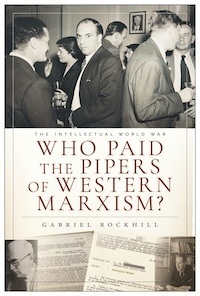
Interview with Gabriel Rockhill, author of Who Paid the Pipers of Western Marxism?
Gabriel Rockhill is Professor of Philosophy at Villanova University. He earned PhDs at both Paris 8 University and Emory University in Atlanta. An accomplished scholar, he has published works for many outlets, both in the United States and in France. He is the editor of the English edition of Domenico Losurdo’s book, Western Marxism: How It Was Born, How It Died, How It Can Be Reborn, published by Monthly Review Press. Here we discuss his book, Who Paid the Pipers of Western Marxism? (Monthly Review Press, 2025). In what follows, MY is the interviewer, Michael Yates, and GR is Gabriel Rockhill.
MY: Gabriel, what we are as adults is conditioned by our childhoods. Tell us something about where and how you grew up. How do you think this influenced who you are now?
GR: I grew up on a small farm in rural Kansas, and manual labor was an integral part of my life from an early age. This included work on the farm, of course, but I also worked construction. My father is a builder and an architect, so when I wasn’t working on the farm, I spent most of my time outside of school and sports on construction sites.
Before I even knew the word, I had the lived experience of exploitation (farm work was never waged, nor was construction work early on). This is clearly one of the things that drove me to the life of the mind: I enjoyed school as a welcome reprieve from manual labor.
My father is deeply passionate about design, and his motto is “hand and mind,” meaning that to be a true architect, you need to have the practical knowledge to build (hand) what you design (mind). I was desperate for more of the latter when I was young, but I have also remained deeply attached to the former. In retrospect, this approach obviously had a lasting impact on me, since I have definitely embraced what I would now call the dialectical relationship between practice and theory.
My parents are liberals who were opposed to the Vietnam War, and they are extremely anti-corporate, without really being anti-capitalist or anti-imperialist. Since my father also teaches architecture at the university, alongside running his small design-build firm, their class standing is petty-bourgeois. They have many justifiable criticisms of contemporary society, and I have learned a lot from them about how the quest for profit destroys the land and the lived environment. However, they primarily resist what they see as a corporate takeover, in part by relying on a do-it-yourself attitude, which certainly impressed itself on me. They do not, however, embrace a broader political project that would be able to overcome the commercialization of everything. In addition to their class standing, which tends to be a hindrance in this regard, they have also been ideologically conditioned to reject socialism (though they have arguably become more open to it with the continued decline of the U.S.).
MY: You were once favorably disposed to some of those you strongly criticize in your new book. Among these were some of your professors and mentors. What experiences led to this change in your assessment of these scholars?
GR: When I went to college in Iowa, I was outclassed by my peers. Many of them had simply had more time for intellectual pursuits and had better formal training than I did at a rural high school in Kansas (though I knew a lot more about manual labor and working-class communities). I often felt like I was playing catch-up and needed to be an autodidact, particularly when I obtained a scholarship that allowed me to move to Paris to begin graduate school in the mid-nineties. Therefore, I applied my self-punishing farm boy work ethic to learning French and other languages, as well as studying the history of philosophy and the broader humanities, before turning to history and the social sciences.
I was attracted to radical discourses, but I was also rather confused. On the one hand, it is clear in retrospect that I was looking for theoretical tools to understand and combat exploitation, as well as oppression (gender, sexual, and racial issues were important to me from an early age). At the same time, however, I was attracted to precious and sophisticated discourses with so much symbolic capital that they elevated me, with distinction, above the morass of manual labor that I wanted to escape (the fact that I continued to work as a construction worker and part-time dishwasher served as a constant reminder). In college, I came to think that Jacques Derrida was the most radical thinker alive, undoubtedly due to both his fame in the United States and the recondite complexity of his work. When I moved to Paris and first started doing my M.A. under his supervision, I was very impressed by him and his followers. I was a hayseed, after all, with no symbolic capital or elite training, so I was seriously outclassed and out-cultured by the Parisian intellectual milieu.
However, I studied with the fury of someone racked with class and cultural insecurities, while also being imbued with a healthy dose of autodidacticism and anti-authoritarianism, and I soon started to perceive discrepancies between Derrida’s claims and the texts he was commenting. Through a rigorous process of empirical verification—including working through original texts in German, Greek, and Latin—I realized that my thesis advisor, like the other major French thinkers of his generation, was forcing texts to fit his pre-established theoretical framework, thereby misreading them. I also increasingly engaged in a more materialist mode of analysis by studying the institutional history of knowledge production and circulation. It became clear to me, as I spelled out in my dissertation and first book Logique de l’histoire, that Derrida’s theoretical practice was largely a consequence of the history of the material system within which he operated.
At the same time, I was becoming increasingly interested in the broader political world. As I recount in a short autobiographical interlude in Who Paid the Pipers of Western Marxism?, September 11, 2001 constituted an important turning point. I realized that my first-hand education in French Theory—I was also taking seminars with the other living luminaries of this tradition—left me ill-equipped to understand global politics, and imperialism more specifically. I was clueless about the things that matter most to the majority of the planet, while I had an intricate understanding of precious discursive refinements that only matter to the intellectual patriciate. I increasingly read figures like Samir Amin, who clarified so much for me, though my theoretical and practical development was still held back by a compulsion to read Western Marxists like Slavoj Žižek, among many others.
MY: Both Losurdo and you use the term “Western Marxism”? What do you mean by this? Is it simply a geographical difference?
GR: Western Marxism is the specific form of Marxism that has arisen in the imperial core and been spread around the world through cultural imperialism. The history of capitalism has developed the core countries of Western Europe, the United States, etc., by underdeveloping the rest of the world. The former have seized or secured at a pittance natural resources and labor from the latter, while using the periphery as a market for its goods, creating an international flow of value from the global South to the global North. This has led to the constitution of what Engels and Lenin called a labor aristocracy in the core countries, meaning an upper crust of the global working class whose conditions outstrip those of the workers in the periphery. This top layer of workers profits—directly or indirectly—off the value flow just mentioned. Such a global stratification of the working class has meant that the workers in the core have a material interest in maintaining the imperial world order.
It is within this material context that Western Marxism arose. Losurdo insightfully traces it back to the split in the socialist movement around the time of the First World War, which was a competitive conflict between the leading imperialist countries. Many of the leaders of the working-class movement in Europe encouraged workers to support the war, and some of them even defended colonialism, thereby aligning themselves—willingly, or not—on the interests of their national bourgeoisies. Lenin was one of the fiercest critics of these tendencies, which he identified as revisionist and anti-Marxist. He countered them with the powerful slogan: no war but class war!
The orientation of Western Marxism has thus often been what we might call “anti-anti-imperialist” insofar as it tends to refuse to support the struggle of those in the global South—particularly when they are self-declared socialists—to secure sovereignty and pursue a path of autonomous development. You do not need to be a specialist in academic debates about the infamous “negation of the negation” to understand that the double negative in “anti-anti-imperialism” means that Western Marxists have tended toward de facto support for imperialism.
This trend has arguably only intensified over the last century. Whereas the revisionists criticized by Lenin were deeply involved in organized politics, a lot of the later Western Marxists withdrew into the academy, where their 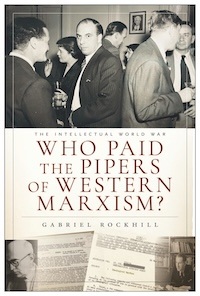 version of Marxism became predominant. While Western Marxism has been driven by the socio-economic base and the imperial world order, it has also been cultivated and shaped by the imperial superstructure, meaning the politico-legal apparatus of the state and the cultural apparatus that produces and disseminates culture (in the broadest sense of the term). A significant portion of my most recent book is dedicated to an analysis of the superstructures of the leading imperialist countries and the various ways in which they have fostered Western Marxist discourses as a weapon of ideological warfare against the version of Marxism defended by Lenin. By engaging in a political economy of knowledge production and distribution, which has required extensive archival research, I shed much-needed light on the extent to which the capitalist class and bourgeois states have directly supported Western Marxism as an “anti-anti-imperialist” ally in their class struggle against anti-imperialist Marxism (meaning Marxism tout court).
Intellectuals and organizers are subjected to the powerful dictates of Western Marxism, but they are by no means rigorously determined to abide by them. There are, indeed, plenty of Marxists in the West who are not Western Marxists, and one of the objectives of my work—like Losurdo’s—is to increase their number. People reading it should find encouragement to mobilize their agency to free themselves from the ideological constraints of Western Marxism.
MY: In the title of the book, you write, “Who Paid the Pipers.” This implies that someone is “calling the tune.” Your book makes clear that these phrases do not simply mean that the Frankfurt School intellectuals, such as Theodor Adorno and Max Horkheimer, were simply bribed to take positions hostile to Marx and what was happening in places where socialism was being put into practice. Instead, you develop a theory of the production of knowledge in a hegemonic social system, namely capitalism. Can you explain your theoretical analysis and exactly how and why leading left intellectuals came to, in effect, enable capitalist hegemony?
GR: The Frankfurt School of critical theory, led by figures like Adorno and Horkheimer, has made a foundational contribution to Western Marxism, and I therefore focused on it in part of the book. You are absolutely right that my methodological approach firmly rejects the dominant, liberal ideology that counterposes individual freedom to determinism. The idea that intellectuals either act completely autonomously or are rigorously controlled by external forces is a massive oversimplification that ignores the dialectical complexities of material reality.
Since my research engages with the history of the U.S. national security state, and the CIA more specifically, some readers assume that I am somehow claiming that intellectuals are puppets on strings, with the Agency playing the role of the grand puppet master behind the scenes. This is not at all the case. What the book offers is a material history of the dominant system of knowledge production, distribution, and consumption. It is this system that functions as the general lifeworld within which intellectuals operate. They have agency and make choices within it, reacting in various ways to the rewards and punishments that structure the system. What the book demonstrates, then, is that there is a dialectical relationship between subject and system. Since the latter is by no means neutral but is rather a superstructural outgrowth of the imperial world order, it rewards subjects that contribute to its objectives. In this sense, rather than the anti-anti-imperialist intellectuals being puppets on strings, they exercise their agency within material institutions in which opportunism on the part of the subject is strongly correlated to uplift within the system. In other words, they choose to advance by giving to the system what it demands and rejecting what it repudiates.
Left intellectuals invested in making careers and climbing the social ladder within the imperial core have to, as a question of survival, learn to navigate the system. They all know that communism is simply beyond the pale, and that there is nothing to be gained from defending—or even rigorously studying—actually existing socialism. If they want to occupy a left position within the extant institutions, then they need to respect—and ideally police—the left border of critique. If they are radicals, they will generally advance more quickly by serving as radical recuperators, meaning intellectuals who seek to recuperate potential radicals within the realm of respectable and acceptable politics, redefining “radical” in the terms of the non-communist left. All of this tends to lead to accommodation with capitalism, and even imperialism, since there is no—real—alternative.
To become a leading left intellectual within the imperial theory industry, subjects have to exercise their agency in conforming to the protocols of this system. One of the things that my research demonstrates is how consistent this pattern is, not only in the tradition of Western Marxism and French Theory, but also in contemporary radical theory with all of its trendsetting discourses (from postcolonial studies and liberal queer theory to decolonial theory, new materialism, and so on). In spite of how much the theory market presents these thinkers and traditions as different and even incompatible, they tend to share the most important ideological orientation of anticommunism.
MY: The longest chapter in your book is devoted to Herbert Marcuse, in your words, “The Radical Piper of Western Marxism.” Your critique of Marcuse is bound to generate controversy, given his status as one of the main philosophers and champions of the New Left of the 1960s and given that he was professor, mentor, and confidant of Angela Davis. Even prior to your book’s publication, critics were hostile to your views on Marcuse. Why did you focus so much attention on him?
GR: Marcuse has been widely identified as the most radical member of the first generation of the Frankfurt School, and this is why I was originally attracted to his work and read it all with great interest. Toward the end of his life, he did take a number of positions that were well to the left of figures like Adorno and Horkheimer. At the same time, like many people, I had heard the rumors of him having connections to the CIA and serving as a form of controlled opposition. Unsatisfied with hearsay, I decided to examine the archival record through Freedom of Information Act requests and archival research.
I have to admit that I was a bit surprised myself when I first started to piece together the study that became, over the years, the last chapter of the book. By reading some excellent scholarship in German, working through Marcuse’s long FBI file, consulting State Department and CIA records, and doing research at the Rockefeller Archive Center, it became crystal clear to me that Marcuse was being disingenuous in the interviews where he was asked about his work for the U.S. state. He actually did regularly collaborate with the CIA, and Tim Müller revealed that he was involved in the drafting of at least two National Security Estimates (the highest level of intelligence of the U.S. government). His collaborations with the U.S. national security state did not at all end when he secured a university position, and he continued to have close ties to current or former state operatives until the end of his life. He was also the leading intellectual in the Rockefeller Foundation’s Marxism-Leninism Project, where he worked hand in glove with his close friend, Philip Mosely, who was a high-level, long-term CIA advisor. This extremely well-funded, transatlantic project had the explicit mission of internationally promoting Western Marxism over and against Marxism-Leninism.
Although I was very familiar with Marcuse’s anti-Sovietism and his strong anarchist tendencies, since I had been reading his work for decades, I did not go into this research with a pre-established idea about how exactly he was situated within global class struggle (if anything, my view of him was more aligned on consensual assumptions regarding his radicality). Given my findings, and their contributions to consolidating an evolving thesis on the deep-seated anticommunism of the imperial theory industry, I felt that I needed to treat his case in some detail, which included tracing out his own political evolution and FBI surveillance. It demonstrates, in many ways, how radical an intellectual can be while still serving, in certain decisive ways, imperial interests.
I should note, in this regard, that I am absolutely open to critical feedback and am a firm believer in the socialization of knowledge. If anyone disagrees with my interpretation (I am sure some of those invested in Marcuse will), then the onus is on them to consult the entire archive that I have examined and propose an account of the facts with greater explanatory power and internal coherence. I would be the first to read such an analysis. If their rejection of my work is based, however, on a priori assumptions rather than a rigorous examination of all of the evidence, then, I am sorry to say, it is not worthy of serious consideration since it is little more than an expression of dogmatism.
MY: Given the sharp splits that exist today between those who support Western Marxism, which no doubt includes most social democrats and democratic socialists, what is the way forward in terms of radically changing the world? Compromise? An independent and global radical left that continues to subject Western Marxism to critique? What?
GR: Here we have arrived at the most important question. Theory becomes a real force in the world when it comes to grip the masses. In many ways, my book charts the remaking of the left in the age of U.S. imperial dominion. While the second half of the book focuses on Western Marxism, the work as a whole is concerned with the overall redefinition of the left—to use the CIA’s terminology—as a “respectable,” meaning “non-communist,” left that is compatible with the interests of capitalism, and even imperialism. The history of how the intelligentsia has been driven in this direction is ultimately important, not simply for its own sake, but because of what it reveals about the broader left. Today, much of the left is thoroughly compatible.
The real task at hand, then, is to rejuvenate the actual left, which is anti-imperialist and anticapitalist. This is a gargantuan task, particularly given the forces arrayed against us. However, if we fail to do so, human life and many other life forms will be eradicated, either through nuclear apocalypse, intensified social murder, ecological collapse, or other capitalist-driven forces.
In order to rise to the occasion, we need to be able to solve at least three important problems. To begin with, there is the issue of theory, which is the main focus of this book. Contemporary theory has generally been purged of any serious engagement with dialectical and historical materialism, and the latter has been widely slandered as passé, dogmatic, reductivist, unsophisticated, totalitarian, and so forth. Even worse, Marxism itself has been hijacked by reactionary forces, working hand in glove with opportunists, and transformed into a trendy cultural commodity—“Western” or “cultural” Marxism—that is anticommunist, capitalist accommodationist, and sometimes openly imperialist and even fascist. Culturalism reigns supreme, while class analysis has been cast by the wayside. This is, moreover, by no means a problem limited to the academy, since the organizing world has been deeply penetrated by these anticommunist ideologies. In this regard, my book seeks to serve as a corrective to such backsliding tendencies, while reconnecting the red thread to the dialectical and historical materialist tradition, developing its methodological contributions, and advancing its analysis of the imperial superstructure in the contemporary world.
The other two problems are the organizational question and the issue of what Brecht calls the pedagogics of form. In much of the capitalist world, the party form, democratic centralism, and even hierarchical political organizations in general have either been abandoned or sidelined. Yet, there is no way for the left to fight and win without disciplined organizations that build collective power. These have to be able to bring people in, educate them, and empower them to take destiny into their own hands. All of this requires forms of communication, cultural expression, and organizing that really connect with people, through their form, and motivate them to engage in collective action to change the world. While my book is primarily focused on the theory problem, it does insist on the crucial importance of an organized left politics, while highlighting its important gains in the form of actually existing socialism. It is also my hope that the book provides a compelling narrative and is an enjoyable read that brings people into the collective struggle to build a better world.
MY: Thank you for this enlightening interview.
GR: Thank you for the excellent questions and for all of the work that you do!
This interview first appeared in Monthly Review.
The post An Insider Critique of the Imperial Theory Industry appeared first on CounterPunch.org.
From CounterPunch.org via this RSS feed
You must log in or # to comment.