

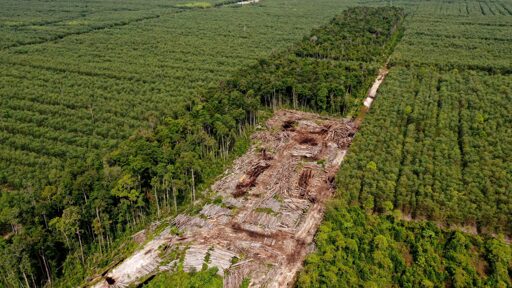
JAKARTA — A major global forestry certification body is under scrutiny for endorsing one of Indonesia’s largest recent deforesters, raising concerns that consumers may be misled about the origins of the wood products they buy. In November, the Programme for the Endorsement of Forest Certification (PEFC) approved the certification of Indonesian timber firm PT Industrial Forest Plantation (IFP). The label allows the company to market its pulpwood as “sustainable,” even though investigative group Earthsight says IFP has in recent years become Indonesia’s second-largest deforester. Between 2016 and 2022, IFP cleared nearly 22,000 hectares (about 54,000 acres) of natural forest in central Borneo, an area roughly the size of Amsterdam, to establish its plantations. Since 2022, the company has cleared more forest each year than almost any other operator in Indonesia’s industrial plantation sector. The concession lies in a landscape recognized as a key stronghold for critically endangered Bornean orangutans (Pongo pygmaeus), with roughly half the licensed area estimated to be orangutan habitat. IFP has refuted Earthsight’s findings, saying all clearing and planting was carried out under work plans approved by Indonesia’s Ministry of Environment and Forestry. It also said it stopped logging natural forest at the end of 2023. But analysis by Indonesian NGO Auriga Nusantara shows deforestation continued well into 2024, with more than 1,000 hectares (2,500 acres) of forest loss recorded in the concession. That made IFP the fourth-largest deforester among plantation permit holders that year. PEFC told Earthsight it found no clear evidence of procedural error in…This article was originally published on Mongabay
From Conservation news via this RSS feed