

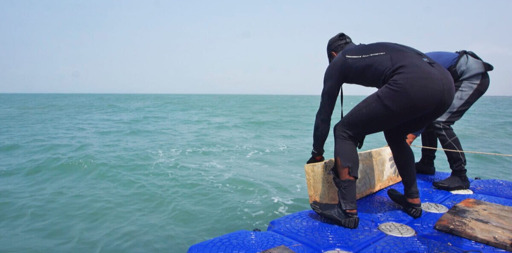
A recent study provides the first detailed map of Cambodia’s coastal seafloor habitats and finds that simple, low-cost anti-trawling structures are helping seagrass meadows recover and support small-scale fishers in the Kep Marine Fisheries Management Area in the Gulf of Thailand. The study was published in Frontiers in Marine Science by researchers from Marine Conservation Cambodia, an organization that co-manages the Kep MFMA in partnership with Cambodian authorities and local fishing communities. To map the region’s seafloor, the team surveyed 62,146 hectares (153,566 acres) across four areas: Kep MFMA, Outer Kep, Kampot, and Koh Seh. Divers visited hundreds of points spaced every 250 meters (820 feet) to document seagrasses, corals, shellfish beds, sediment type, and depth. In shallow waters, they used aerial photos to observe areas that boats couldn’t reach. The data were then analyzed using computer models to understand how depth and sediment influence habitat presence. They found that seagrass cover in Kampot province declined by 39% between 2013 and 2023 — the first time this loss has been clearly measured. They described “destructive fishing” as the most immediate driver of habitat loss in Cambodia, alongside chronic pressures like warming seas and turbidity from coastal development (two large-scale ports and a special economic zone are under construction). The study said the decline in seagrass highlights “the urgent need for scalable restoration and enforcement strategies.” The livelihoods of many Kep residents hinges on the preservation of marine resources, which have been depleted due to overfishing and large-scale coastal development projects.…This article was originally published on Mongabay
From Conservation news via this RSS feed
You must log in or # to comment.