

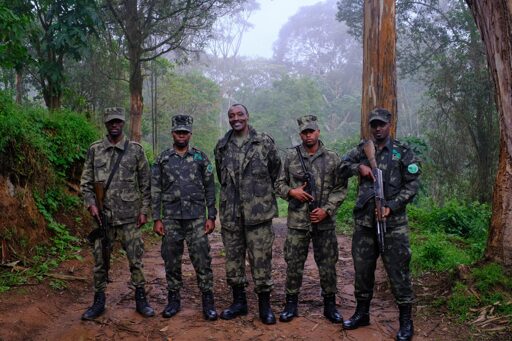
This is the sixth story in the Mongabay Series – Beyond the Safari. Read the others here. BWEYEYE, Rwanda — Josephine Irandwanahafi sits in a small, musty provisions shop off the main road in Bweyeye, a border town that marks the entrance from southern Rwanda into Burundi. Plantains and onions are stacked high in boxes next to her. She’s just gotten off work but is still wearing the olive-green uniform of her employer, the South Africa-based NGO African Parks. Irandwanahafi is an eco-guard, one of about 100 hired from the towns and villages around Nyungwe National Park, a 1,019-square-kilometer (393-square-mile) protected forest that’s been managed by African Parks since 2020. Irandwanahafi and her colleagues are ambassadors to the communities that surround the park, and serve as African Parks’ first line of defense. Their job is to patrol the outer ring of eucalyptus plantations that serve as a buffer zone around Nyungwe, warn their neighbors to stay out of the park, and when needed, to pass on intelligence about rule-breakers. Josephine Irandwanahafi, an eco-guard at Nyungwe National Park. Photo by Ashoka Mukpo/Mongabay. At 50,000 Rwandan francs per month, about $35, it doesn’t pay as well as her old job — cooking food for poachers at bush camps inside the forest and selling what they caught in local markets. But it’s safer. She isn’t risking jail time anymore. “I used to earn a lot better previously in trading wild meat compared to now,” she says, “but the risks of being caught and…This article was originally published on Mongabay
From Conservation news via this RSS feed
You must log in or # to comment.