

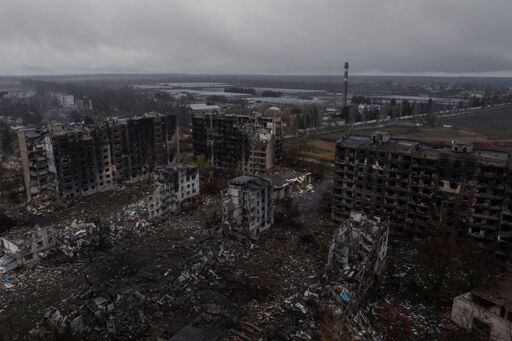
Ukraine says that failure to provide a financial lifeline to Kyiv backed by Russian assets would have grave consequences beyond the current war, and for Europe’s future.
“Failure to decide tomorrow would be a catastrophe for every single European,” Iryna Mudra, deputy head of President Zelensky’s office, told the Kyiv Independent on Dec. 17 in a written statement.
European leaders will gather in Brussels for a summit on Dec. 18–19 to decide on the fate of a “reparations loan,” a plan to lend up to 210 billion euros ($245 billion) to Ukraine using immobilized Russian central bank reserves.
“If immobilized Russian assets remain untouchable despite a clear legal and financial mechanism, the lesson will be that European solidarity ends where fear of action begins, even in self-defense,” Mudra told the Kyiv Independent. “That precedent will not stay confined to Ukraine.”
Ukraine needs new financing urgently. Without additional assistance, the country will run out of cash by spring 2026. Ukraine needs a colossal 135 billion euros ($160 billion) in 2026 and 2027 to sustain its army and keep the state afloat, according to International Monetary Fund and EU estimates.
With the second Trump administration withholding new U.S. support and Europe repeatedly sidelined in Russia-U.S. brokered peace talks, frozen Russian assets have been increasingly viewed as crucial for funding Kyiv and showcasing Europe’s strategic leverage. Yet, some EU member states remain hesitant to back the plan to lend these funds to Ukraine.
“This is about something way beyond just Ukraine. It is about Europe’s agency, and how we see ourselves in the future,” Mudra said.
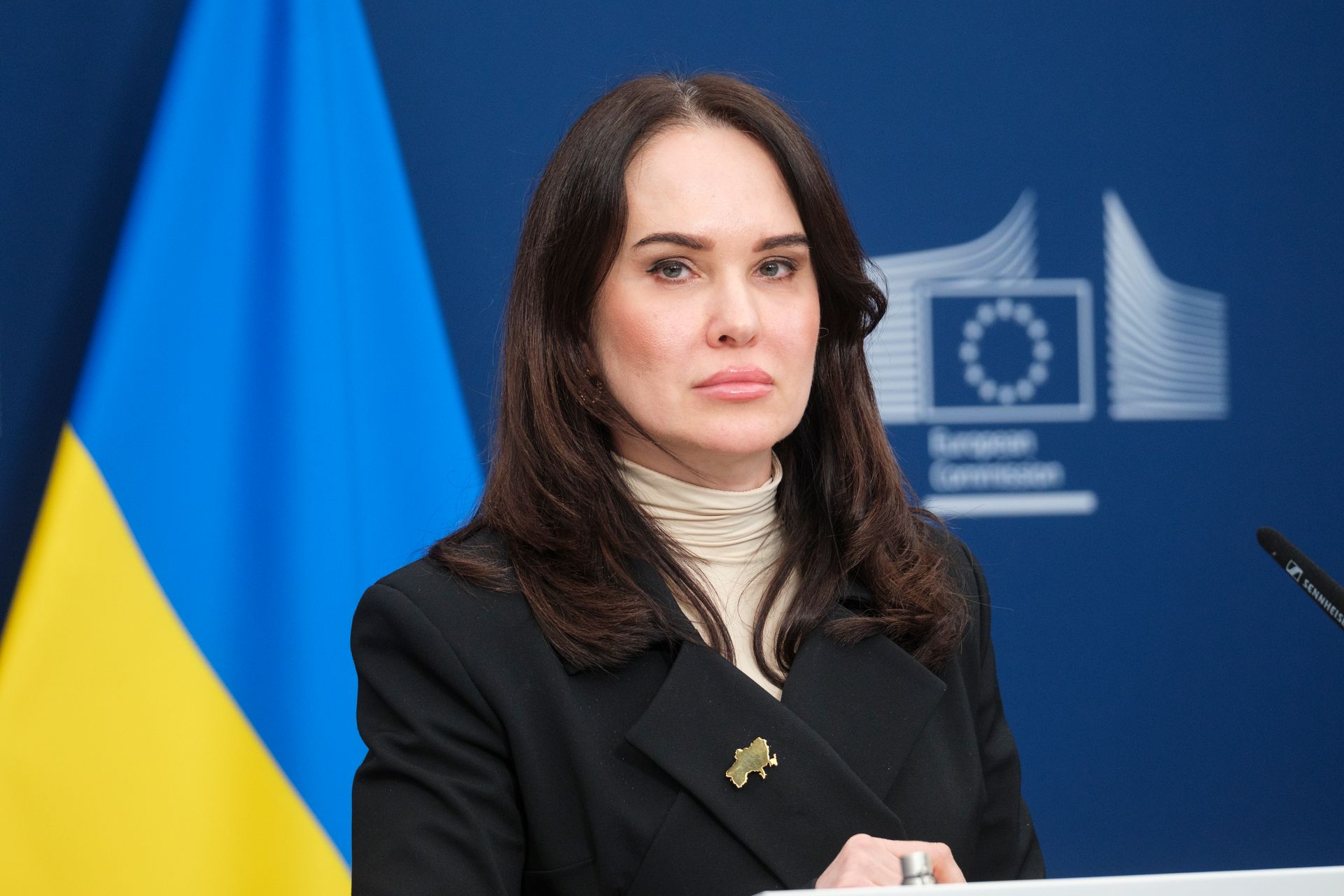
Iryna Mudra, deputy head of Ukraine’s Presidential Office, at the Berlaymont, the European Commission headquarters, in Brussels, Belgium, on Feb. 4, 2025. (Thierry Monasse / Getty Images)
“The reparations loan is therefore a test case for Europe’s future and will show whether it can act as a strategic union when confronted with aggression and whether Europe is able to take care of its own security and destiny.”
Mudra’s comments echo the words of German Chancellor Friedrich Merz, who said on Dec. 15 in a joint press conference with President Volodymyr Zelensky that, should the reparations loan fail, “the European Union’s ability to act will be severely damaged for years, if not longer.”
EU envoys took part in a series of meetings every day this week in Brussels in a last attempt to address outstanding concerns before the leaders meet tomorrow.
Belgium, which houses Euroclear, the financial institution holding the vast majority of the assets, has long expressed opposition to the plan, citing legal and financial risks.
Italy, Bulgaria, Malta and Belgium on Dec. 12 expressed further reservations to the plan, and pushed for the EU to find alternatives to the reparations loan to continue financing Ukraine.
But joint European borrowing, the Commission’s alternative option to the reparations loan, would be subject to unanimity — meaning that all 27 countries would need to agree. Slovakia and Hungary, the bloc’s most pro-Russia members, would likely veto any such plan.
Most analysts agree that the reparations loan is a well-crafted policy response to Ukraine’s financing needs and Russia’s continued war in Ukraine.
Two legal opinions released over the last week from multinational firm Covington & Burling and a group of prominent international lawyers both point out that it would be almost impossible for Russia to find a court or tribunal that would hear or enforce a case against Belgium.
Theoretically, a majority of European countries could bypass Belgium and approve the reparations loan. But the EU’s top diplomat, Kaja Kallas, said on Dec. 15 that it would be important to get Belgium on board.
In addition to Merz’s vocal backing of the plan, seven EU countries said that they “strongly support” the reparations loan in a different joint declaration on Dec. 7.
Roughly $300 billion in Russian central bank reserves were immobilized when Russia invaded Ukraine in February 2022. Two-thirds of those are held in Belgium.
Read also: Russia’s strong currency puzzles economists, signals economic woes
From The Kyiv Independent - News from Ukraine, Eastern Europe via this RSS feed