

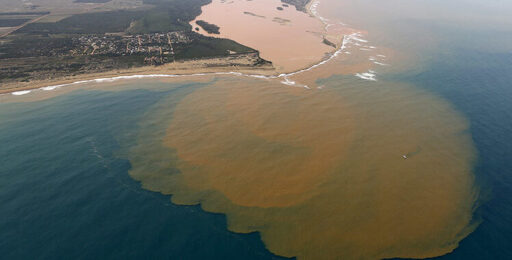
LINHARES, Espírito Santo, Brazil — A yellow mark stains the blue water tank sitting in the front yard of Lucimar Dias dos Santos Silva’s home. The same color, at times more intense, sometimes comes out of the faucets inside the house, or the neighbors’ water well. Lucimar, known as Preta to her friends, was born and raised in Povoação, a district of the municipality of Linhares in Brazil’s state of Espírito Santo. Her village is called Brejo Grande. For as long as she can remember, Preta has lived with flooding in Brejo Grande, when water covers the road, invades homes and isolates the people who live here. But after the burst Fundão tailings dam in Mariana, Minas Gerais, in 2015, water problems have taken on a new meaning, shattering her life and those of the people living in the quilombos along the mouth of the Rio Doce. Located 37 kilometers (23 miles) from the Linhares urban area, Brejo Grande can only be accessed by dirt road. It lies on the northern side of the mouth of the Rio Doce and is bordered by 24 lakes. The last official census made by the the Brazilian Institute of Geography and Statistics) counted a total population of 3,274 in Povoação, 1,800 of whom are Quilombolas — descendants of escaped enslaved people who established the communities in the colonial period — according to a report by the Povoação Traditional Quilombola Community. The landscape in Brejo Grande is one of vast fields dotted by small…This article was originally published on Mongabay
From Conservation news via this RSS feed