
Evans Njewa of Malawi is chair of the Least Developed Countries (LDC) group at UN climate talks.
At COP30 in Belém, the world took a long-awaited step forward. Countries agreed to triple international finance for adaptation by 2035.
Using the current goal as a starting point, as proposed by the Least Developed Countries (LDCs), the new target amounts to about $120 billion a year.
For the LDCs, which are home to more than a billion people on the frontlines of climate impacts, this commitment is more than just a number. It is a signal of hope, solidarity and the possibility of a more resilient future.
Now the real work begins to turn this promise into reality.
 Dec 12, 2025News
As Paris Agreement enters tougher era, new alliances urged to step up
With global consensus over climate action faltering on the accord’s 10th anniversary, experts say “coalitions of the willing” should move faster and with more ambitionRead more Oct 30, 2025Investigations
Business-as-usual: Donors pour climate adaptation finance into big infrastructure, neglecting local needs
A deep-sea port project in Bangladesh highlights how some major donor nations are labelling funds for industry-friendly transport and energy projects as adaptation finance, reporting by Climate Home News showsRead more Dec 16, 2025Comment
From Baku to Belém and beyond: How we turn a climate finance roadmap into reality
The roadmap to $1.3 trillion a year is an innovative effort to direct more money to climate action in developing countries – donor governments and others now need to follow upRead more
The path ahead is clear. The UN Environment Programme’s 2025 Adaptation Gap Report shows that developing countries will require between $310 billion and $365 billion annually by 2035 to protect lives, livelihoods and ecosystems.
The current adaptation finance target is around $40 billion a year by 2025 – but we do not know yet whether it has been met, with projections suggesting that is unlikely.
Business-as-usual: Donors pour climate adaptation finance into big infrastructure, neglecting local needs
Tripling this goal would be real progress, but still only a foundation. While the global adaptation gap remains wide, we now have a mandate to begin closing it.
The world is no longer debating whether adaptation matters. COP30 made it clear that adaptation is essential; the priority and line of survival for LDCs – and many developing countries are ready to act.
We are ready
Twenty-five LDCs and 72 countries globally now have national adaptation plans in place while others have included adaptation as a component in their broader Nationally Determined Contributions (NDCs).
Communities have identified concrete, ready-to-implement actions across agriculture, biodiversity, water, health, energy and infrastructure sectors. The blueprints exist. The needs are known. The financial gap is known, too.

Alex Messan Kouassi, lifeguard and resident of Azuretti, a village threatened by the sea, looks through a window in the ruins of his house, destroyed by a sudden rise in water level which damaged several hotels and houses in the coastal towns east of Abidjan in August in Grand Bassam, Ivory Coast September 20, 2023. REUTERS/Luc Gnago
Alex Messan Kouassi, lifeguard and resident of Azuretti, a village threatened by the sea, looks through a window in the ruins of his house, destroyed by a sudden rise in water level which damaged several hotels and houses in the coastal towns east of Abidjan in August in Grand Bassam, Ivory Coast September 20, 2023. REUTERS/Luc Gnago
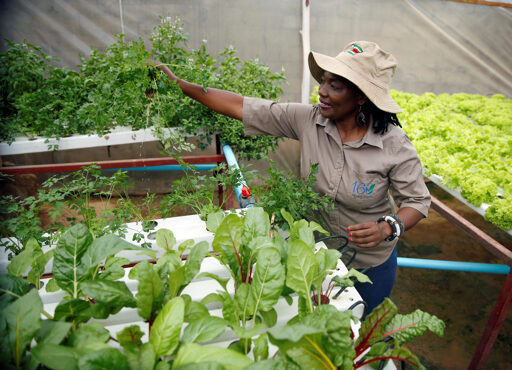
People on the ground are prepared to introduce drought-resilient crops, restore mangroves, upgrade drainage systems and build early-warning systems that save lives and livelihoods.
This is where developed countries have an unprecedented opportunity to lead. The technologies exist. Finance exists in the world’s wealthiest economies.
Rich nations “on track” to double adaptation finance but huge gap persists
What is needed now is political will – to honour commitments, uphold the principles of the Paris Agreement, and support those who contributed least to this crisis but suffer its worst impacts.
Grants, not loans
For too long, much of the adaptation support on offer has come as loans, many of them non-concessional, pushing vulnerable countries deeper into debt.
COP30 gives the world a chance to change course. For the LDC Group, the message is clear: adaptation finance must be predominantly grant-based.
Grants build resilience without placing new burdens on countries already stretched thin. It is fairer, just and economically wiser than debt-creating finance. When providing adaptation finance, both the quantitative and qualitative aspects must be taken into consideration.
So here is our invitation to developed countries:
Confirm and make concrete national commitments toward the tripling target of $120 billion a year – accessible, predictable, transparent and aligned with need.Prioritise grants at scale, ensuring that protection from climate impacts does not come with a price tag communities cannot afford.Channel support for adaptation through funds established under the UNFCCC, particularly those designed to specifically support LDCs and Small Island Developing States (SIDS).Streamline access procedures so that LDCs and SIDS can receive support quickly – because bureaucracy should never stand between people and their safety.Respond to country needs: Providing funding for countries’ priorities promotes sustainability – and wherever possible, supporting locally-led initiatives that incorporate Indigenous knowledge and technology is preferable.

Pasijah, 55, holds mangrove seedlings at her home in the submerged hamlet of Rejosari Senik, Demak regency, Central Java Province, Indonesia, March 14, 2025. REUTERS/Ajeng Dinar Ulfiana
Pasijah, 55, holds mangrove seedlings at her home in the submerged hamlet of Rejosari Senik, Demak regency, Central Java Province, Indonesia, March 14, 2025. REUTERS/Ajeng Dinar Ulfiana
Disappointment on LDC Fund replenishment
At COP30, LDCs called for scaling up of the Least Developed Countries Fund to $3 billion over the next four years under the Global Environment Facility’s ninth replenishment cycle. This request aligned with the climate finance commitment made at COP29 in Baku.
However, developed countries refused to meet this expectation. If it had been agreed upon in the COP30 decision, it would have significantly strengthened morale and fostered trust with LDCs.
Nonetheless, the COP30 decision on adaptation finance still offers a rare moment of hope and possibility. Early ambition now can build momentum. Factoring in inflation, adaptation needs will rise to between $440 billion and $520 billion by 2035 – so success today must pave the way for even stronger action in the future.
Resources and resolve required
To the developed countries: your leadership can unlock a chain reaction. Your commitments can build trust. Your partnership can help transform vulnerability into resilience.
This is one of history’s defining moments. The world can still choose to meet the climate challenge – not only by cutting emissions, but by ensuring every community has the tools to adapt and thrive.
The LDCs are ready. We bear the leadership in adaptation, have the plans, the determination and the ingenuity. What we need now are partners with resources and resolve.
The post Tripling adaptation finance is just the start – delivery is what matters appeared first on Climate Home News.
From Climate Home News via this RSS feed