

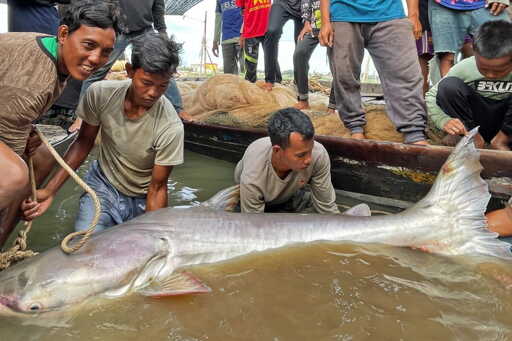
Southeast Asia’s Mekong River is one of the world’s most diverse and productive freshwater ecosystems, home to more than 1,000 fish species, including both the critically endangered Mekong giant catfish (Pangasianodon gigas) and giant barb (Catlocarpio siamensis). Many of these species migrate long distances and depend on the timing and extent of the annual flood pulse that expands habitat and triggers spawning. But that seasonal rhythm is shifting as monsoon seasons become increasingly erratic — the result of climate change, with upriver dams adding to the water level fluctuation problem. There have been years in which Cambodia’s Tonle Sap Lake, the region’s major nursery ground, has failed to expand as it did in the past, reducing habitat for migratory fish. These changes in annual rainfall are unfolding on top of multiple stressors, including dam building, pollution and overfishing — altering habitats and driving species declines. Escalating climate change is adding a new layer of instability to the Mekong system. But how such pressures combine remains poorly understood. Floating villages along Cambodia’s Tonle Sap Lake rise and fall with the annual flood pulse that drives the Mekong region’s fisheries. When the monsoon is weak and the lake fails to expand to its usual size, fish habitat shrinks and local catches drop — conditions felt immediately by communities whose lives are tied to the lake’s seasonal rhythms. Image courtesy of Chhut Chheana/Wonders of the Mekong. “Climate change is a great unknown,” says Zeb Hogan, a biologist at the University of Nevada, Reno,…This article was originally published on Mongabay
From Conservation news via this RSS feed
You must log in or # to comment.